



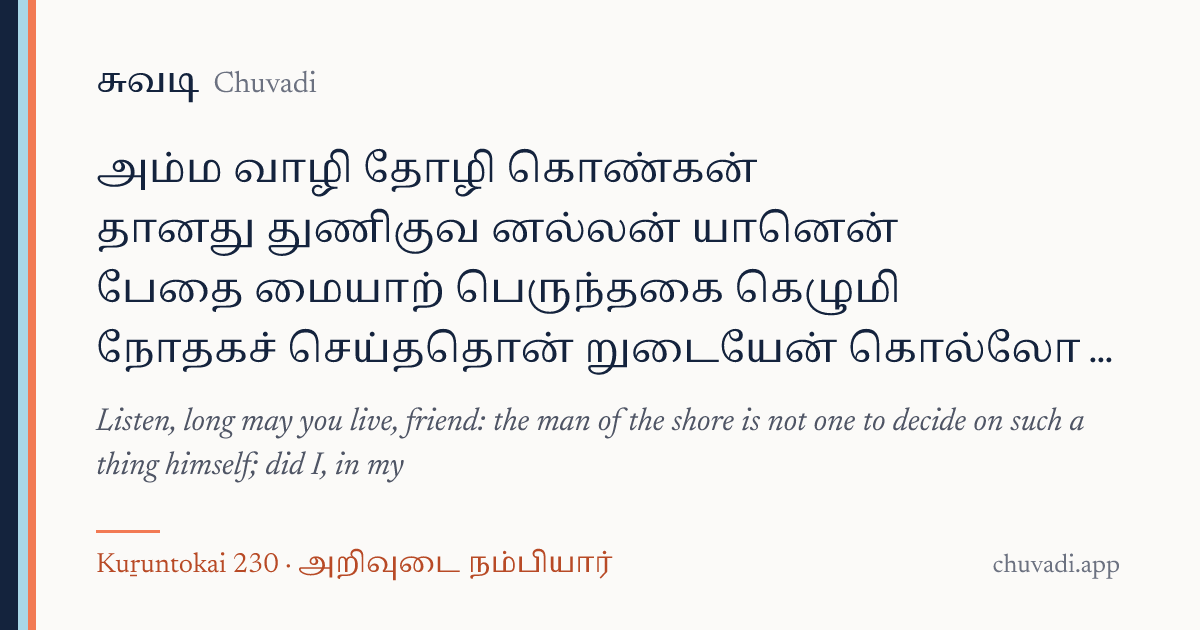

குறுந்தொகை 230
பாடல் · The poem
Tap a word to see where else it occurs.
பொருள் · Meaning in TamilAI
தோழி, வாழ்க, கேள்! கடற்கரைத் தலைவன் தானாக நம்மை விட்டுவிடத் துணிபவன் அல்லன். என் அறியாமையால் அந்தப் பெருந்தகையோடு முரண்பட்டு, அவன் மனம் நோகும்படி ஏதேனும் செய்துவிட்டேனோ? வலிய சுறாமீன்கள் திரியும் நீர்வழியாக, சில நாள்களுக்கு முன்பு வந்தது போல இப்போது அவன் வருவதில்லையே.
நெய்தல் திணை; தோழி தலைவிக்குக் கூறியது. வருகை குறைந்த தலைவனைக் குறை கூறாமல், பழியைத் தன்மேல் ஏற்றுக்கொள்கிறாள் தோழி; இது தலைவியின் மானத்தையும் காக்கிறது, அருகில் கேட்கும் தலைவனையும் நாணச் செய்கிறது. சுறா திரியும் வழி, அவன் வழியின் அபாயத்தைச் சுட்டி, விரைந்து மணக்க வேண்டும் என்பதையும் உணர்த்துகிறது.
ஆங்கிலம் · English translationAI
Translation
- Listen, long may you live, friend: the man of the shore
- is not one to decide on such a thing himself; did I, in my
- foolishness, cross that noble man
- and do something that caused him pain?
- On the watery road where the strong sharks roam,
- he does not come as he did in those few days before.
What the poem says
The friend speaks to the heroine on the seashore (neytal). The hero, who once came regularly by the sea road, has stopped coming. The friend refuses to blame him: he is not the kind of man to break off on his own. Perhaps, she says, she herself offended him through some foolish act.
Her self-blame is a tactful move. By taking the fault on herself she spares the heroine's pride and avoids accusing the hero, who may be within hearing. The mention of shark-infested waters also hints at the dangers of his journey, another reason to hurry the marriage.
The poet's name, Aṟivuṭai Nampiyār, means "the wise Nampi".