



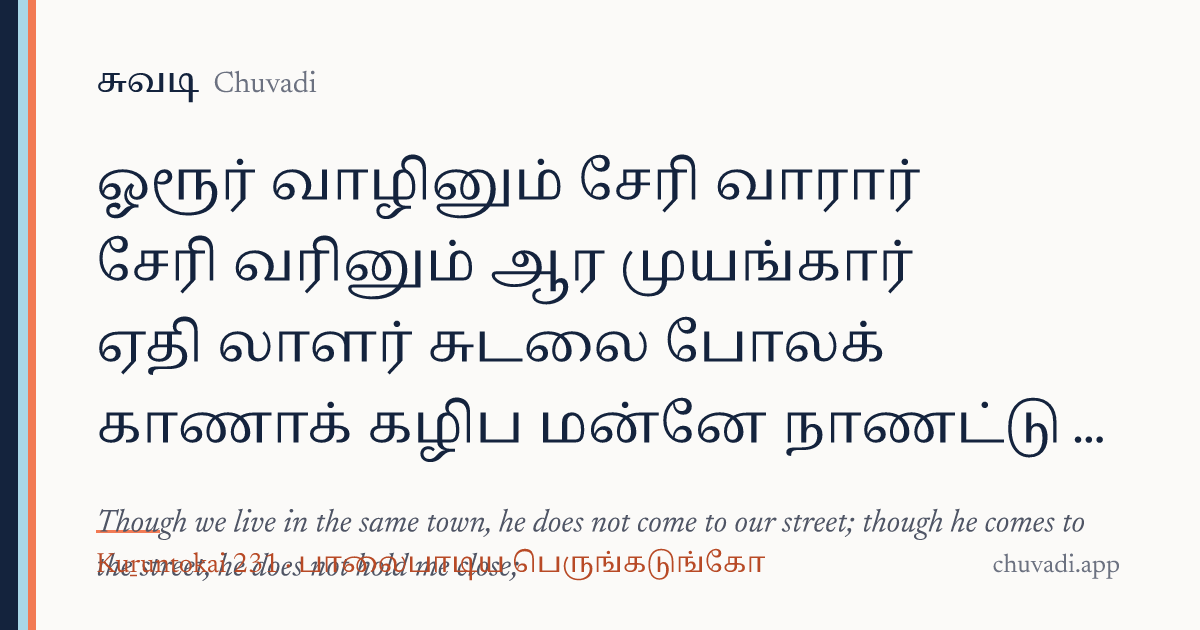

குறுந்தொகை 231
பாடல் · The poem
Tap a word to see where else it occurs.
பொருள் · Meaning in TamilAI
ஒரே ஊரில் வாழ்ந்தாலும் அவர் நம் தெருவுக்கு வருவதில்லை; தெருவுக்கு வந்தாலும் நிறைவாகத் தழுவுவதில்லை. அயலாரின் சுடுகாட்டைக் கண்டும் காணாதவர்போலக் கடந்துபோவது போல, என்னைப் பாராமலே கடந்து போகிறார். நாணத்தை அழித்து, நல்லறிவையும் இழந்த என் காமம், வில்லிலிருந்து விடுபட்ட அம்புபோலச் சென்று நெடுந்தொலைவு போய்விட்டதே!
மருதத் திணை; தலைவி கூற்று. பரத்தையர் தொடர்பால் தன்னைப் புறக்கணிக்கும் கணவனைப் பற்றித் தலைவி வருந்துகிறாள். அயலார் சுடுகாட்டைப் பற்றற்றுக் கடப்பது போல அவன் தன்னைக் கடக்கிறான் என்பது கடுமையான உவமை. பாடத்தில் "கணி" என்று உள்ளது; உவமைக்கு ஏற்ப "கணை" (அம்பு) என்று கொள்ளப்பட்டது.
ஆங்கிலம் · English translationAI
Translation
- Though we live in the same town, he does not come to our street;
- though he comes to the street, he does not hold me close;
- like the burning ground of strangers,
- he passes by without a look; with shame destroyed,
- the love that has lost all good sense
- has gone, like an arrow shot from a bow, far away.
What the poem says
The heroine speaks in marutam, the setting of the unfaithful husband. They live in the same town, yet he does not come to her street, and when he does he will not embrace her. He passes her as people pass a cremation ground of strangers, without even glancing.
The comparison is harsh. A burning ground is something to avoid and look away from; for a stranger's pyre one feels nothing at all. That is how he now treats her.
The last lines turn the blame on love itself. Love, having swept away shame and good sense, has flown off and gone far, like an arrow loosed from a bow that cannot be called back. (The text has kaṇi here; it is read as kaṇai, 'arrow', which the simile seems to need.) The poet, Peruṅkaṭuṅkō, is the Cēra king known for poems of separation.