



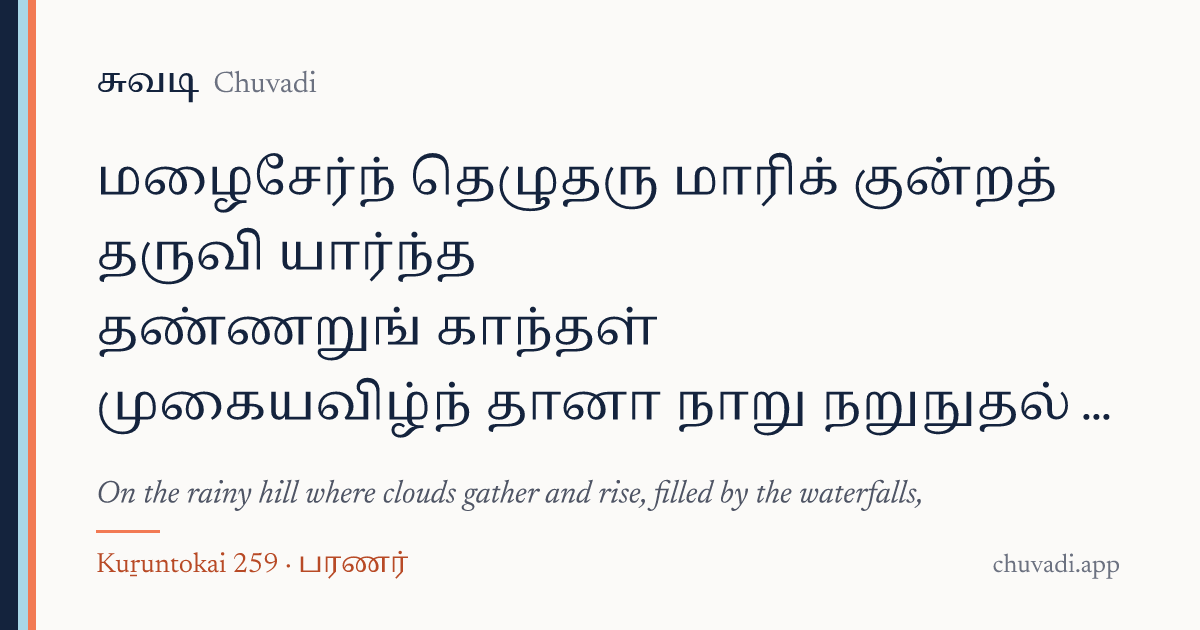

குறுந்தொகை 259
பாடல் · The poem
Tap a word to see where else it occurs.
பொருள் · Meaning in TamilAI
மேகங்கள் கூடி எழும் மழைக்கால மலையில், அருவிநீர் நிறைந்த இடத்தில் வளர்ந்த குளிர்ந்த மணமுடைய காந்தள், அரும்பு அவிழ்ந்து இடைவிடாது மணப்பது போல மணக்கும் நறுநுதலும், பல இதழ்களுடைய மலர் போன்ற குளிர்ந்த கண்களும், மாந்தளிர் நிறமும் உடையவளே! நீ உடன்பட்டாலும் சரி, என்னைக் கொன்றாலும் சரி, நீயே ஆராய்ந்து அறிந்துகொள். உன் நிலையைப் பற்றி உண்மைபோலப் பொய் சொல்வதால் என்ன பயன்? உன்மீது என் நெஞ்சம் நல்லதே.
குறிஞ்சித் திணை; தோழி தலைவிக்குக் கூறியது. முதலில் தலைவியைப் புகழ்ந்து, பின்பு கடினமான ஒன்றை வேண்டுகிறாள் தோழி; அது களவை வீட்டாருக்கு வெளிப்படுத்துவதாக (அறத்தொடு நிற்றல்) இருக்கலாம் எனக் கொள்வர். "உடன்பட்டாலும் கொன்றாலும்" என்பது "எதுவாயினும் முடிவு செய்" என்பதாகும். ஏழாம் அடியின் "புரைமை" என்பதன் பொருளும், தோழியின் வேண்டுகோள் எது என்பதும் உறுதியாகத் தெரியவில்லை.
ஆங்கிலம் · English translationAI
Translation
- On the rainy hill where clouds gather and rise,
- filled by the waterfalls,
- the cool fragrant kāntaḷ
- opens its buds and smells unceasingly — so smells your fragrant brow,
- you of the dark skin and eyes cool as many-petalled flowers:
- whether you agree to it or whether you kill me,
- you will weigh it and know; to say, as if it were true,
- what is false about your worth — what use is that?
- My heart is wholly good toward you.
What the poem says
The friend speaks to the heroine in kuṟiñci. She begins by praising her: the heroine's forehead smells of the kāntaḷ, the glory lily of the rainy hills, whose buds open by the waterfalls. The praise prepares for a hard request.
What the friend asks is left implicit. The usual reading is that she urges the heroine to stop concealing her love for the hero, or to take some decisive step in the affair, perhaps to let it be known at home. "Whether you agree or kill me" means: decide as you will, but decide. She refuses to flatter the heroine with comforting falsehoods about her situation and ends by insisting on her own good will.
The second and third lines are very short in the Tamil and have been kept short here. Line seven is ambiguous; puraimai can mean worth or fitting conduct, and the line may also be read as "you will judge your own worth", so the exact sense of the friend's argument is uncertain.