



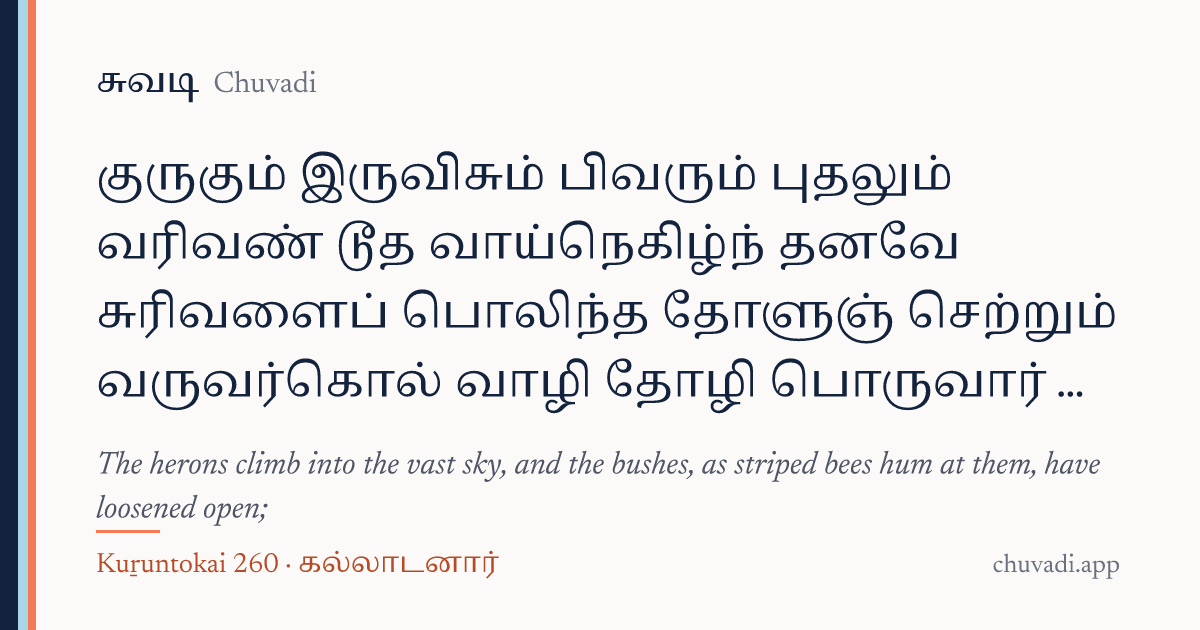

குறுந்தொகை 260
பாடல் · The poem
Tap a word to see where else it occurs.
பொருள் · Meaning in TamilAI
நாரைகளும் பெரிய வானில் எழுந்து பறக்கின்றன; வரிவண்டுகள் ஊதுவதால் புதர்களும் மலர்ந்துவிட்டன; சுரிந்த வளையல்களால் பொலிந்த உன் தோள்களும் மீண்டும் பருத்துவிட்டன. தோழி, வாழ்க! பகைவருடைய மண்ணைக் கைப்பற்றி உண்ணும் பெருமைமிக்க யானைகளையும் வளமான தேர்களையும் உடைய தொண்டையரின் சுரபுன்னை நிறைந்த மலைச்சாரலில், கன்றைப் பிரிந்த பசு வழிதெரியாமல் தடுமாறும், மெல்லிய அடியுடைய ஓமை மரங்கள் நிறைந்த பாலைவழியைக் கடந்து சென்றவர் இனி வருவார் போலும்.
பாலைத் திணை; தோழி தலைவிக்குக் கூறியது. நாரை எழுதல், புதர் மலர்தல், மெலிந்த தோள் மீண்டும் பருத்தல் ஆகிய நல்ல நிமித்தங்களைக் கண்டு, தலைவன் விரைவில் திரும்புவான் என்று தேற்றுகிறாள். ஏழாம் அடியின் பொருள் உறுதியாகத் தெரியவில்லை; கன்றைப் பிரிந்து தவிக்கும் விலங்காகக் கொண்டால், அது தலைவியின் பிரிவுநிலையைக் காட்டும்.
ஆங்கிலம் · English translationAI
Translation
- The herons climb into the vast sky, and the bushes,
- as striped bees hum at them, have loosened open;
- and your arms, made lovely by spiral bangles, have grown full again:
- will he come, may you live, friend? — on the slopes crowded with vaḻai
- of the Toṇṭaiyar of fine chariots, whose noble elephants
- seize the land of their foes and devour it,
- where a cow without her calf stands barred and lost,
- he crossed the wasteland of thin-stemmed ōmai trees.
What the poem says
The friend speaks to the heroine while the hero is away in the pālai wilderness. She reads good omens: herons rising, bushes bursting into flower as bees hum at them, and the heroine's arms, which had grown thin with grief, filling out again so that her bangles fit. All of these suggest that his return is near.
The second half describes where he has gone: the hills of the Toṇṭaiyar, a people famous for their chariots and war-elephants, and a dry tract of ōmai trees. The phrase about elephants that "take the earth and eat it" refers to conquering enemy land.
The seventh line is obscure. It seems to describe an animal separated from its young and wandering lost or blocked, which would mirror the heroine's own separation, but the words (kaṉṟu il ōrā vilaṅkiya) can be construed in more than one way and the meaning given here is tentative.