



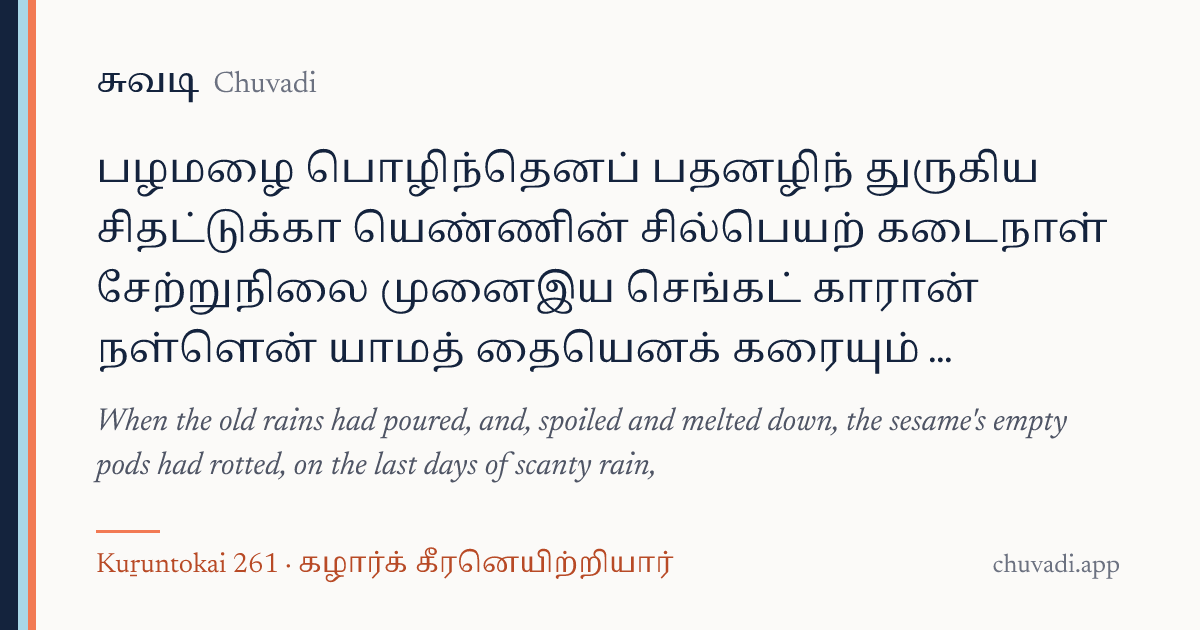

குறுந்தொகை 261
பாடல் · The poem
Tap a word to see where else it occurs.
பொருள் · Meaning in TamilAI
முன்மழை பொழிந்ததால் பக்குவம் அழிந்து அழுகிய, உள்ளீடற்ற எள்ளுக் காய்களை உடைய, சிறுமழை பெய்யும் கடைசி நாள்களில், சேற்றில் நிற்பதை வெறுத்த சிவந்த கண்களை உடைய கரிய எருமை, நள்ளிரவு யாமத்தில் "ஐ" என்று கத்தும். அச்சம் தரும் அந்தப் பொழுதிலும் என் கண்கள் உறங்குவதில்லை, தோழி, வாழ்க! காவலர்கள் கணக்காயர் போலக் கண்டிப்போடு முறைப்படி சுற்றிவர, நான் வருந்தி, புண்பட்ட நெஞ்சின் துயரத்தால் விழித்திருக்கிறேன்.
குறிஞ்சித் திணை; தலைவி தோழிக்குக் கூறியது. களவுக் காலத்தில் வீடு காக்கப்படுவதால் தலைவனைச் சந்திக்க இயலாமல் இரவெல்லாம் உறங்காமல் வருந்துகிறாள். சேற்றில் தனித்து நின்று கத்தும் எருமை, அவள் சொல்ல இயலாத புலம்பலை எதிரொலிக்கலாம். "கணக்காய்" என்ற சொல் ஆசிரியரைக் குறிக்கும்; காவலர் யாமங்களைக் கணக்கிடுவதைக் குறிக்கலாம்; பொருள் உறுதியில்லை.
ஆங்கிலம் · English translationAI
Translation
- When the old rains had poured, and, spoiled and melted down,
- the sesame's empty pods had rotted, on the last days of scanty rain,
- the red-eyed black buffalo, tired of standing in the mire,
- in the dense dark of midnight cries out 'ai';
- even at that frightening hour my eyes
- do not sleep, may you live, friend; while the guards
- go about like a master counting off the hours, I suffer,
- in the grief of a heart that has been wounded.
What the poem says
The heroine tells her friend that she lies awake every night. The setting is kuṟiñci and the stage is secret love: she longs for the hero, but the house is watched and the guards make their rounds.
The night is drawn in a few bleak details. The rains are ending, the sesame crop has rotted in its pods, and a buffalo, sick of the mud, bellows into the darkness. It is a time when anyone would be afraid, yet her sleeplessness has nothing to do with fear. The cry of the lonely buffalo may also echo her own unvoiced complaint.
Line seven is uncertain. Kaṇakkāyar usually means a teacher, especially of reckoning, and the phrase seems to compare the watchmen to a schoolmaster keeping strict count, perhaps of the watches of the night; other readings of this phrase are possible. The poet, Kaḻār Kīraṉ Eyiṟṟiyār, is one of the women poets of the anthology.