



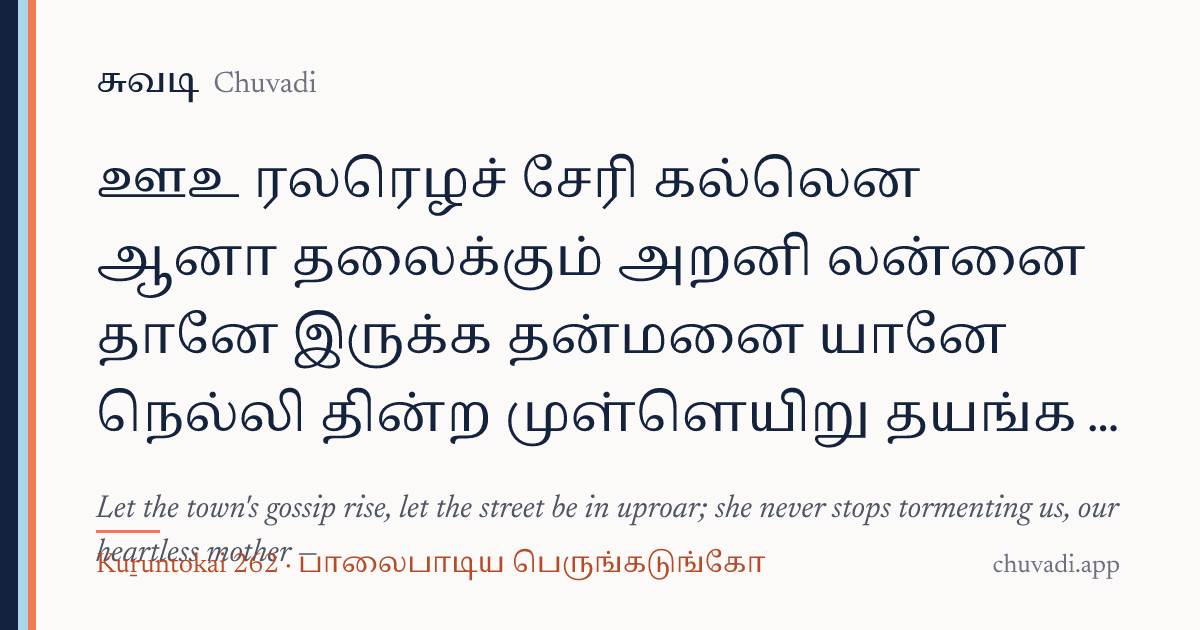

குறுந்தொகை 262
பாடல் · The poem
Tap a word to see where else it occurs.
பொருள் · Meaning in TamilAI
ஊரில் அலர் எழட்டும்; தெரு முழுதும் ஆரவாரிக்கட்டும். ஓயாமல் நம்மை வருத்தும் அறமில்லாத அன்னை தன் வீட்டில் தானே தனியாக இருக்கட்டும். இவளோ, நெல்லிக்காய் தின்ற கூரிய பற்கள் ஒளிர, அவரோடு தொலைநாட்டில், வானைத் தொடும்படி உயர்ந்த குறுக்கிடும் மலையின் சரிவில், கரும்பு நடும் பாத்திகள் போலப் பெருங்களிறுகளின் அடிச்சுவடுகளில் தேங்கிய நீரை, ஆராய்ந்து பருகுவாள்.
பாலைத் திணை; தோழி கூற்று. தலைவனோடு உடன்போக்கில் சென்ற (அல்லது செல்லவிருக்கும்) தலைவியைப் பற்றித் தோழி, ஊர் அலரையும் கடுமையான தாயையும் பொருட்படுத்தாமல் பேசுகிறாள். நெல்லிக்காய் தின்ற பின் நீர் இனிக்கும்; காதலனோடு பகிர்ந்துகொள்ளும் கடுமையும் வீட்டுச் சுகத்தைவிட இனிது என்பது கருத்து.
ஆங்கிலம் · English translationAI
Translation
- Let the town's gossip rise, let the street be in uproar;
- she never stops tormenting us, our heartless mother —
- let her stay on alone in her own house.
- Her sharp teeth gleaming from eating the nelli fruit,
- she will choose to drink, with him, in a distant land,
- on the slope of the barrier mountain rising to touch the sky,
- like the beds where sugarcane is planted,
- the water left standing in the footprints of great bull elephants.
What the poem says
The friend speaks in pālai, the tiṇai that includes elopement (uṭaṉpōkku). The heroine has gone away with the hero, or is about to, and the friend defies the scandal in the village and the mother who has made the girl's life miserable. Let the mother keep her house to herself.
The second half imagines the girl on the road. In the dry mountains she will chew the sour nelli (Indian gooseberry), which makes water taste sweet, and drink from the pools that collect in the deep footprints of elephants, footprints compared to the trenches in which sugarcane is planted. Hardship shared with the man she loves will taste better to her than comfort at home.
The poet is called Pālai Pāṭiya Peruṅkaṭuṅkō, "Peruṅkaṭuṅkō who sang of pālai"; he is traditionally identified as a Cēra prince and is the master of this landscape across the anthologies.