




குறுந்தொகை 266
பாடல் · The poem
Tap a word to see where else it occurs.
பொருள் · Meaning in TamilAI
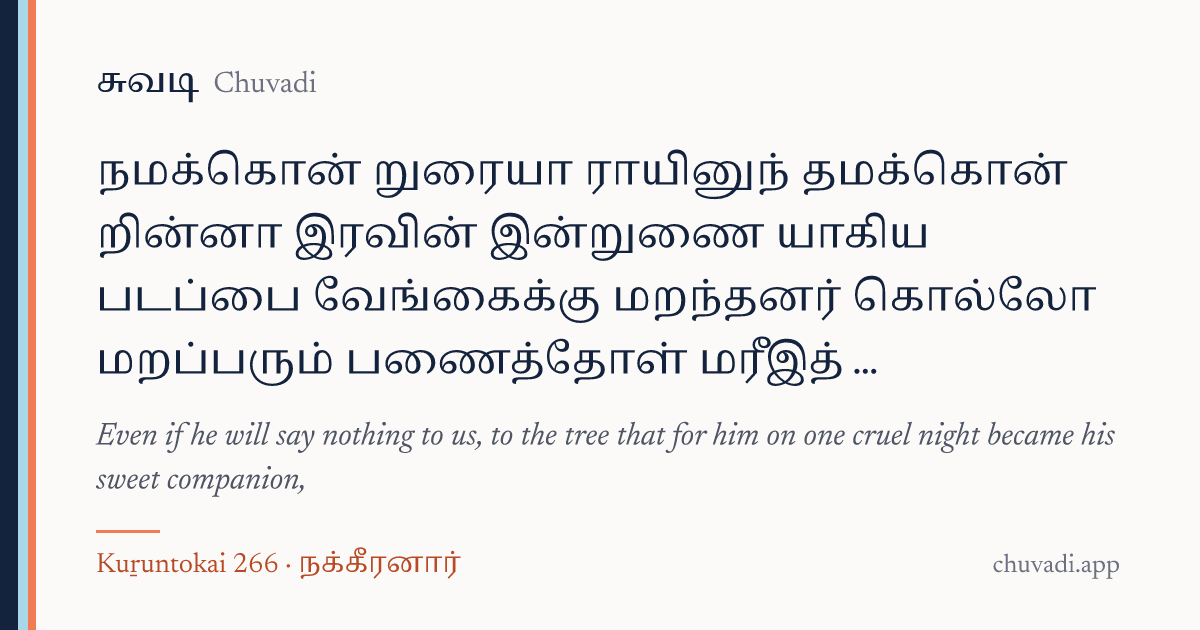
நமக்கு ஒரு சொல்லும் சொல்லி அனுப்பாவிட்டாலும், ஒரு கொடிய இரவில் தனக்கு இனிய துணையாக நின்ற தோட்டத்து வேங்கை மரத்துக்காவது, பறவைகளின் வாயிலாக ஒரு தூது அனுப்ப மறந்துவிட்டாரோ? எல்லாவற்றையும் மறக்கச் செய்யும் என் பருத்த தோள்களைத் தழுவியும், துறந்து செல்லும் வலிமை உடையவர் அவர்.
பாலைத் திணை; தலைவி கூற்று. தனக்குச் செய்தி அனுப்பாவிட்டாலும், களவுக் காலத்தில் ஓர் இரவு அவனுக்கு நிழல் தந்த வேங்கை மரத்தையாவது நினைத்திருக்கலாமே என்று மெல்லக் கடிந்துகொள்கிறாள். "துறத்தல் வல்லியோர்" என்று அவன் வலிமையையே குற்றமாக்குவது நயம். பறவைகள் வழித் தூது அனுப்புவது சங்க மரபு. வேங்கை மலைமரம் என்பதால், இவர்கள் குறிஞ்சி நாட்டில் சந்தித்தவர் எனலாம்.
ஆங்கிலம் · English translationAI
Translation
- Even if he will say nothing to us, to the tree that for him
- on one cruel night became his sweet companion,
- the vēṅkai in the garden, has he forgotten even that,
- he who held my broad arms that make one forget all else
- and yet was strong enough to leave — a message by the mouths of birds?
What the poem says
The heroine speaks while the hero is away. She expects no word for herself, but asks whether he has forgotten even the vēṅkai tree in the garden, which once sheltered him on a hard night when he came to meet her. He could at least have sent a message to the tree.
The irony is gentle and sharp at once. She speaks of a man who held her in his arms and yet "was strong enough to leave", turning his strength into a reproach. A "message by the mouths of birds" is a conventional phrase for news carried by birds; lovers in Sangam poetry often send, or wish to send, birds as messengers.
The colophon places the poem in pālai, separation. The vēṅkai belongs to the hills, which suggests that the lovers first met in the kuṟiñci country. The poet is Nakkīraṉār.