




குறுந்தொகை 265
பாடல் · The poem
Tap a word to see where else it occurs.
பொருள் · Meaning in TamilAI
காவலுக்கு அடங்காமல், வண்டு வந்து வாய் திறக்கும் பொழுதில், காந்தளின் கொழுத்த அரும்புகள், முன்பே தாம் அறிந்த நேர்மையுடைய சான்றோரைக் கண்டதும் இடம் விட்டு விலகி நிற்கும் கடமை அறிந்த மக்களைப் போல, இதழ்க்கட்டு அவிழ்ந்து மலரும் உயர்ந்த பாறைமலையை உடைய தலைவன் நல்ல நெஞ்சம் உடையவன், தோழி! உன் நிலையை நானே அவனிடம் சொன்னேன்; அதைக் கேட்டு, இப்படி ஆகிவிட்டதே என்று அவன் நாணினான்.
குறிஞ்சித் திணை; தோழி தலைவிக்குக் கூறியது. தலைவியின் துயரைத் தலைவனிடம் சொன்னதையும், அவன் நாணி வருந்தியதையும் சொல்லி, இனி அவன் நேர்மையாக மணம் பேசுவான் என்று தேற்றுகிறாள். வண்டு வந்ததும் தடையின்றி மலரும் காந்தள் போல, தலைவியின் நிலையைக் கேட்டதும் அவன் நல்லுள்ளம் திறந்தது என்பது உள்ளுறை.
ஆங்கிலம் · English translationAI
Translation
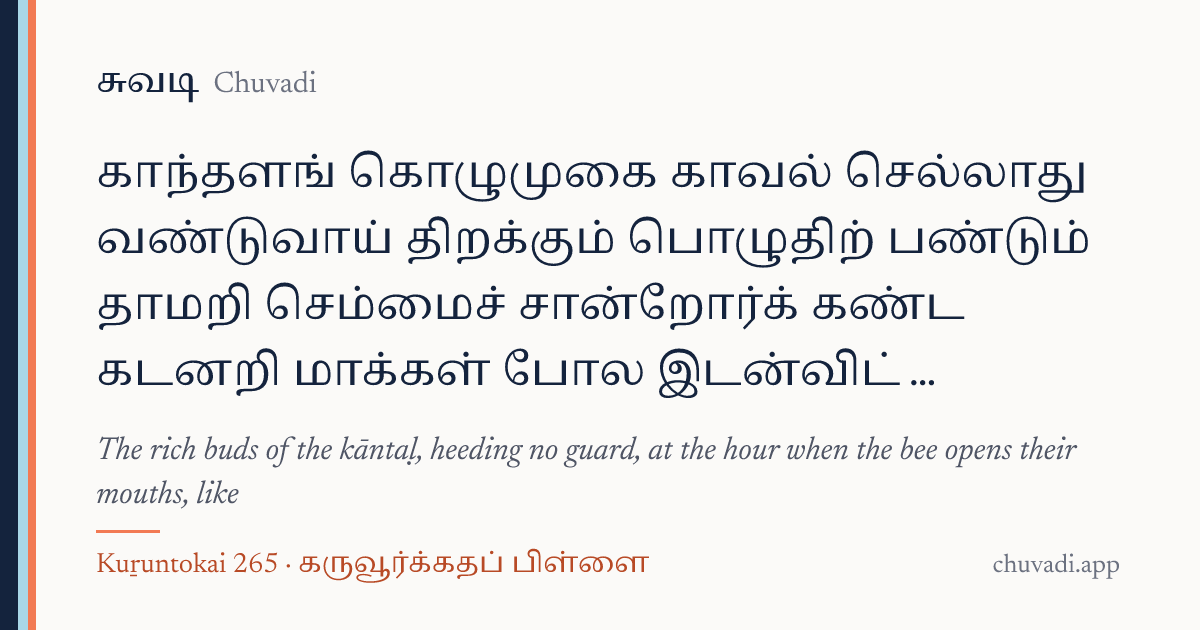
- The rich buds of the kāntaḷ, heeding no guard,
- at the hour when the bee opens their mouths, like
- dutiful men who, seeing the noble whose rectitude they have long known,
- stand aside and yield their place,
- loosen their petals from their bonds, on the hills of the lofty rock; their lord
- is good of heart, friend: your condition
- I told him myself, and so
- he was ashamed that it should have come to this.
What the poem says
The friend reports to the heroine that she has spoken to the hero. She told him how the heroine is suffering, and he was ashamed that things should have reached such a state. The implication is that he will now act honourably and seek her in marriage.
The opening image carries the hidden meaning. The kāntaḷ buds cannot be guarded, and when the bee comes they open their petals, as well-bred people make way for men of known virtue. The comparison flatters the hero: the closed bud opens readily to the bee, and the heroine's cause, once put to him, opened his good heart at once.
The syntax is intricate. The long description of the flower is an epithet of the hill country, and the "lord" of that land is the subject of the second half. The poet is Katappiḷḷai of Karuvūr.