



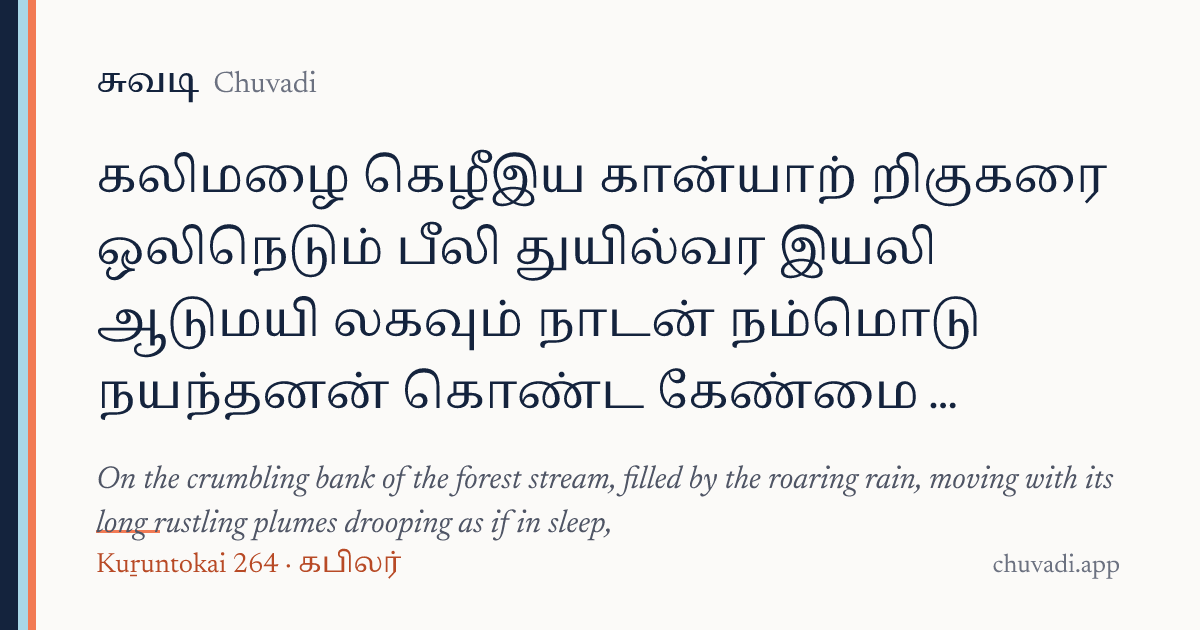

குறுந்தொகை 264
பாடல் · The poem
Tap a word to see where else it occurs.
பொருள் · Meaning in TamilAI
பெருமழையால் நிறைந்த காட்டாற்றின் இடிந்து சரியும் கரையில், ஒலிக்கும் நெடிய தோகை உறக்கம் வந்தாற்போலத் தாழ்ந்து அசைய நடந்து, ஆடும் மயில் அகவும் நாட்டை உடையவன், நம்மை விரும்பி நம்மோடு கொண்ட நட்பு, பயன் தந்த காலத்திலும் நன்மை தருவதில்லையே.
குறிஞ்சித் திணை; தலைவி கூற்று. சுருக்கமான இறுதி அடி சொல்விளையாட்டை உடையது: "பயத்தல்" பயன் தருதல்; "பசப்பு" காதல் பசலை. சந்திப்பு நிறைவேறிய காலத்திலும் அது சிறிது நேரமே, களவானது என்பதால் இந்த உறவு அவளுக்குத் துயரமே தருகிறது. இடியும் கரையில் கனத்த தோகையோடு நிற்கும் மயில், அழகிய ஆனால் பாதுகாப்பற்ற நிலையில் உள்ள தலைவியைக் குறிப்பாகக் காட்டலாம்.
ஆங்கிலம் · English translationAI
Translation
- On the crumbling bank of the forest stream, filled by the roaring rain,
- moving with its long rustling plumes drooping as if in sleep,
- the dancing peacock calls; the man of that land, with us,
- the friendship he formed in his desire —
- even when it bears fruit, it does no good.
What the poem says
The heroine speaks in kuṟiñci. A peacock on a rain-soaked riverbank moves about with its plumes drooping heavily and gives its cry. That is the hero's land, and from it she turns to the bond he made with her.
Her final line is compressed and turns on a play of words. Payattal means to yield or bear fruit, while payappu or pacappu is the sallow pallor of a lovesick woman. The line can mean "even when it has borne fruit it is of no use", and it may also hint at "it brings pallor even when fulfilled". Either way she is saying that the affair hurts her even in its happy moments, since every meeting is brief and secret.
The peacock with its heavy plumes on a crumbling bank may suggest the heroine herself: splendid, but weighed down and on unsafe ground. This is a suggestion, not something the poem says outright. The poet is Kapilar, the great poet of kuṟiñci.