



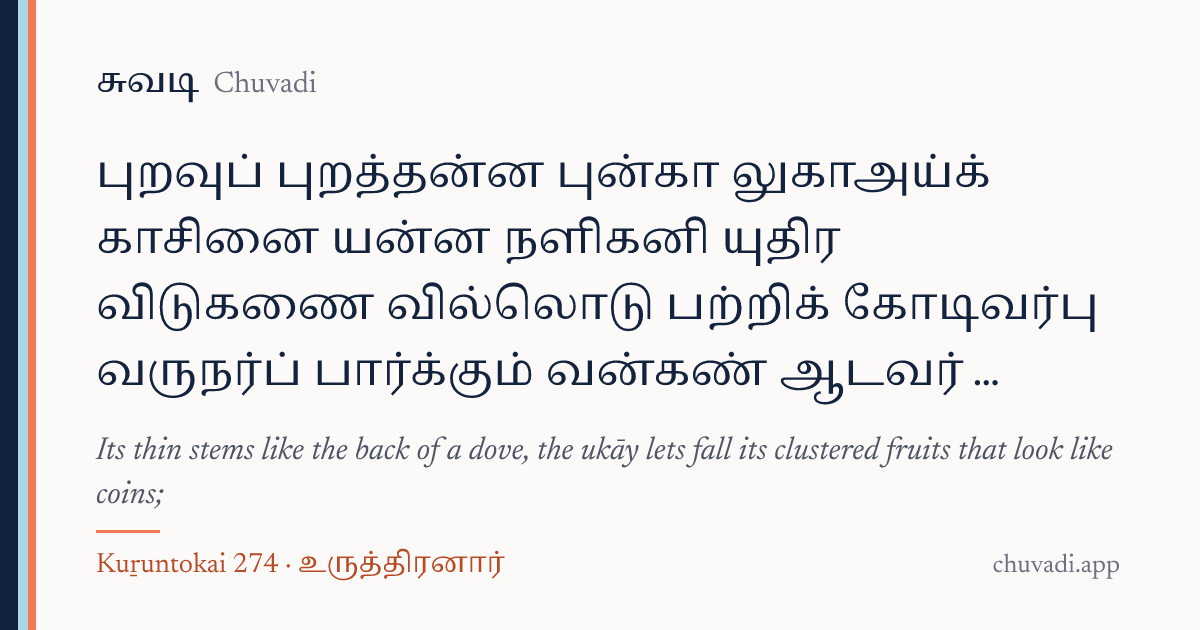

குறுந்தொகை 274
பாடல் · The poem
Tap a word to see where else it occurs.
பொருள் · Meaning in TamilAI
புறாவின் முதுகுபோன்ற நிறமுடைய மெல்லிய அடிமரம் கொண்ட உகாய் மரம், காசுகள் போன்ற அடர்ந்த கனிகளை உதிர்க்கும். விடுவதற்குத் தயாரான அம்பை வில்லோடு பற்றிக்கொண்டு, மலைமுகடுகளில் ஏறி, வழியில் வருவோரைப் பார்த்திருக்கும் கொடிய கண்களை உடைய ஆறலைக் கள்வர், நீர் வேட்கையால் அந்தக் கனிகளை மென்று தாகம் தணிப்பர். அத்தகைய கொடிய காடும் இனிதாகிவிடும், பொன்னும் மணியும் கலந்த அணிகள் அணிந்த இடையை உடைய இளம்பெண்ணின் அழகிய முலைகளை உடைய மார்பைத் தழுவிக்கொண்டு நாம் சென்றால்.
பாலைத் திணை; தலைவன் கூற்று. கள்வரும் நீரின்மையும் நிறைந்த பாலைவழியும் தலைவியோடு சென்றால் இனிதாகும் என்கிறான்; இது உடன்போக்கை நினைக்கும் சூழலாகக் கொள்ளப்படுகிறது. காசு போன்ற கனிகளும் அவள் இடையணியின் பொன்னும் மணியும் அருகருகே வந்து, செல்வத்தைவிடக் காதலே அவனுக்கு விருப்பம் என்பதைக் காட்டுகின்றன.
ஆங்கிலம் · English translationAI
Translation
- Its thin stems like the back of a dove, the ukāy
- lets fall its clustered fruits that look like coins;
- gripping their bows with arrows ready to loose, climbing the ridges,
- hard-eyed men lie watching for those who come by,
- and, in their thirst for water, chew the fruit to ease it —
- even that cruel wilderness is sweet, if
- the young woman, whose waist is hung with gold and set with gems,
- her lovely-breasted body, we hold close as we go.
What the poem says
The hero speaks of the journey through the pālai wasteland. Its dangers are listed plainly: robbers with bows lying in wait on the heights, and no water, so that even these men chew the small fruits of the ukāy tree to ease their thirst. Yet with the heroine beside him, he says, the road would be sweet.
The poem is usually read in the context of elopement (uṭaṉpōkku): the hero imagines taking the heroine with him rather than leaving her behind. The fruits that look like coins, and the gold and gems at her waist, place wealth and love side by side, and the hero leaves no doubt about which one he wants.
The ukāy is a tree of the arid tracts, described elsewhere in the anthologies with dove-coloured bark and small round fruits. The poet is called Uruttiraṉār.