



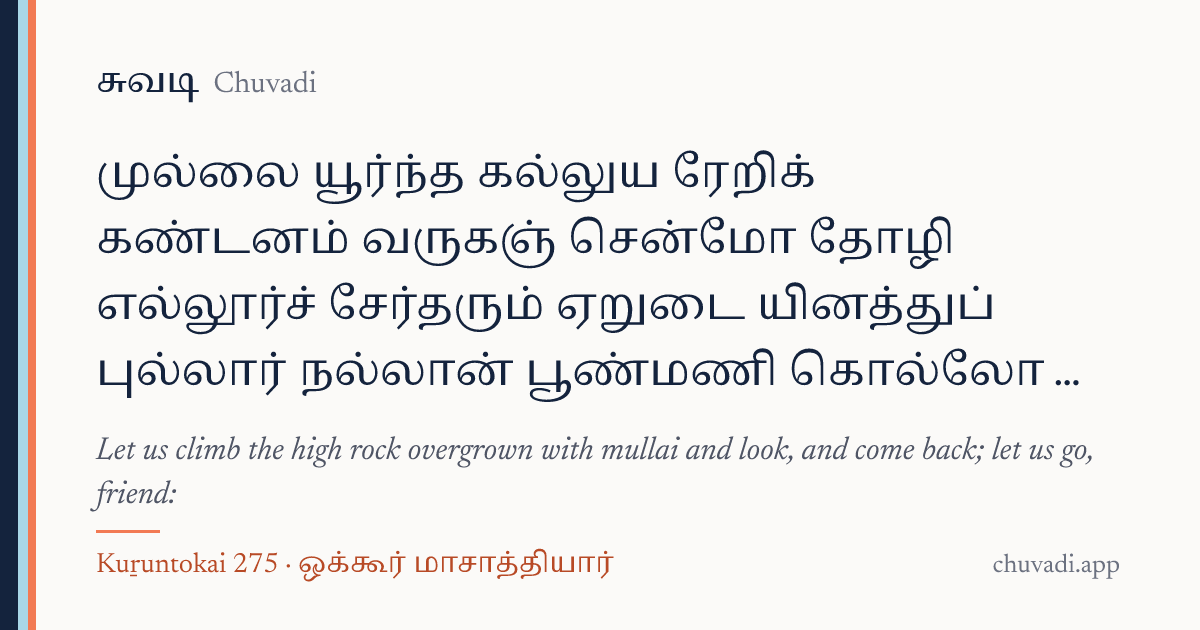

குறுந்தொகை 275
பாடல் · The poem
Tap a word to see where else it occurs.
பொருள் · Meaning in TamilAI
தோழி! முல்லைக்கொடி படர்ந்த உயர்ந்த பாறைமேல் ஏறிப் பார்த்துவிட்டு வருவோம், போவோம். பொழுது சாயும்போது ஊரை அடையும், காளைகளோடு கூடிய பசுக்கூட்டத்தில், புல்லை வயிறார மேய்ந்த நல்ல பசுவின் கழுத்து மணியோசையோ இது? அல்லது, மேற்கொண்ட செயலை முடித்த பெருமித உள்ளத்தோடு, வலிய வில்லேந்திய இளைஞர்கள் பக்கத்தில் காத்துவர, ஈரமணல் நிறைந்த காட்டாற்று வழியாக வரும் அவருடைய தேரின் மணியோசையோ அங்கே ஒலித்தது?
முல்லைத் திணை; தோழி கூற்று. மாலையில் கேட்கும் மணியோசை வீடு திரும்பும் பசுவினுடையதா, தலைவனின் தேருடையதா என்று ஆவலோடும் ஐயத்தோடும் பாறைமேல் ஏறிப் பார்க்க அழைக்கிறாள். பாடல் அந்தக் கேள்வியிலேயே நின்றுவிடுகிறது. "செய்வினை முடித்த செம்மல் உள்ளமொடு" என்ற தொடர் இருநூற்றெழுபதாம் பாடலிலும் வருவதால் அது ஒரு மரபுத் தொடர் போலும்.
ஆங்கிலம் · English translationAI
Translation
- Let us climb the high rock overgrown with mullai
- and look, and come back; let us go, friend:
- is it the bell on the good cow, full of grass,
- from the herd with its bull that comes home to the village at dusk?
- or, with the proud heart of one whose task is finished,
- young men with strong bows guarding his side,
- coming along the wild stream with its wet sand,
- are those his chariot bells, that rang out there?
What the poem says
The heroine's friend speaks in mullai, the forest and pasture land where women wait through the rains for their husbands. At dusk a bell can be heard. It might be a cow's bell as the herd comes home, or it might be the bell of the hero's chariot, returning with his work done and his archers riding beside him.
The friend's suggestion that they climb a rock covered in mullai creeper to look is full of eagerness, though also of uncertainty. The poem stops on the question and never says which bell it is. Dusk, cattle and returning chariots are the standard signs of the mullai landscape.
The poet, Okkūr Mācāttiyār, is one of the women poets of the anthologies. The line about the returning hero with a "proud heart" whose task is done is also found in poem 270, which suggests it was a set phrase.