




குறுந்தொகை 292
பாடல் · The poem
Tap a word to see where else it occurs.
பொருள் · Meaning in TamilAI
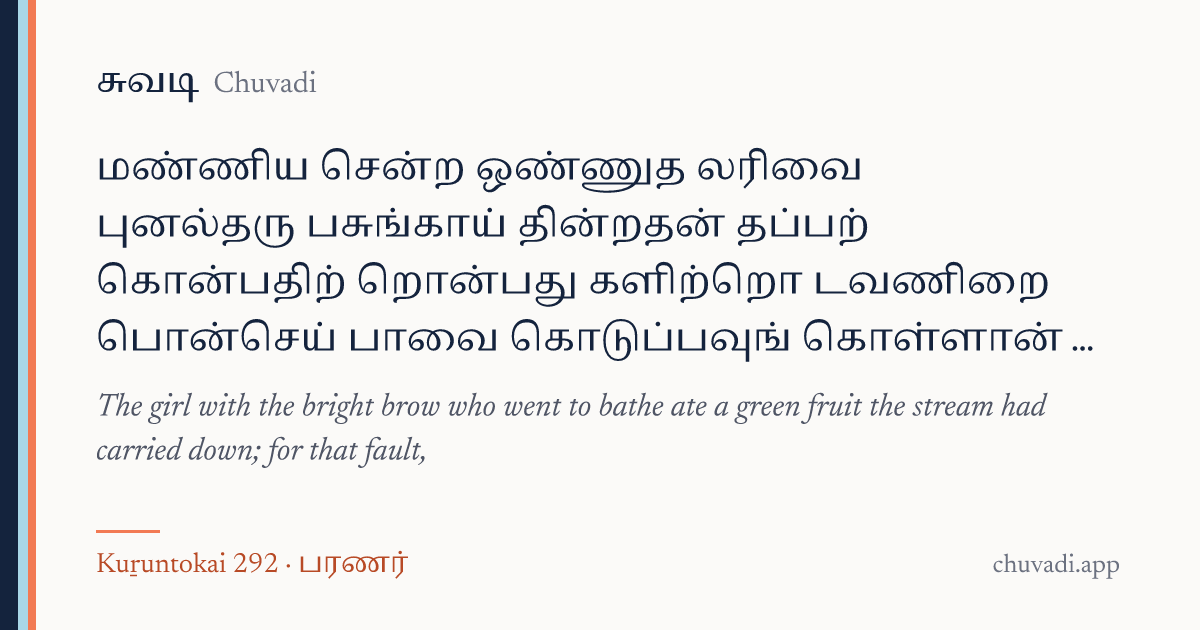
நீராடச் சென்ற ஒளிரும் நெற்றியுடைய இளம்பெண், ஆற்று நீர் அடித்துக் கொண்டுவந்த பசிய மாங்காயைத் தின்றாள்; அந்தக் குற்றத்துக்காக, எண்பத்தொரு யானைகளோடு அவள் எடைக்கு நிகரான பொன்னால் செய்த பாவையையும் அவள் உறவினர் கொடுத்தும் ஏற்காமல், பெண்கொலை புரிந்தான் நன்னன். அவனைப் போலவே எம் அன்னையும் எல்லையில்லாத நரகத்துக்குச் செல்வாளாக! ஒருநாள் நகைமுகத்தோடு ஒரு விருந்தினன் வந்தான் என்பதற்காக, பகைவரை எதிர்நோக்கும் ஊர்போல அவள் இரவெல்லாம் உறங்குவதே இல்லை.
குறிஞ்சித் திணை; தோழி கூற்று. தலைவன் விருந்தினனாக வீட்டுக்கு வந்த பின் ஐயம் கொண்ட தாய், முற்றுகையிடப்பட்ட ஊர்போல இரவெல்லாம் விழித்துக் காவல் காக்கிறாள்; அதனால் சந்திப்பு இயலவில்லை. பாடலே கூறும் நன்னனின் கொடுஞ்செயலோடு தாயை ஒப்பிடுவது வேண்டுமென்றே செய்த மிகை; விழிப்பான தாய்க்கும் பெண்கொலை செய்த கொடுங்கோலனுக்கும் உள்ள பொருத்தமின்மையிலேயே நகைச்சுவை உள்ளது.
ஆங்கிலம் · English translationAI
Translation
- The girl with the bright brow who went to bathe
- ate a green fruit the stream had carried down; for that fault,
- though they offered eighty-one elephants and, of her weight,
- a doll made of gold, he would not take it —
- like Naṉṉaṉ, who carried out the killing of a woman,
- may she go to a hell without end, our mother!
- because one day a guest came with a smiling face,
- like a town that faces its enemy, she does not sleep at all.
What the poem says
The friend speaks in kuṟiñci, furious with the heroine's mother, who has grown suspicious since the hero came to the house as a smiling visitor. Now the mother stays awake all night like a town under siege, which makes any meeting impossible.
The curse alludes to a story told in several Sangam poems. A chieftain named Naṉṉaṉ had a guarded mango tree. A young girl bathing in the river ate a fruit from it that the water had carried down, and Naṉṉaṉ had her put to death. He refused even the ransom her family offered: eighty-one elephants and a golden statue of her own weight. He became a byword for cruelty, and the friend wishes the same hell on the mother.
The curse is plainly exaggerated, and part of the humour lies in the mismatch between a watchful mother and a tyrant who killed a girl. The poet is Paraṇar, who refers to Naṉṉaṉ elsewhere too.