




குறுந்தொகை 293
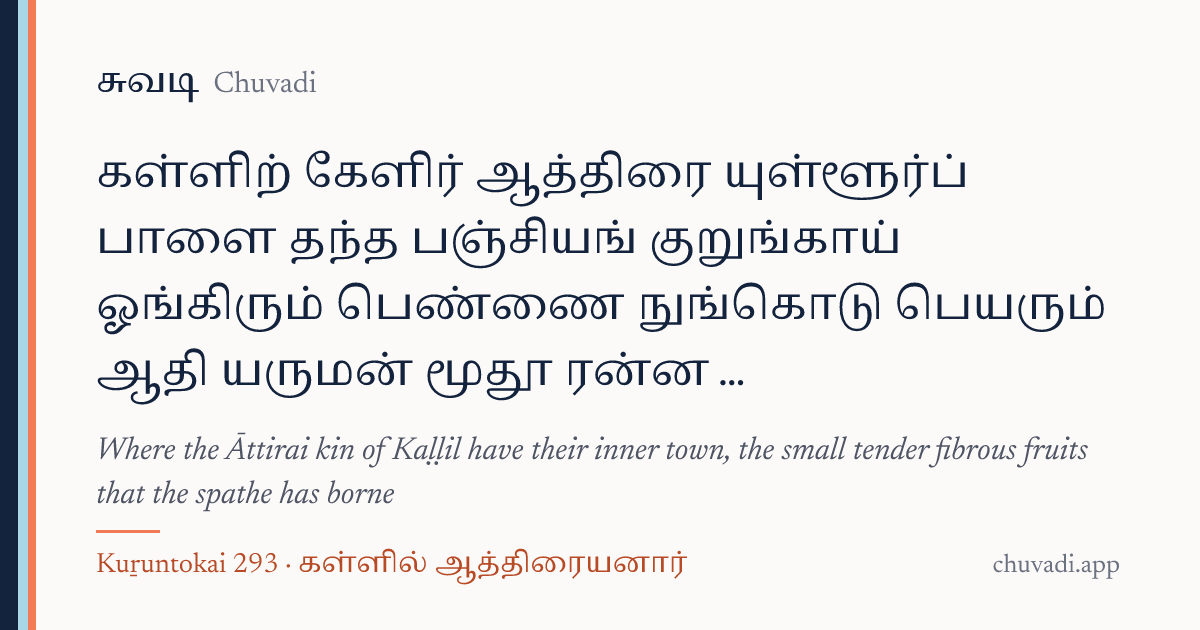
பாடல் · The poem
Tap a word to see where else it occurs.
பொருள் · Meaning in TamilAI
கள்ளில் என்னும் ஊரின் ஆத்திரைக் குடியினர் வாழும் உள்ளூரில், உயர்ந்த கரிய பனைமரங்களின் பாளை தந்த நாருடைய சிறிய இளங்காய்களை நுங்கோடு மக்கள் சுமந்து செல்வர். அத்தகைய ஆதி அருமனின் பழைய ஊர் போன்றவள் அவள். குளத்தில் வளர்ந்த வெள்ளாம்பல் மலரால் செய்த, அழகு மாறுபட்டு விளங்கும் மடிப்புடைய தழையாடை, தேமல் படர்ந்த அவள் தொடைகளில் மாறிமாறி மோத, செவ்விய அணிகலன் அணிந்த அவள் அந்த இடத்துக்குத் தன் "கணவனைக்" காண வருகிறாள். நான் இரங்கத்தக்கவள்!
மருதத் திணை; தலைவி கூற்று. தழையாடை அணிந்து தன் கணவனைத் தன்னுடையவன் போலக் காண வரும் பரத்தையைக் கண்டு தலைவி வருந்துகிறாள்; "கொழுநன்" என்ற சொல்லில் கசப்பு உண்டு. பரத்தையை ஆதி அருமனின் வளமான ஊருக்கு ஒப்பிட்டு அவள் அழகை ஒப்புக்கொள்வதே தலைவிக்கு வலி தருகிறது. முதல் அடியின் அமைப்பும், "கள்ளில்", "ஆத்திரை" என்பவை ஊர்ப்பெயரா குடிப்பெயரா என்பதும் உறுதியில்லை; ஆதி அருமனைப் பற்றி இப்பாடலுக்கு மேல் உறுதியாக எதுவும் தெரியவில்லை.
ஆங்கிலம் · English translationAI
Translation
- Where the Āttirai kin of Kaḷḷil have their inner town,
- the small tender fibrous fruits that the spathe has borne
- people carry home with the nuṅku from the tall dark palmyras —
- like the old town of Āti Aruman,
- her lovely leaf-skirt of pond-grown white āmpal, pleated, in bright contrast,
- beating by turns against her spotted thighs,
- she comes, the woman of red jewels, to that place,
- to see her husband; how wretched I am.
What the poem says
The heroine speaks in marutam, the tiṇai of the husband's infidelity. She sees, or imagines, another woman, a rival or courtesan, coming boldly to see "her husband" in a fresh leaf-skirt of white water-lilies that swings against her thighs. The phrase is bitter: the rival treats the heroine's husband as her own.
The first four lines compare the rival to the rich old town of a chieftain named Āti Aruman, in a palmyra country where people come home loaded with tender palm fruit (nuṅku). The comparison concedes the rival's beauty and abundance, and the heroine's last words, "how wretched I am", show how much that concession costs her.
The first line is obscure. Kaḷḷil and Āttirai appear to be names, of a place and a family or village, and the poet's name, Kaḷḷil Āttiraiyaṉār, is taken from them, but the construction and the reference are uncertain. Nothing reliable is known of Āti Aruman beyond this mention.