




குறுந்தொகை 294
பாடல் · The poem
Tap a word to see where else it occurs.
பொருள் · Meaning in TamilAI
கடலில் ஒன்றாக நீராடியும், கடற்கரைச் சோலையில் தங்கியும், மாலை அணிந்த தோழியர் கூட்டத்தோடு கைகோத்துத் தழூஉ ஆடியும் இருந்தபோது, அயலான் போல அவன் திடீரென்று வந்தான். அவளைத் தழுவிவிட்டுப் போயிருந்தால் அலர் மட்டுமே எழுந்திருக்கும். ஆனால், தேமல் படர்ந்த, பாம்பின் படம் போல அகன்ற அவள் இடையில், திருந்திய அணிகளோடு அசையும் கிளைகளிலிருந்து கொய்த பசிய தழையாடையைவிட நெருக்கமாக அவளருகிலிருந்து அவன் நீங்குவதில்லை. அந்தத் தழையை அவனே தந்தான்; அன்னை காத்தது பயனற்றுப் போயிற்று.
நெய்தல் திணை; தோழி கூற்று. தலைவன் தந்த தழையாடை காதலின் உறுதிக்கான அடையாளம்; எனவே இது தற்செயலான சந்திப்பு அன்று, உறுதியான உறவு என்று தோழி வீட்டார் அறியும்படி சொல்கிறாள் (அல்லது தலைவன் கேட்டு மணம் பேசும்படி). நான்காம் அடியும் இறுதி அடியும் உறுதியில்லை; இறுதி அடியைத் தாயின் காவலைக் கேலி செய்வதாகவோ, தாய் தடுக்கும் முன்பே பரிசு கொடுக்கப்பட்டது என்பதாகவோ கொள்ளலாம்.
ஆங்கிலம் · English translationAI
Translation
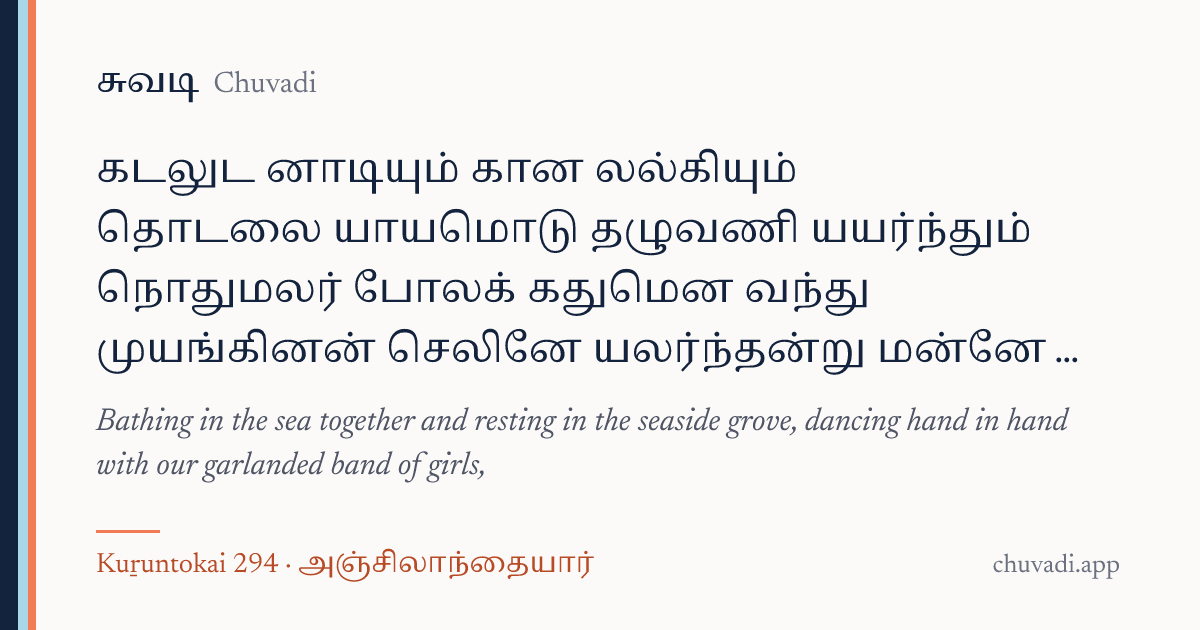
- Bathing in the sea together and resting in the seaside grove,
- dancing hand in hand with our garlanded band of girls,
- like a stranger he came upon us suddenly;
- had he only embraced her and gone, there would have been gossip, that is all;
- but on her mound, wide as a snake's hood and spread with spots,
- the fresh-leaved skirt, made from swaying branches, finely ornamented —
- closer even than that skirt, he will not leave her side;
- he gave it himself; so much for mother's watching and guarding.
What the poem says
The friend speaks in neytal, the seashore. The girls were bathing and dancing on the beach when the hero arrived as if he were a stranger. The friend's point is that this was no passing encounter. He gave the heroine a leaf-skirt (taḻai) with his own hands, and he stays as close to her as that skirt.
In Sangam custom the gift of a leaf-skirt from a man to a girl was a token of love and commitment. The friend is probably speaking so that the family will understand the attachment is serious, or so that the hero will hear and act on it. All the mother's watchfulness, she says, has been for nothing.
The fourth and eighth lines are uncertain. Alarntaṉṟu maṉṉē can mean "gossip would have blossomed" or "it would have stayed mere gossip", and the last line may be read either as mockery of the mother's guarding or as a statement that the gift came before the mother could prevent it.