



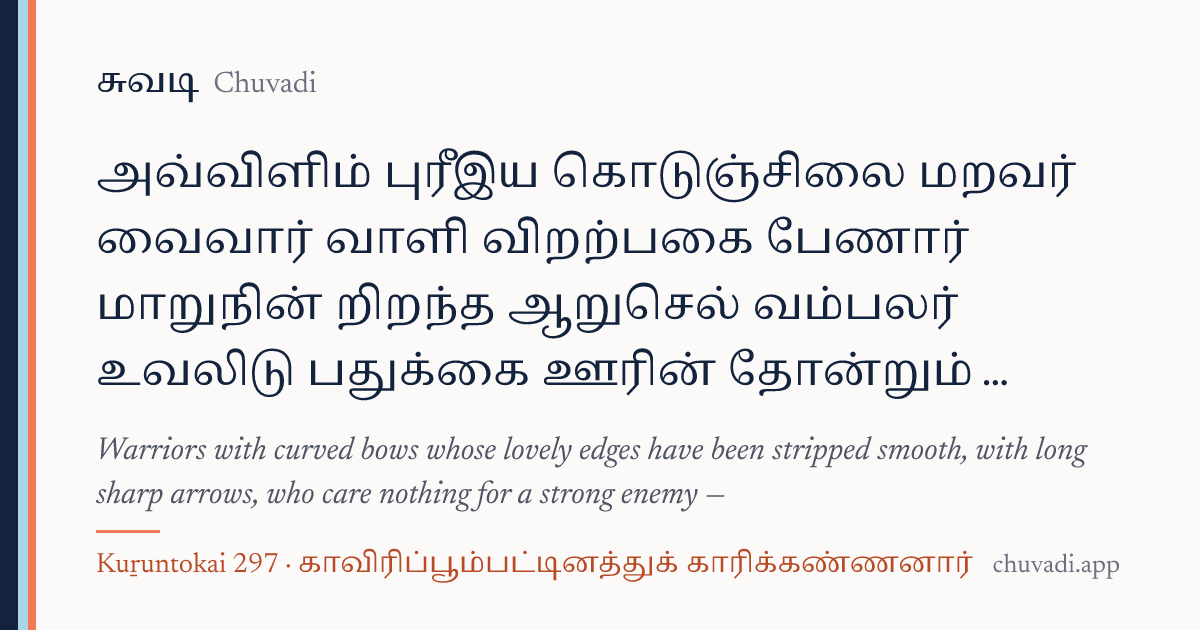

குறுந்தொகை 297
பாடல் · The poem
Tap a word to see where else it occurs.
பொருள் · Meaning in TamilAI
அழகிய விளிம்பைச் சீவி மெருகேற்றிய வளைந்த வில்லும், நீண்ட கூரிய அம்புகளும் உடைய மறவர், வலிய பகையையும் பொருட்படுத்தாதவர். அவர்களை எதிர்த்து நின்று இறந்த வழிச்செல்லும் புதியவர்கள்மேல் தழைகளை இட்டு மூடிய கற்குவியல்கள் ஓர் ஊர்போலத் தோன்றும் கற்கள் உயர்ந்த அகன்ற பாலைவெளி அது. ஆயினும், நல்ல சொற்களைச் சொல்லி, அவரோடு சேர்ந்து உடன்செல்வதே தக்கது என்று, வீட்டார் அறிவதற்கு முன்பே நான் உறுதியாக உணர்ந்துகொண்டேன்.
குறிஞ்சித் திணை என வகுக்கப்பட்டது; தோழி கூற்று. உடன்போக்கு வழியில் கள்வரால் கொல்லப்பட்டோரின் பதுக்கைகள் ஊர்போல நிறைந்திருந்தாலும், வீட்டார் அறியும் முன்பே தலைவி தலைவனோடு செல்வதே சரி என்று தோழி முடிவு செய்கிறாள்; வழியின் அச்சத்துக்கு எதிரே அவள் உறுதி துணிவாகத் தோன்றுகிறது. ஐந்தாம் அடியின் "நல்ல கூறி" என்பது தலைவனிடம் நல்லன சொல்லியோ, நன்னிமித்தம் கூறியோ எனப் பொருள் உறுதியில்லை.
ஆங்கிலம் · English translationAI
Translation
- Warriors with curved bows whose lovely edges have been stripped smooth,
- with long sharp arrows, who care nothing for a strong enemy —
- the travellers who stood against them and died on the road,
- the cairns heaped with leaves over them look like a village
- in that wide rocky waste; telling him words of good omen,
- that to join him and go together is the right course,
- I have surely come to know, before they come to know it.
What the poem says
The friend speaks in the context of elopement (uṭaṉpōkku). The road the lovers would take is terrible: bandits with bows and arrows lie in wait, and the stone heaps covered with leaves over murdered travellers are so many that they look like a village. Even so, the friend has decided that the heroine must go with the hero before her family discovers the affair.
The cairns (patukkai) over the bodies of those killed on the road were a real feature of Sangam-age travel, and they appear often in pālai poetry. Setting them against the friend's resolve makes her advice seem brave rather than reckless.
The fifth line is uncertain. Nalla kūṟi may mean speaking kind words to the hero, encouraging the plan, or reading good omens; it is rendered here as "words of good omen". The colophon assigns the poem to kuṟiñci, though its subject is close to pālai. The poet is Kārikkaṇṇaṉār of Kāvirippūmpaṭṭiṉam, the Cōḻa port.