



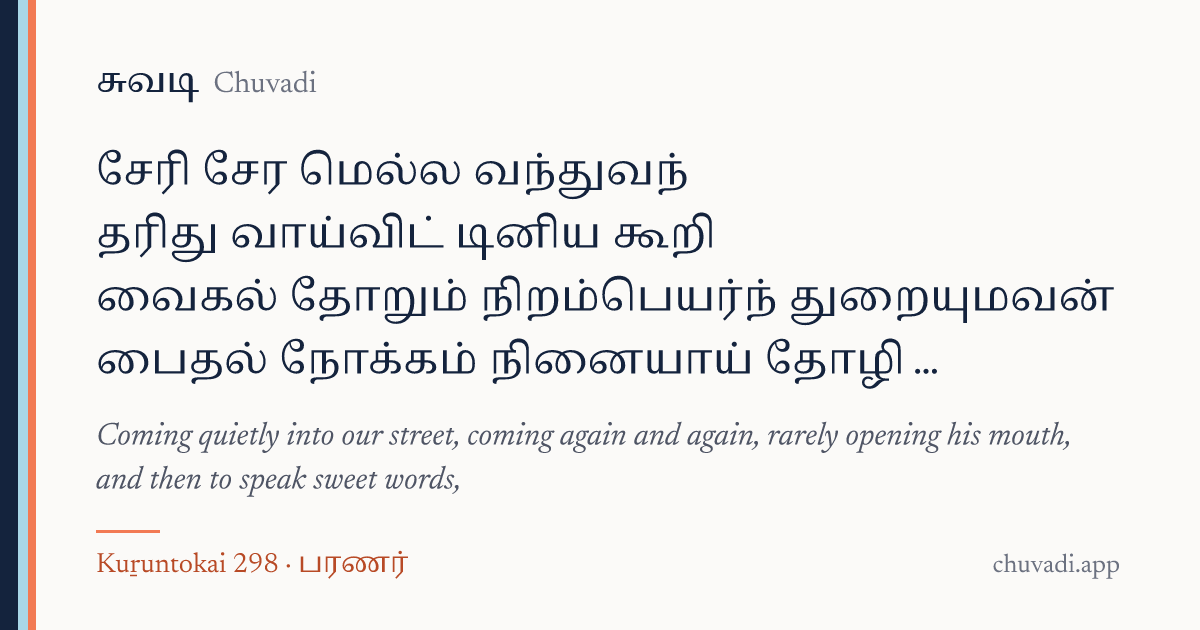

குறுந்தொகை 298
பாடல் · The poem
Tap a word to see where else it occurs.
பொருள் · Meaning in TamilAI
எம் தெருவுக்கு மெல்ல மெல்ல மீண்டும் மீண்டும் வந்து, அரிதாகவே வாய் திறந்து, அப்போதும் இனிய சொற்களையே சொல்லி, நாள்தோறும் நிறம் மாறி இங்கேயே தங்குகிறான். அவனுடைய வருத்தம் தோய்ந்த பார்வையை நீ நினைக்கவில்லையா, தோழி? இனிய கடுமையான கள்ளை உடைய அகுதையின் தந்தையிடம், வெண்முனையுடைய சிறுகோல் ஏந்திய அகவன் மகளிர் இளம்பெண்யானைகளைப் பரிசிலாகப் பெறக் காத்து நிற்பது போல, அவன் நெடுநேரம் வெளியே நிற்பதும் வேறொன்றைக் குறித்தே.
குறிஞ்சித் திணை; தோழி தலைவிக்குக் கூறியது. தெருவில் காத்து நின்று வாடும் தலைவனுக்காகத் தோழி பரிந்து பேசி, அவனை ஏற்குமாறு தலைவியை வேண்டுகிறாள். வள்ளலின் வாயிலில் பரிசிலுக்காகக் காத்திருக்கும் அகவன் மகளிரைப் போல, அவன் எதிர்பார்க்கும் பரிசு தலைவியே. "அகுதை தந்தை" ஒருவரா இருவரா என்பதும், அகவன் மகளிரின் பணி என்ன என்பதும் உறுதியாகத் தெரியவில்லை.
ஆங்கிலம் · English translationAI
Translation
- Coming quietly into our street, coming again and again,
- rarely opening his mouth, and then to speak sweet words,
- day after day he stays on, his colour fading; his
- sad look — do you not think of it, friend?
- From Akutai's father, with his sweet strong toddy,
- like the women singers with small white-tipped staffs
- waiting for a gift of young she-elephants,
- it means something else, his long standing outside.
What the poem says
The friend speaks to the heroine in kuṟiñci on behalf of the hero. He keeps coming to their street, hardly speaks, looks pale and sad, and waits outside for hours. The friend asks the heroine to take pity on him and accept his love.
The comparison is with a group of women singers, holding small white-tipped staffs, who wait at the gate of a famously generous patron in hope of a gift of young elephants. The hero, too, is not standing about idly; he is waiting for a gift, and the gift he hopes for is the heroine herself.
The patron is named Akutai, or Akutai's father; Akutai is a generous chieftain mentioned in other poems, but the phrase akutai tantai could also be read as "Akutai who gave", so it is uncertain whether one man or two is meant. The akavaṉ makaḷir seem to be women who sang or recited in the akaval measure, perhaps diviners, and their exact role is not clear. The poet is Paraṇar.