



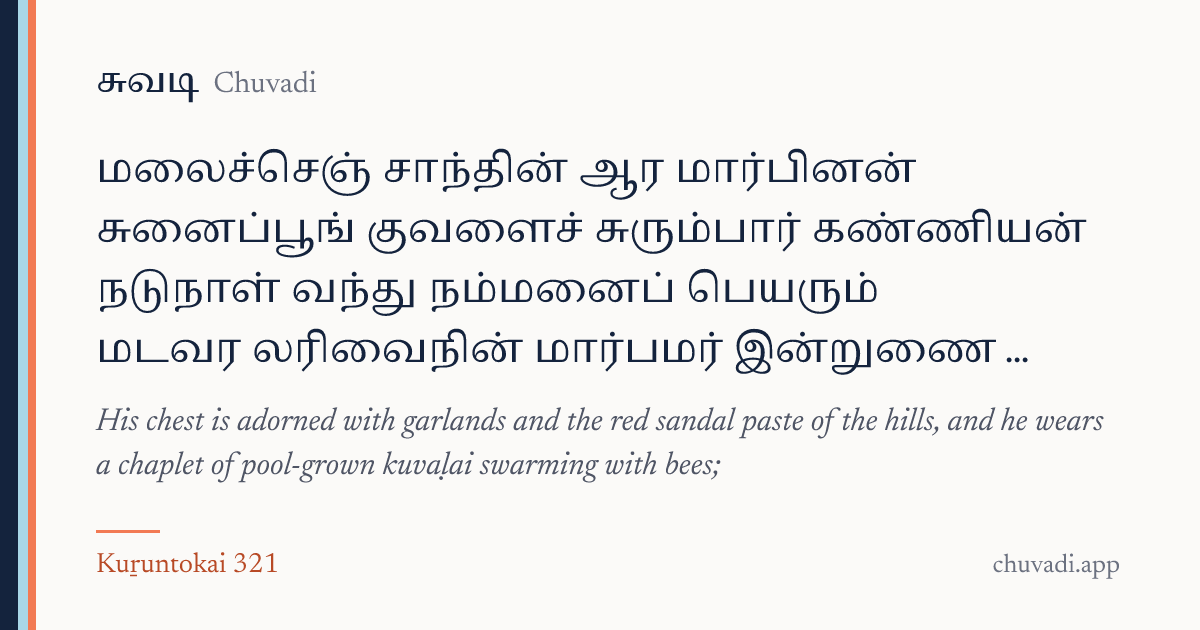

குறுந்தொகை 321
பாடல் · The poem
Tap a word to see where else it occurs.
பொருள் · Meaning in TamilAI
மலையில் விளையும் செஞ்சந்தனம் பூசி, மாலை அணிந்த மார்பை உடையவன்; சுனையில் பூத்த குவளை மலர்களால் ஆன, வண்டுகள் மொய்க்கும் தலைமாலையைச் சூடியவன்; நள்ளிரவில் வந்து நம் வீட்டிலிருந்து திரும்பிச் செல்பவன் அவன். இளமையும் மென்மையும் உடைய பெண்ணே! அவன் உன் மார்பில் விரும்பி அமரும் இனிய துணை. ஊர்ப் பொதுவிடத்தில் மரை ஆவினம் அஞ்சி ஓடும்படி அதன் காளையைக் கொன்று, சிவந்த கண்களை உடைய பெரிய புலி கூட்டமாக முழங்குகிறது. ஆகவே இது இனியும் மறைத்து வைக்கும் காலம் அன்று. அன்னையே, நீ வாழ்க! நீ விரும்பினால், நம் கதவைத் திறந்துவிடுவேன்.
குறிஞ்சித் திணை; தோழி கூற்று. இரவில் புலி திரியும் வழியில் தலைவன் உயிரைப் பணயம் வைத்து வருவதால், களவை இனி மறைக்கக் கூடாது என்று தோழி முடிவு செய்கிறாள். ‘கதவைத் திறப்பேன்’ என்பது காதலை வீட்டாருக்கு வெளிப்படுத்தி, மணத்துக்கு வழி செய்வதைக் குறிக்கிறது; இது அறத்தொடு நிற்றல் எனப்படும். நான்காம் அடியில் யாரை நோக்கிப் பேசுகிறாள் என்பது உறுதியாகத் தெரியவில்லை; புலவர் பெயரும் கிடைக்கவில்லை.
ஆங்கிலம் · English translationAI
Translation
- His chest is adorned with garlands and the red sandal paste of the hills,
- and he wears a chaplet of pool-grown kuvaḷai swarming with bees;
- he comes at midnight and goes back from our house —
- the dear companion, gentle girl, who rests upon your breast.
- In the common ground, scattering the marai herd and killing the bull,
- the red-eyed great tiger roars with its kind; and so
- this is no longer a time for hiding;
- I will open our door — long life to you — if you wish it, mother.
What the poem says
The friend speaks in kuṟiñci, the hill mode of secret love. She describes the hero who visits the heroine at midnight, his chest fragrant with sandal paste from the hills and his head crowned with blue kuvaḷai flowers from the mountain pools. She seems to address the heroine first, calling him her dear companion.
Then the danger of the night road comes in. A tiger has killed a marai bull in the village common and scattered the herd, and its roaring shows that the hero risks his life every time he comes. The friend therefore decides that secrecy can no longer continue.
The last line turns to the mother. 'I will open our door' seems to mean that she will now reveal the affair to the family, so that the lovers can be openly married and the night visits can end. This is the convention called aṟattoṭu niṟṟal, the friend's disclosure of the heroine's love. Who exactly is addressed in line 4 is not certain.