



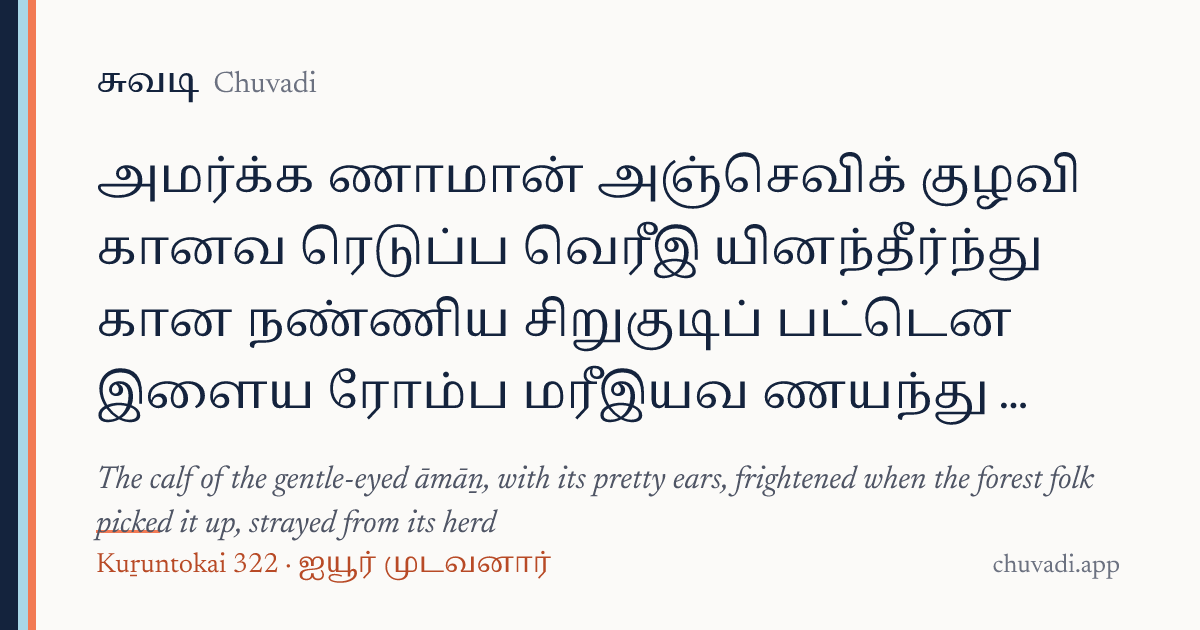

குறுந்தொகை 322
பாடல் · The poem
Tap a word to see where else it occurs.
பொருள் · Meaning in TamilAI
அமைதியான கண்களையும் அழகிய காதுகளையும் உடைய ஆமா என்னும் காட்டுப்பசுவின் கன்று, காட்டில் வாழும் கானவர் தூக்கிச் சென்றதால் அஞ்சி, தன் கூட்டத்தைப் பிரிந்து, காட்டை ஒட்டிய சிறிய குடியிருப்பில் வந்து சேர்ந்தது. அங்குள்ள இளையவர்கள் அதைப் பேணி வளர்க்க, அது அவர்களோடு பழகி, அந்த இடத்தை விரும்பி, வீட்டில் வாழும் வாழ்க்கைக்குப் பழகிவிட்டது. அதுபோல, பழகி நெருங்கிய இடத்தைவிட இனியது வேறு உண்டோ? தோழி, நம்மால் இயன்றவாறு நடந்து நாம் செல்வோம்.
குறிஞ்சித் திணை; தலைவனோடு உடன்போக்குச் செல்லத் துணிந்த தலைவி தோழியிடம் கூறுவது. புதிய இடத்தில் எப்படிப் பொருந்தி வாழ்வாள் என்ற அச்சத்துக்கு, கானவர் வீட்டில் பழகிவிட்ட ஆமான் கன்றை எடுத்துக்காட்டாகக் காட்டி விடை தருகிறாள். பழகியதே இனிமையாகும் என்பது பாடலின் கருத்து. இறுதி அடியில் ‘செல்வாம்’ என்பது தோழியையும் உடன் அழைப்பதா என்பது தெளிவாக இல்லை.
ஆங்கிலம் · English translationAI
Translation
- The calf of the gentle-eyed āmāṉ, with its pretty ears,
- frightened when the forest folk picked it up, strayed from its herd
- and came into the little hamlet near the forest;
- the children tended it, it grew used to them and came to love that place,
- and settled into a life spent dwelling at home — just so,
- is there anything sweeter than the place one grows close to?
- Let us go, friend, walking as best we can.
What the poem says
The heroine speaks to her friend. She has decided to elope with the hero and leave her family's home for his, and she answers the fear that she will never settle in a strange place.
Her example is a wild calf of the āmāṉ, a kind of forest cattle. Hill people carried it off, and it was terrified and lost its herd. Yet once the young people of the hamlet looked after it, it grew fond of them and learned to live as a household animal. She will do the same: whatever becomes familiar and dear becomes sweet.
The final line, 'let us go, walking as we can', accepts the hardship of the journey. In some readings the friend is to come with her, while in others 'us' means the heroine and the hero. The poet Aiyūr Muṭavaṉār is known from several Sangam poems.