



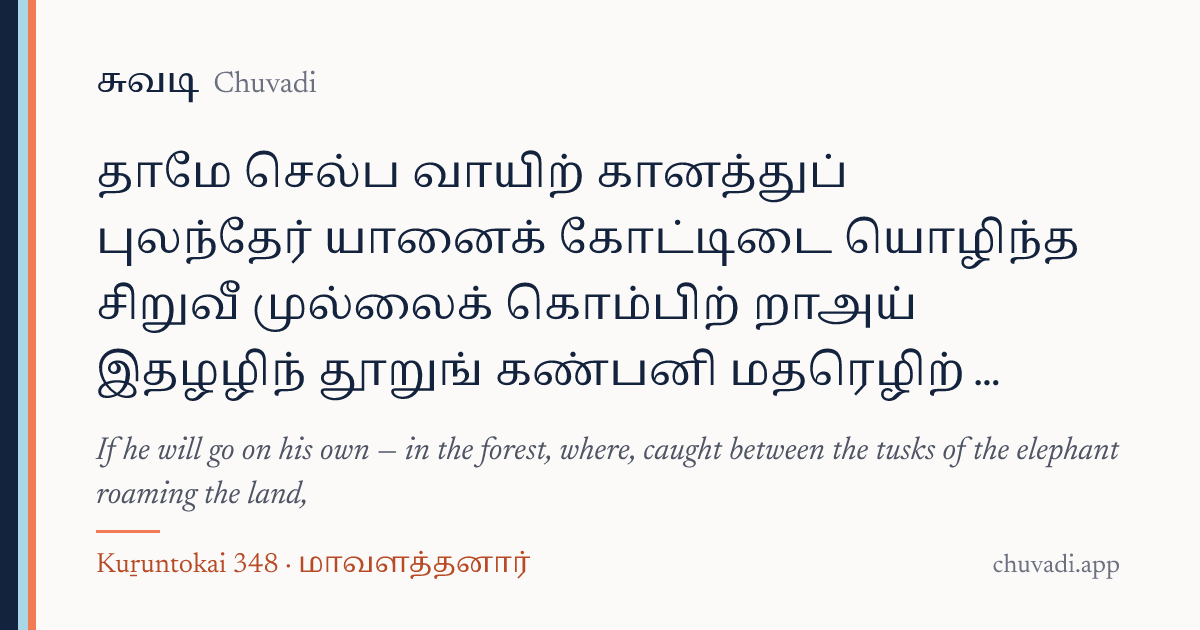

குறுந்தொகை 348
பாடல் · The poem
Tap a word to see where else it occurs.
பொருள் · Meaning in TamilAI
சிறந்த அணிகலன்களை அணிந்தவளே! காட்டில் உணவு தேடித் திரியும் யானையின் தந்தங்களுக்கு இடையே சிக்கிய, சிறிய பூக்களை உடைய முல்லைக் கொடி உதிர்ந்து சிதறிக் கிடக்கும் வழியில், அவர் தாமே தனியாகப் போகப் போகிறார் என்றால், இமைகள் வாடி வீங்கிய உன் கண்களிலிருந்து ஊறும் கண்ணீர், செருக்கும் அழகும் உடைய, அணிகலன் அணிந்த உன் அழகிய முலைகளை நனைப்பதை நம்மவர் காணமாட்டாரோ?
பாலைத் திணை; பொருள்தேடத் தனியே பிரியப் போகும் தலைவனைப் பற்றித் தோழி தலைவியிடம் கூறுவது. யானையால் பிடுங்கப்பட்டு உதிர்ந்த முல்லைப் பூக்கள், அவன் பிரிவால் சிதையும் தலைவியையும் உதிரும் அவள் கண்ணீரையும் குறிக்கின்றன. அவள் அழுகையைக் கண்டால் அவர் போகமாட்டார் என்ற நம்பிக்கையும் இந்த வினாவில் தொனிக்கிறது.
ஆங்கிலம் · English translationAI
Translation
- If he will go on his own — in the forest,
- where, caught between the tusks of the elephant roaming the land,
- the small-flowered mullai is strewn from its stem —
- the tears that well from your eyes, their lids grown worn, drenching
- your proud, lovely breasts beneath their ornaments:
- will he not see these, our man, O you of fine jewels?
What the poem says
The friend speaks to the heroine in pālai. The hero is preparing to set off alone through the forest, and the friend wonders whether he will not even notice the heroine's tears before he goes. They stream from her swollen eyes onto her breasts and jewellery.
The forest picture is set alongside the tears. An elephant feeding its way across the land has torn up a mullai vine, and the little flowers caught between its tusks fall scattered on the ground. Like those scattered flowers, the tears fall, and like the trampled vine, the heroine is hurt by a force that hardly notices her.
'Our man' is an affectionate, slightly ironic way of referring to the hero. The arrangement of the image across lines 2 to 4 is loose, and the comparison could also be read as the crushed flower standing for the heroine herself rather than for her tears.