



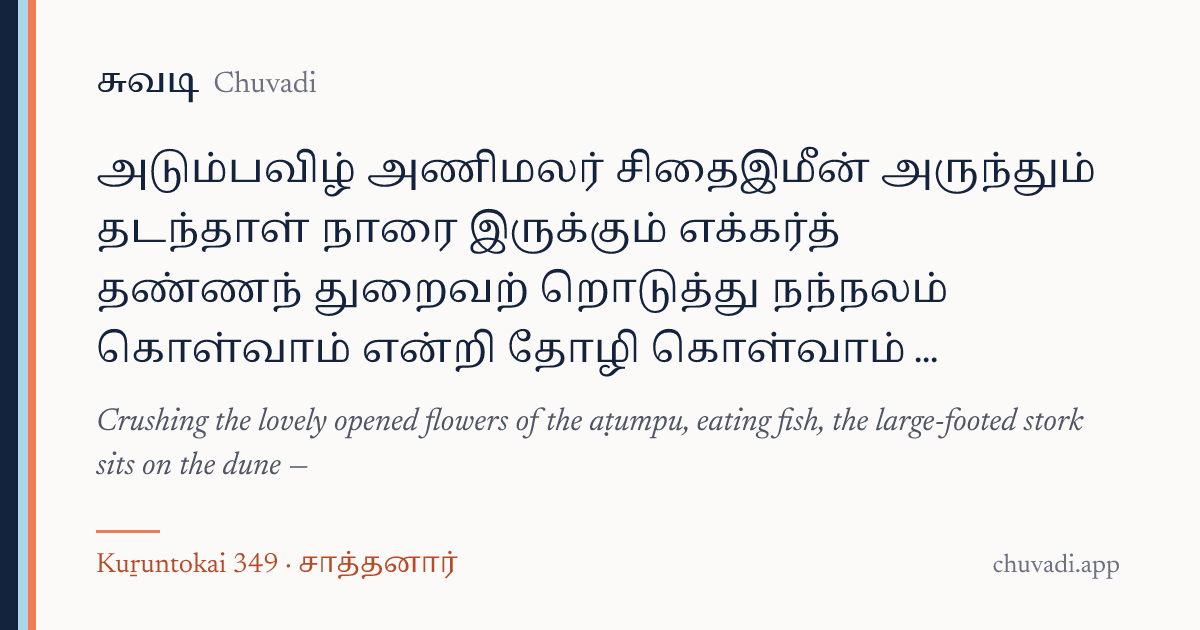

குறுந்தொகை 349
பாடல் · The poem
Tap a word to see where else it occurs.
பொருள் · Meaning in TamilAI
தோழி! அடும்புக் கொடியில் மலர்ந்த அழகிய பூக்களைச் சிதைத்துக்கொண்டு மீனை உண்ணும் பெரிய கால்களை உடைய நாரை தங்கியிருக்கும் மணல்மேட்டை உடைய குளிர்ந்த அழகிய துறைவனைப் பற்றி இழுத்து, அவன் கொண்டுபோன நம் அழகை நாம் திரும்பப் பெறுவோம் என்கிறாய். பெறலாம்தான். ஆனால், துன்பத்துக்கு அஞ்சி இரந்து வந்தவர்கள் கேட்டதைக் கொடுத்துவிட்டு, ‘கொடுத்ததைத் திருப்பித் தா’ என்று சொல்வதைவிட, நம் இனிய உயிரை இழப்பது துன்பம் தருவதோ?
நெய்தல் திணை; தலைவனிடம் சென்று தலைவியின் இழந்த நலத்தைத் திருப்பிக் கேட்கலாம் என்ற தோழியின் யோசனைக்குத் தலைவி மறுமொழி தருவது. தானே மனமுவந்து கொடுத்ததைத் திரும்பக் கேட்பது இரந்தோர்க்குக் கொடுத்ததைத் திரும்பக் கேட்பது போன்ற இழிவு; அதைவிடச் சாவதே மேல் என்கிறாள். அடும்புப் பூக்களைச் சிதைத்து மீன் உண்ணும் நாரை, அவளுடைய நலத்தைச் சிதைத்து நுகர்ந்த தலைவனைக் குறிப்பாகக் காட்டும் உள்ளுறை.
ஆங்கிலம் · English translationAI
Translation
- Crushing the lovely opened flowers of the aṭumpu, eating fish,
- the large-footed stork sits on the dune —
- from that man of the cool, lovely shore, holding him to it, our beauty
- we shall take back, you say, friend. We shall take it back —
- but to those who begged, fearing distress, and received what they asked,
- to say, 'Give back what was given' — than that,
- is the loss of our sweet life more bitter?
What the poem says
The heroine replies to her friend, who has suggested that they confront the hero and demand back the beauty he took from her. In this poetry a woman's beauty is thought to fade when her lover neglects her, as if he had carried it off.
The heroine refuses with an argument from generosity. Her beauty was a gift freely given. Demanding it back would be like asking beggars who came in need to return what they had been given, and a person of honour would rather die than do that. Losing her life, she says, would be less bitter.
The opening image carries an implied meaning. The stork tramples the aṭumpu flowers on the dune while it hunts for fish, as the hero spoiled her beauty in pursuing his own pleasure. Some readers take her answer as ironic, but the plain sense is a proud refusal.