




குறுந்தொகை 355
பாடல் · The poem
Tap a word to see where else it occurs.
பொருள் · Meaning in TamilAI
உயர்ந்த மலையை உடையவனே! மழை உன் கண்களை மறைப்பதால் வானத்தைக் காண முடியாது; நீர் எங்கும் பரந்து ஓடுவதால் நிலத்தைக் காண முடியாது; பகல் கழிந்துவிட்டதால் இருள் மிகவும் அடர்ந்துவிட்டது. பலரும் உறங்கும் இந்த நள்ளிரவில் நீ எப்படி வந்தாய்? வேங்கை மலர் மணக்கும் எங்கள் சிறுகுடிக்கு வழியை எப்படி அறிந்தாய்? இதை எண்ணி நான் வருந்துகிறேன்.
குறிஞ்சித் திணை; புயல்மழையில் இரவுக்குறிக்கு வந்த தலைவனிடம் தோழி கூறுவது. மழை, வெள்ளம், இருள் என்று வழியின் ஆபத்துகளை அடுக்கி வியப்பும் கவலையும் வெளிப்படுத்துகிறாள். அவன் தலைவியை வெளிப்படையாக மணந்தால் இத்தகைய இடர் இல்லை என்பதே உட்கருத்து; ஆகவே இது வரைவு கடாதல்.
ஆங்கிலம் · English translationAI
Translation
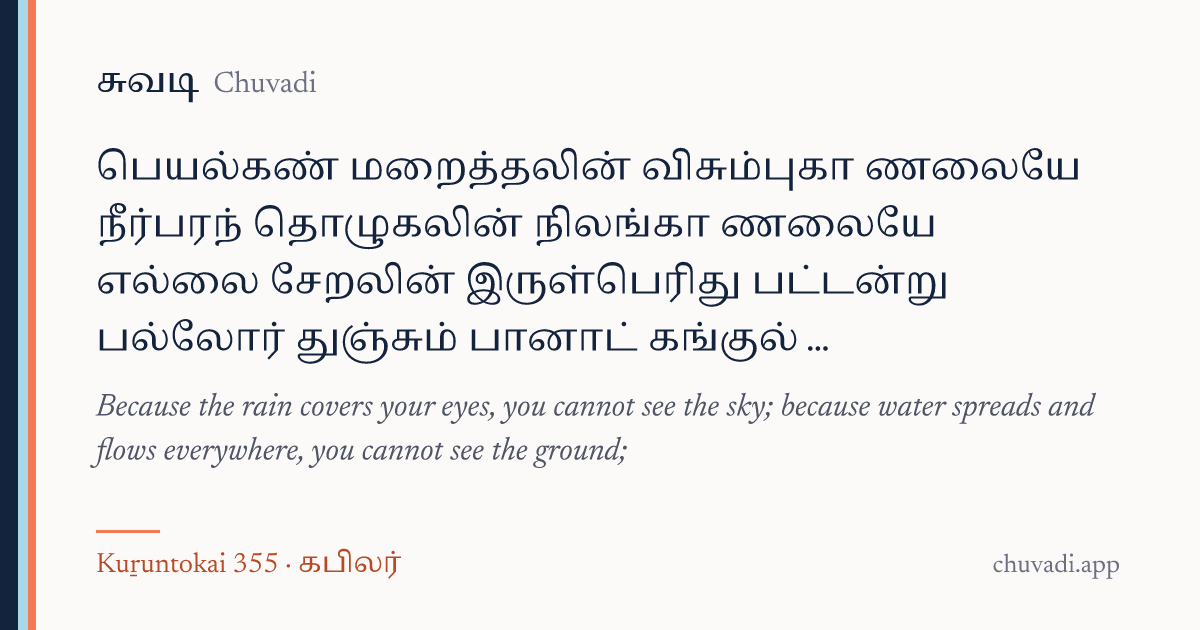
- Because the rain covers your eyes, you cannot see the sky;
- because water spreads and flows everywhere, you cannot see the ground;
- since the day has gone, the darkness has grown very deep;
- in the middle of the night, when everyone is asleep,
- how did you come here, man of the lofty mountain?
- Our little hamlet, fragrant with vēṅkai —
- how did you find your way to it? How I suffer for it!
What the poem says
Kapilar, the great poet of kuṟiñci, gives the friend's words to the hero, who has come to a night meeting through a storm. The friend piles up the dangers: rain in his eyes, water over the path, deep darkness, everyone else asleep.
On the surface this is wonder and concern. Underneath, it is an argument for marriage, as in many friend's speeches of this landscape. If the hero would only marry the heroine openly, he would not need to risk his life on mountain paths in the monsoon, and she would not need to lie awake fearing for him.
The vēṅkai tree, with its golden blossoms, marks the hill village. The final exclamation, 'how I suffer', speaks both for the friend and for the heroine. The danger to the hero has become their pain.