




குறுந்தொகை 386
பாடல் · The poem
Tap a word to see where else it occurs.
பொருள் · Meaning in TamilAI
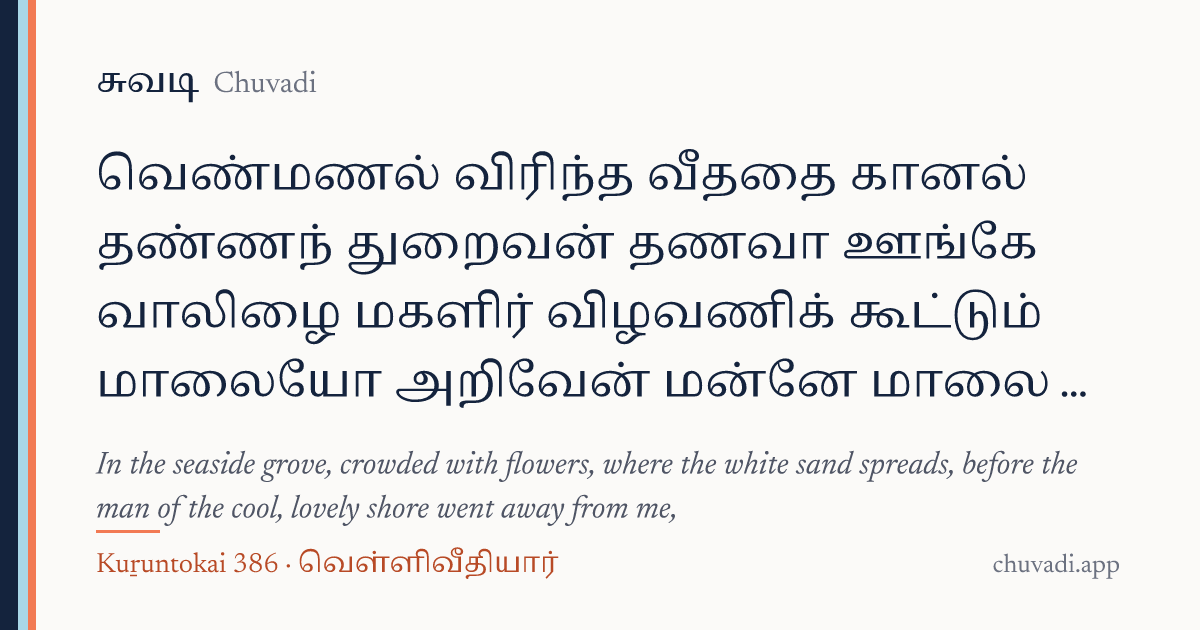
வெண்மணல் பரந்த, பூக்கள் நெருங்கிய கடற்கரைச் சோலையை உடைய குளிர்ந்த அழகிய துறைவன் என்னைப் பிரிவதற்கு முன்பு, ஒளிரும் அணிகலன்கள் அணிந்த பெண்கள் விழாக்கோலம் பூண்டு ஒன்றுகூடும் மாலைப்பொழுதை நான் அறிந்திருந்தேன். ஆனால், நிலம் முழுதும் பரந்தாற்போன்ற துயரத்தோடு மாலை தனிமை நிறைந்ததாக இருக்கும் என்பதை நான் அறியவில்லை.
நெய்தல் திணை; தலைவன் பிரிந்தபின் தலைவி தோழியிடம் கூறுவது. ஒரே மாலைப்பொழுது, தலைவன் அருகில் இருந்தபோது மகளிர் விழாக் கூடும் இனிய வேளையாகவும், பிரிந்தபின் நிலம் அளவு பரந்த துயர் தரும் வேளையாகவும் தோன்றுகிறது என்ற முரணே பாடலின் உயிர். இரண்டு மாலைகளின் ஒப்பீட்டால் பிரிவின் கொடுமையை எளிமையாக உணர்த்துகிறார் வெள்ளிவீதியார்.
ஆங்கிலம் · English translationAI
Translation
- In the seaside grove, crowded with flowers, where the white sand spreads,
- before the man of the cool, lovely shore went away from me,
- the evening that gathers bright-jewelled women in their festival finery —
- that evening I knew, it is true; but that an evening,
- with a sorrow as wide as the spreading of the earth,
- could be full of loneliness — that I never knew.
What the poem says
The heroine speaks, perhaps to her friend, after the hero of the seashore has left her. In neytal, evening is the hour of pining, and Veḷḷivītiyār, one of the best-known women poets of the anthology, builds the whole poem on two different evenings.
The first is the evening she knew before: the hour when the young women of the village put on their jewels and gather for festivities. The second is the one she has found now, filled with a grief as vast as the earth and with emptiness. It is the same hour of the day, but she lives it in a different world.
The poem's power lies in its simplicity. The repeated word mālai (evening) and the change from 'I knew' to 'I never knew' carry the meaning without any further image. The construction is close to that of poem 352, where the heroine also learns what evening really is only after separation.