




குறுந்தொகை 387
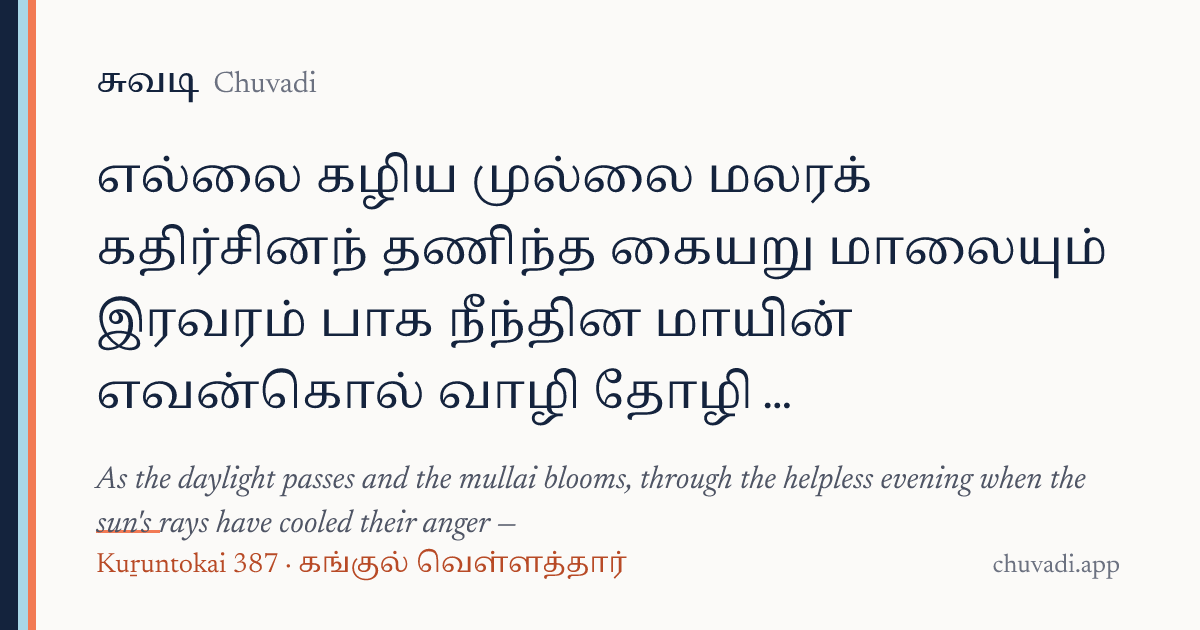
பாடல் · The poem
Tap a word to see where else it occurs.
பொருள் · Meaning in TamilAI
பகல்பொழுது கழிந்து முல்லை மலர, கதிரவனின் கதிர்கள் தம் சினம் தணிந்த, செய்வதறியாத துயர் தரும் மாலைப்பொழுதை, இரவையே மறுகரையாகக் கொண்டு நீந்திக் கடந்துவிட்டோம். அப்படிக் கடந்தாலும் என்ன பயன்? தோழி, நீ வாழ்க! இரவு என்னும் வெள்ளமோ கடலைவிடப் பெரியதாக இருக்கிறது.
முல்லைத் திணை; பிரிவுக்காலத்தில் தலைவி தோழியிடம் கூறுவது. மாலையை ஆழமான நீராகவும் இரவை அதன் மறுகரையாகவும் எண்ணி நீந்தி வந்தாள்; ஆனால் கரை என்று நினைத்த இரவே கடலைவிடப் பெரிய வெள்ளமாக இருக்கிறது. காத்திருப்பின் ஒவ்வொரு நிலையும் முந்தையதைவிடக் கொடியது என்பது கருத்து. ‘கங்குல் வெள்ளம்’ என்ற தொடராலேயே புலவர் கங்குல் வெள்ளத்தார் எனப் பெயர் பெற்றார்.
ஆங்கிலம் · English translationAI
Translation
- As the daylight passes and the mullai blooms,
- through the helpless evening when the sun's rays have cooled their anger —
- if we have swum across it, with the night as our far bank,
- what then, friend, may you live long?
- The flood of the night is greater than the sea.
What the poem says
The heroine speaks to her friend while her husband is away. This is mullai, the poetry of waiting, and its flower, the wild jasmine, opens as the day ends and as the heat of the sun fades.
The image is of swimming. She has struggled through the evening as through deep water, holding on to the thought that night would be the far shore. But when she reaches it, she finds that night is itself a flood, wider than the sea. Each stage of waiting is worse than the one before.
The poet is known only as Kaṅkul Veḷḷattār, 'the poet of the night's flood', after the last line of this poem. As with several Kuṟuntokai poets, the real name has been lost and a striking phrase has taken its place.