




குறுந்தொகை 388
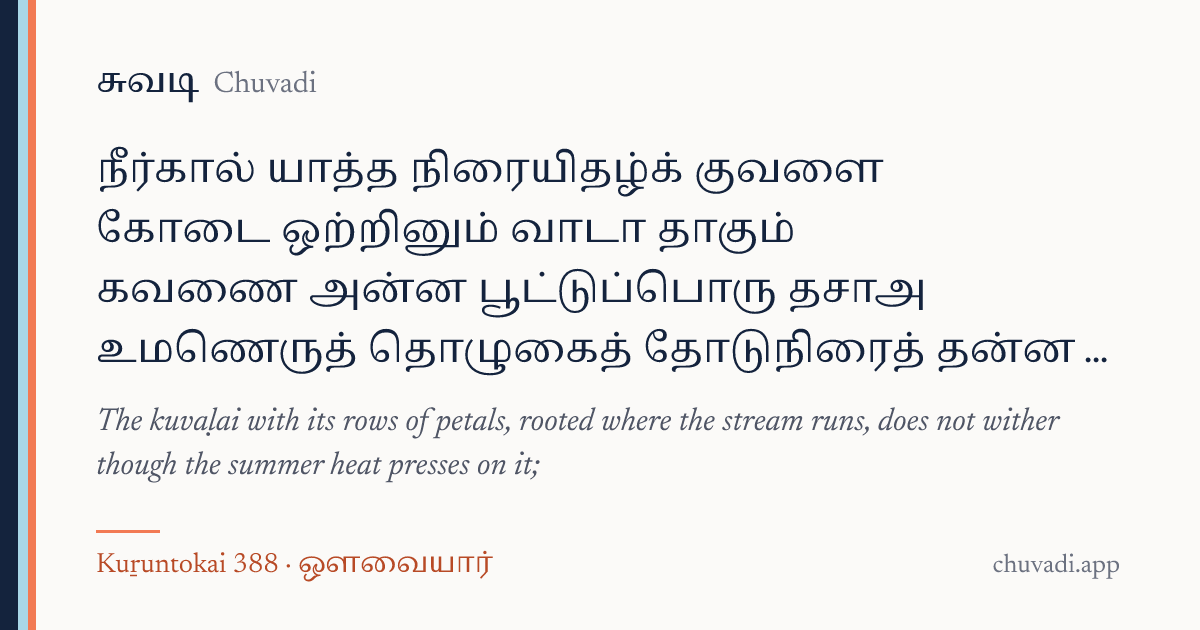
பாடல் · The poem
Tap a word to see where else it occurs.
பொருள் · Meaning in TamilAI
நீரோடும் இடத்தில் வேரூன்றிய, வரிசையான இதழ்களை உடைய குவளைமலர், கோடை வெயில் தாக்கினாலும் வாடுவதில்லை. கவண்போல இறுகக் கட்டிய நுகத்தடியில் சோர்வின்றி இழுக்கும் உப்பு வணிகரின் எருதுகள் பூட்டிய வண்டிகள் வரிசையாகச் செல்வதுபோல, காய்ந்த கிளைகளையும் முறிக்க முடியாத வலிமையின்மையால் யானைகள் துதிக்கையை மடக்கிக்கொண்டு வருந்தும் அந்தக் காடும், இவள் உங்களோடு வந்தால் இனிமையானதாகிவிடும்.
பாலைத் திணை; தலைவியைத் தன்னுடன் அழைத்துச் செல்லத் தயங்கும் தலைவனிடம் தோழி கூறுவது. ஓடும் நீரில் வேரூன்றிய குவளை கோடையில் வாடாததுபோல, தலைவனின் அன்பில் வேரூன்றிய தலைவியும் பாலைவழியில் வாடமாட்டாள் என்பது உவமை. யானைகளே சோர்ந்து நிற்கும் கொடிய காடும் அவனுடன் இருந்தால் இனிதாகும் என்கிறாள். உமணர் வண்டித்தொடர் உவமை எதை விளக்குகிறது என்பது சற்றுத் தெளிவில்லை; யானைகள் வரிசையாக நிற்பதைக் குறிக்கலாம்.
ஆங்கிலம் · English translationAI
Translation
- The kuvaḷai with its rows of petals, rooted where the stream runs,
- does not wither though the summer heat presses on it;
- like slings, straining unflagging at their yokes,
- the salt-traders' bullocks in their long lines of carts — like those,
- too spent to tear apart the dry branches,
- the elephants fold up their trunks and suffer;
- even that forest will be sweet, if she goes with you.
What the poem says
The friend speaks to the hero, who means to cross the wasteland and is reluctant to take the heroine. Auvaiyār gives the friend a two-part answer: the girl will not wilt, and the terrible forest will become sweet in his company.
The first image is the argument in brief. A blue water-lily (kuvaḷai) whose roots are in running water does not fade in the summer heat. The heroine, rooted in his love, is like that flower. The forest is then described at its worst: elephants so weak with heat and hunger that they cannot even strip dry branches, so they curl their trunks and suffer.
Lines 3 and 4 are obscure. They seem to compare something, perhaps the line of exhausted elephants, to the long caravans of salt merchants' bullock carts. The word kavaṇai (sling) and the phrase about yokes are hard to construe, and this version is tentative.