




குறுந்தொகை 391
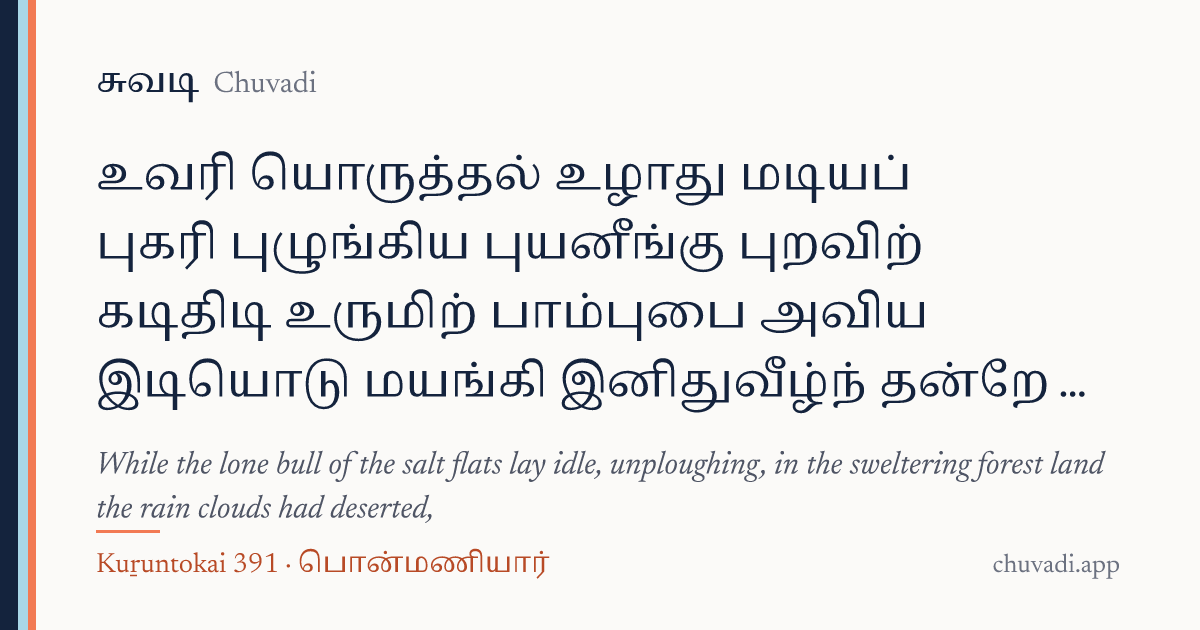
பாடல் · The poem
Tap a word to see where else it occurs.
பொருள் · Meaning in TamilAI
உவர்நிலத்தில் உள்ள தனிக் காளை உழவுக்குச் செல்லாமல் சோம்பிக் கிடக்க, மழைமேகங்கள் கைவிட்டதால் புழுக்கத்தில் வெந்த காட்டுநிலத்தில், பாம்புகளின் படம் ஒடுங்கும்படி கடுமையாக இடிக்கும் இடியோடு கலந்து, மழை இனிதாகப் பொழிந்துவிட்டது. அவ்வாறு பெய்த பெருமழையை வரவேற்று, பிரிந்தவர்கள் செயலற்றுத் தவிக்கும்படி வந்த துயர் நிறைந்த மாலையில், பூத்த கிளையில் அமர்ந்திருக்கும், கண்கள் போன்ற புள்ளிகளை உடைய தோகையுள்ள மயில்கள், பரவிய நீர் நிறைந்த அகன்ற நிலம் தனிமையில் வாடும்படி கூவுகின்றன. தோழி! அவை பெரும் பேதைமை உடையவை!
முல்லைத் திணை; தலைவன் மீள்வதாகச் சொன்ன கார்காலம் தொடங்கியும் அவன் வராததால் தலைவி தோழியிடம் கூறுவது. நீண்ட வறட்சிக்குப் பின் வந்த மழையை மயில்கள் மகிழ்ந்து வரவேற்கின்றன; ஆனால் தனித்திருக்கும் அவளுக்கு அந்தக் கூவல் துயரையே பெருக்குகிறது. அதனால் மயில்களைப் ‘பேதைகள்’ என்கிறாள். இடிக்கு அஞ்சிப் பாம்பு படம் ஒடுக்கும் என்பது பழைய நம்பிக்கை. முதல் அடியின் ‘உவரி ஒருத்தல்’ என்பதன் சரியான பொருள் உறுதியாகத் தெரியவில்லை.
ஆங்கிலம் · English translationAI
Translation
- While the lone bull of the salt flats lay idle, unploughing,
- in the sweltering forest land the rain clouds had deserted,
- with swift-striking thunder that makes the snakes' hoods shrink,
- mingled with the lightning-crash, it has fallen sweetly —
- the great rain has fallen; welcoming it, in the evening when those who are parted
- are left helpless, in this sad evening that has come,
- the peacock with eye-spotted plumes, perched on a flowering branch,
- as the spreading water fills the wide land, makes it lonely
- with its calling, friend — the great foolish things!
What the poem says
The heroine speaks to her friend at the start of the rains, the season when her husband promised to return. In mullai, the landscape of waiting, the first great rain of the monsoon should be the sign of reunion. For her, it only deepens the loneliness.
The rain arrives dramatically after a long drought, when even the plough bull lay idle. Thunder crashes, and in Tamil tradition this makes snakes shrink their hoods in fear. Then, in the evening, the peacocks greet the rain with their cries. To everyone else the cry is joyful. To the heroine, alone, it is an insult, and she calls the birds 'great fools' for celebrating a season that has not brought him home.
The first two lines are obscure. The words uvari and pukari are difficult, and the picture of the drought-stricken land given here is a cautious reading. The epithet of the peacock (pōḻkaṇ) is taken to refer to the eye-spots of its tail.