



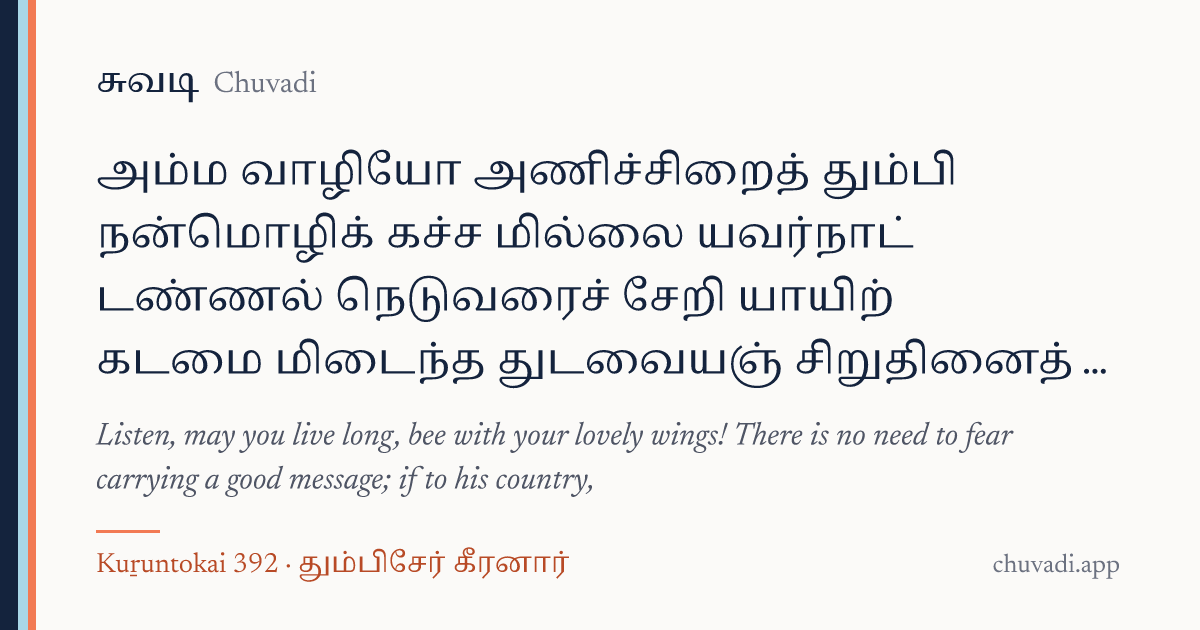

குறுந்தொகை 392
பாடல் · The poem
Tap a word to see where else it occurs.
பொருள் · Meaning in TamilAI
அழகிய சிறகுகளை உடைய தும்பியே, நீ வாழ்க, கேள்! நல்ல செய்தியைக் கொண்டுசெல்ல அஞ்ச வேண்டியதில்லை. நீ அவர் நாட்டிலுள்ள பெருமிதமான நெடிய மலைக்குச் சென்றால், அரசர்களின் படைவரிசை செல்லும்போது ஏந்தும் மெல்லிய தோல் கேடயங்களைப் போலத் தேன்கூடுகள் தொங்கும் அந்த மலையின் தலைவனிடம் இதைச் சொல்: ‘கடமை என்னும் விலங்குகள் நெருங்கித் திரியும் தோட்டத்தில் விளைந்த சிறுதினைப் புனத்தில், களைக்கொட்டால் மண்ணைக் கிளறிக் களையெடுக்கும் உழவர்களின் தங்கை, தன் உறவினரை விட்டு நீங்க முடியாமல் இருக்கிறாள்.’
குறிஞ்சித் திணை; தோழி தும்பியைத் தூதாக அனுப்புவது. தலைவி வீட்டுக் காவலில் இருப்பதால் களவில் சந்திக்க முடியாது; அவளை அடைய வேண்டுமானால் அவன் வெளிப்படையாக வந்து மணம் பேச வேண்டும் என்பதே செய்தியின் உட்கருத்து. அரசர் படையின் கேடய வரிசை போன்ற தேன்கூடுகள், அவன் நாட்டின் செல்வத்தையும் பெருமையையும் காட்டுகின்றன. இப்பாடலாலேயே புலவர் தும்பிசேர் கீரனார் எனப் பெயர் பெற்றார். ‘கடமை’ என்பது ஒருவகைக் காட்டு விலங்கு; அதன் சரியான இனம் உறுதியாகத் தெரியவில்லை.
ஆங்கிலம் · English translationAI
Translation
- Listen, may you live long, bee with your lovely wings!
- There is no need to fear carrying a good message; if to his country,
- to the high, long mountain of that great man, you go,
- 'In the field of small millet, crowded with the kaṭamai,
- the sister of the weeders who loosen the fine soil with their hoes
- cannot leave her kin' — tell him so; like the fine hide shields of kings'
- advancing ranks, the honeycombs hang there —
- say it to the lord of that mountain.
What the poem says
The friend speaks to a bee and asks it to carry a message to the hero's mountain. The poet is known as Tumpicēr Kīraṉār, 'Kīraṉār of the bee', from this poem.
The message is carefully worded. The heroine is described only as 'the sister of the weeders' working in the hill millet fields, a modest girl of the hill folk. She 'cannot leave her kin': she is held at home and cannot go to meet the hero. The hidden meaning is plain. If he wants her, he must come and ask for her openly in marriage.
The last lines describe his country, where honeycombs hang from the cliffs like the leather shields carried by royal troops on the march. The kaṭamai, said to crowd the fields, is probably a wild animal, a kind of deer or wild goat, though its identity is not certain. Asking a bee to carry a message is a familiar device, and this poem may be compared with poem 2, where a bee is asked a question.