




குறுந்தொகை 393
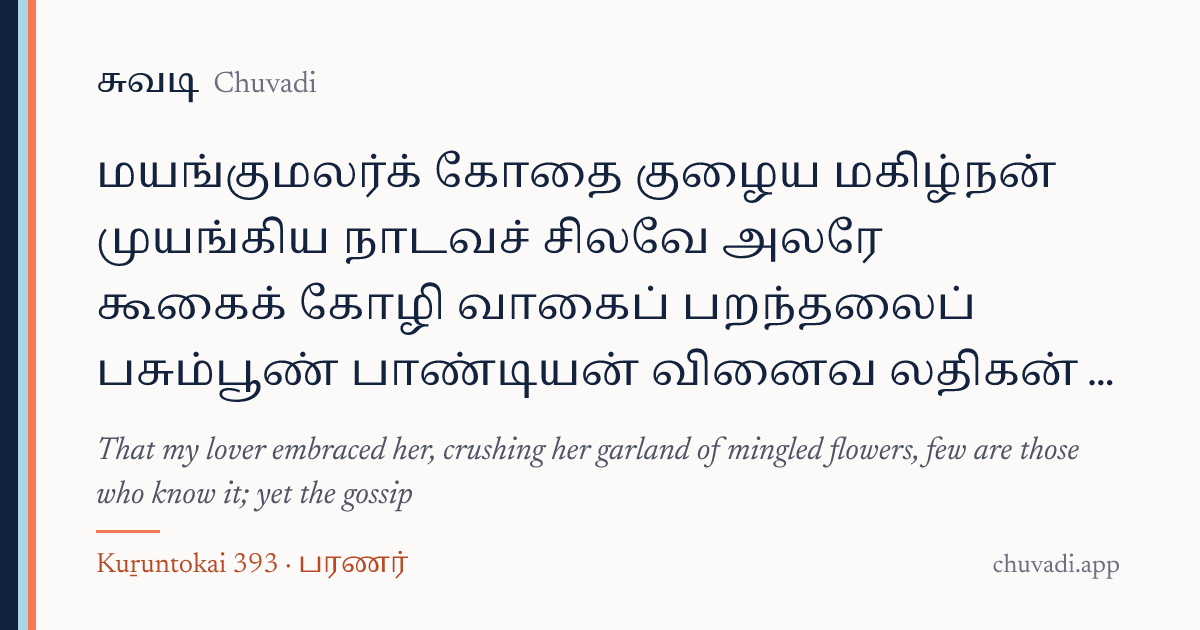
பாடல் · The poem
Tap a word to see where else it occurs.
பொருள் · Meaning in TamilAI
பலவகை மலர்கள் கலந்த மாலை கசங்கும்படி மகிழ்நன் அவளைத் தழுவியதை அறிந்தவர்கள் மிகச் சிலரே. ஆனால் அதைப் பற்றிய அலரோ, கூகைக்கோழிகள் குழறும் வாகைப் போர்க்களத்தில், பசும்பொன் அணிகலன்களை அணிந்த பாண்டியனின் போர்த்திறமை மிக்க படைத்தலைவனான அதிகன் தன் யானையோடு வீழ்ந்த நாளில், ஒளிரும் வாளேந்திய கொங்கர் எழுப்பிய வெற்றி ஆரவாரத்தைவிடப் பெரியது.
மருதத் திணை; தோழி கூற்று. தலைவன் பரத்தையைத் தழுவியதைச் சிலரே கண்டிருந்தாலும் ஊரெங்கும் அலர் பெரிதாக எழுந்துள்ளது என்கிறாள். காதல் நிகழ்ச்சியை வரலாற்றுப் போர் நிகழ்ச்சியோடு ஒப்பிடுவது பரணரின் சிறப்பியல்பு. வாகைப் போர்க்களத்தில் அதிகன் வீழ்ந்ததும் கொங்கர் ஆர்த்ததும் இங்கே உவமையாக மட்டும் வருகின்றன; அந்தப் போரின் விவரம் பாடலில் இல்லை. ‘அவள்’ யார் என்பதும், இது களவா பரத்தமையா என்பதும் உறுதியாகத் தெரியவில்லை.
ஆங்கிலம் · English translationAI
Translation
- That my lover embraced her, crushing her garland of mingled flowers,
- few are those who know it; yet the gossip
- on the Vākai battlefield where the owls hoot,
- when Atikaṉ, able captain of the Pāṇṭiyaṉ with fresh-gold ornaments,
- fell together with his elephant on that day,
- is greater than the roar the Koṅkar with their shining swords raised.
What the poem says
The friend speaks for the heroine in a poem by Paraṇar, a poet who likes to set a love situation against a well-known historical event. The hero has been with another woman, or with the heroine in secret; very few actually saw it, yet the talk in the town is enormous.
The scale of the gossip is compared to a war cry. On the battlefield of Vākai, haunted by owls, Atikaṉ, a general in the service of a Pāṇṭiya king, was killed along with his war elephant, and the Koṅkar, people of the western uplands, raised a great shout of victory. The village's gossip is louder than that roar.
The event is known only from allusions like this one, and nothing more can safely be said about Atikaṉ or the battle. The epithet 'with fresh-gold ornaments' (pacumpūṇ) belongs to the Pāṇṭiya king, not to Atikaṉ, who is described as his capable servant in war.