



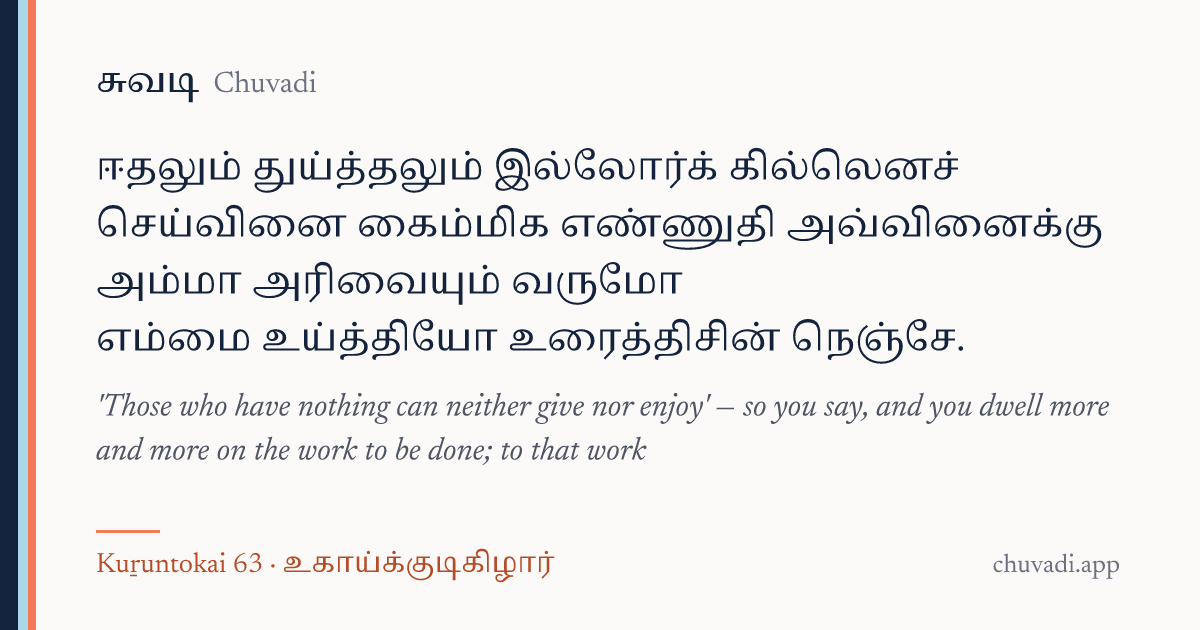

குறுந்தொகை 63
பாடல் · The poem
Tap a word to see where else it occurs.
பொருள் · Meaning in TamilAI
நெஞ்சே! "பொருள் இல்லாதவர்களுக்குப் பிறர்க்குக் கொடுப்பதும், தாம் நுகர்வதும் இல்லை" என்று சொல்லி, செய்ய வேண்டிய பொருள்தேடும் செயலைப் பற்றியே மேலும் மேலும் எண்ணுகிறாய். அந்தச் செயலுக்கு அழகிய இந்த இளம்பெண்ணும் உடன் வருவாளோ? அல்லது என்னை மட்டும் தனியே அனுப்பிவிடுவாயோ? சொல்!
பாலைத் திணை; தலைவன் தன் நெஞ்சுக்குக் கூறியது. பொருள் தேடப் போகத் தூண்டும் நெஞ்சுக்கு, அவளை உடன் அழைத்துச் செல்ல முடியுமா, அல்லது அவளைப் பிரிந்து தனியே போக வேண்டுமா என்று கேட்கிறான். அவளால் பாலைவழியைக் கடக்க முடியாது; அவனால் அவளைப் பிரியவும் முடியாது; ஆகவே அக்கேள்விக்கு நல்ல விடை இல்லை என்பதே பாடலின் உட்பொருள்.
ஆங்கிலம் · English translationAI
Translation
- 'Those who have nothing can neither give nor enjoy' — so you say,
- and you dwell more and more on the work to be done; to that work
- will the lovely young woman come along as well?
- Or will you drive me there alone? Tell me, my heart.
What the poem says
The hero speaks to his own heart in the wasteland (pālai), the landscape of separation. His heart urges him to go away and earn wealth, repeating the old saying that a man without means can neither give gifts nor enjoy life. He answers with a question: will she come along on this enterprise, or will his heart send him off alone?
The question has no good answer, and that is the point. The heroine cannot cross the desert with him, and he cannot bear to leave her. Talking to one's own heart as if it were a separate, stubborn companion is a common device in pālai poems, and it lets the poet stage the man's inner conflict as a dialogue.
The saying in the first line reflects a value shared across Sangam literature: wealth matters because it lets one be generous. The exclamation ammā in line 3 is usually taken as a word of praise for the girl ("lovely"), though it can also be read as a sigh.