




குறுந்தொகை 64
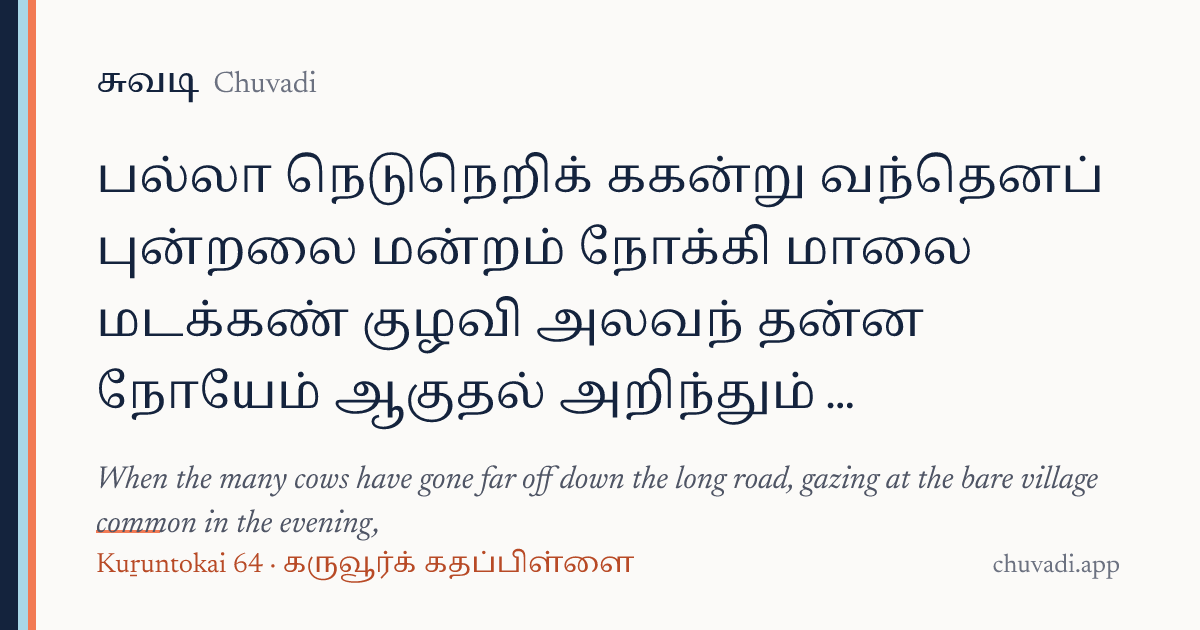
பாடல் · The poem
Tap a word to see where else it occurs.
பொருள் · Meaning in TamilAI
பல பசுக்களும் நீண்ட வழியில் மேயச் சென்று தொலைவில் இருக்க, மாலைப்பொழுதில் புல் தேய்ந்த ஊர்ப் பொதுவிடத்தை நோக்கியபடி, அறியாமை நிறைந்த கண்களையுடைய கன்று தாயைத் தேடிக் கதறுவதுபோல நாம் வருந்துகிறோம். இதை அறிந்திருந்தும், தோழி, தொலைநாட்டில் இருப்பவர் இன்னும் தொலைவிலேயே இருக்கிறார்.
முல்லைத் திணை; தலைவி தோழியிடம் கூறியது. மேய்ச்சலுக்குச் சென்ற தாய்ப்பசு திரும்பி வர வேண்டிய மாலைநேரத்தில், வெறும் மன்றத்தைப் பார்த்துக் கதறும் கன்றுக்குத் தன்னை ஒப்பிடுகிறாள். ஆநிரை திரும்பும் மாலைப்பொழுதே பிரிந்தவரின் ஏக்கம் மிகும் நேரம்; முல்லை நிலத்தின் வாழ்க்கையிலிருந்தே உவமை எடுக்கப்பட்டுள்ளது.
ஆங்கிலம் · English translationAI
Translation
- When the many cows have gone far off down the long road,
- gazing at the bare village common in the evening,
- like a calf with innocent eyes that cries in distress,
- we are in pain; and though he knows it,
- he stays far away, friend, the man in the distant land.
What the poem says
Mullai, the forest-pasture landscape, is the setting of patient waiting, usually through the rainy season and at evening, and here the heroine speaks to her friend in that mood. She compares herself to a young calf left behind when the herd goes out along the long road to graze. At dusk it stares at the empty common and bawls, waiting for its mother to come back.
The image is drawn from the cattle-herding life of the mullai country and fits its hour exactly: evening, when the herds should return, is when a separated woman's longing is sharpest. Her complaint is not that the hero is ignorant of her pain but that he knows of it and still stays away.
The phrase rendered "bare village common" (puṉ talai maṉṟam) may mean a common with thin, sparse grass, or one that has become "dull" and lifeless with the cattle gone. The poet's name, Karuvūr Katappiḷḷai, places the poet at Karuvūr; nothing else is known of him.