



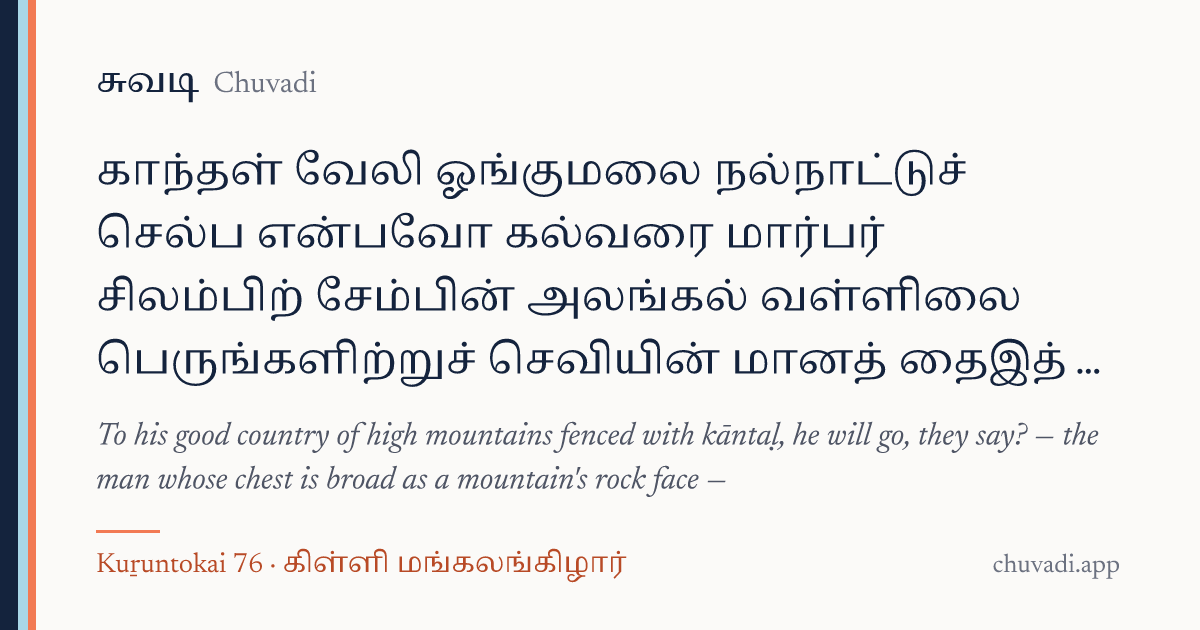

குறுந்தொகை 76
பாடல் · The poem
Tap a word to see where else it occurs.
பொருள் · Meaning in TamilAI
காந்தளை வேலியாகக் கொண்ட உயர்ந்த மலைகள் நிறைந்த தம் நல்ல நாட்டுக்கு, மலைப்பாறையைப் போல அகன்ற மார்பையுடைய அவர் போகிறார் என்கிறார்களா? மலைச்சரிவில், அசையும் சேம்பின் அகன்ற இலைகளைப் பெரிய ஆண்யானையின் காதுகளைப் போல வருடித் தூக்கி அசைக்கும் குளிர்ந்த வாடைக்காற்று வீசும், கடும்பனி பெய்யும் இந்த முன்பனிக்காலத்தில், நான் நடுங்கித் துயருறும்படியா அவர் போகிறார்?
குறிஞ்சித் திணை; தலைவி தோழியிடம் கூறியது. தலைவன் தன் நாட்டுக்குத் திரும்பப் போகிறான் என்று கேட்டு, ஆண்டின் கொடிய பருவத்தில் தன்னைத் தனியே விட்டுப் போகிறானே என்று வருந்துகிறாள். யானைக் காதுபோல அசையும் சேம்பிலைகள் அவள் மனக்கலக்கத்தை எதிரொலிக்கின்றன.
ஆங்கிலம் · English translationAI
Translation
- To his good country of high mountains fenced with kāntaḷ,
- he will go, they say? — the man whose chest is broad as a mountain's rock face —
- when on the slopes the swaying broad leaves of the cēmpu,
- like the ears of a great bull elephant, are stroked
- and lifted by the cold-coming north wind,
- in this season of hard dew, so that I suffer and shiver with grief?
What the poem says
On hearing that the hero means to go back to his own mountain land, the heroine protests to her friend in this kuṟiñci poem that he is leaving at the worst time of year, the cold season of heavy dew, when the north wind sets the big leaves of the cēmpu plants flapping and she will be left shivering and alone.
The comparison of the broad, swaying cēmpu leaves (a taro-like plant) to the ears of an elephant is a vivid hill-country detail, and the restless movement of the leaves mirrors her agitation. The fence of kāntaḷ (glory lily) marks his land as a place of beauty, and makes his going seem all the more like a loss.
The phrase "they say" suggests she has heard the news from others, perhaps from the friend herself. The poet, Kiḷḷimaṅkalaṅkiḻār, is named from Kiḷḷimaṅkalam, a place; nothing more is known of him.