



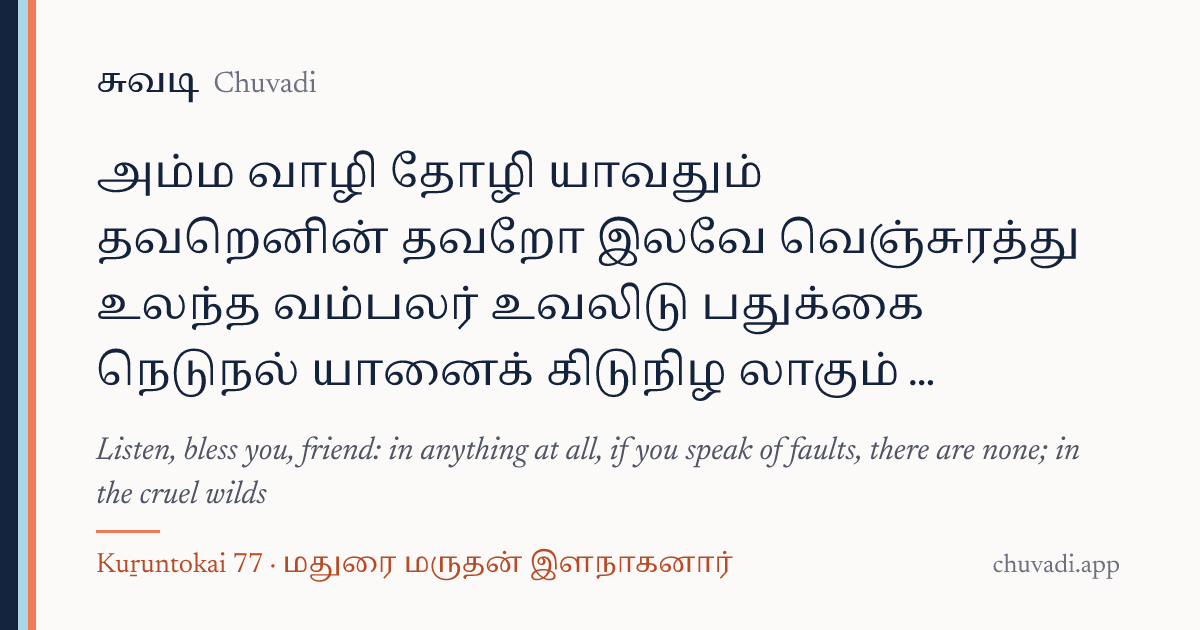

குறுந்தொகை 77
பாடல் · The poem
Tap a word to see where else it occurs.
பொருள் · Meaning in TamilAI
தோழி, கேள்; வாழ்வாயாக! அவர் மேல் குற்றம் என்று சொல்வதானால், எந்தக் குற்றமும் இல்லை. கொடிய பாலைவழியில் இறந்துபோன வழிப்போக்கர்கள் மேல் தழைகளை இட்டுக் குவித்த கல்மேடுகள், உயர்ந்த நல்ல யானைகளுக்கு நிழல் தரும் இடங்களாகும் அரிய காட்டுக்குச் சென்றவருக்கு, அகன்ற மென்மையான என் தோள்கள் எளிதாக விட்டுப் போகக்கூடியவையாகிவிட்டன, அவ்வளவுதான்.
பாலைத் திணை; தலைவி தோழியிடம் கூறியது. பிரிந்து சென்ற தலைவனைத் தோழி குறைகூற, அவள் அவனைக் குற்றம் சொல்ல மறுக்கிறாள்; தன் தோள்கள் அவருக்கு எளியவையாகிவிட்டன என்ற சொல்லில் மறைந்த வருத்தம் தெரிகிறது. இறந்த வழிப்போக்கர்களின் பதுக்கைகள் யானைகளுக்கு நிழலாகும் அளவுக்குப் பெருகியிருப்பது, அவர் சென்ற வழியின் கொடுமையைக் காட்டுகிறது.
ஆங்கிலம் · English translationAI
Translation
- Listen, bless you, friend: in anything at all,
- if you speak of faults, there are none; in the cruel wilds
- the cairns heaped with leaves over travellers who perished
- become a resting shade for tall fine elephants;
- for him who went into that hard forest,
- they have become an easy thing to leave, these broad soft shoulders.
What the poem says
The heroine speaks to her friend while the hero is away in the wasteland (pālai). The friend may have been blaming him for leaving. The heroine refuses to accuse him: there is no fault to find, she says. The only change is that her arms, which once held him, have become a small thing to him, easy to give up for the road.
The middle lines describe the terrible country he has entered. Travellers who died there, perhaps killed by bandits, were buried under heaps of stones and leaves; these mounds (patukkai) are now so large and so many that elephants rest in their shade. The scene implies how much he was willing to face rather than stay, and so explains, without bitterness, her final line.
Her defence of him can be read as loyal or as quietly ironic. "There are no faults" may mean that he has done nothing wrong, or, more painfully, that nothing she had was enough to hold him.