




குறுந்தொகை 84
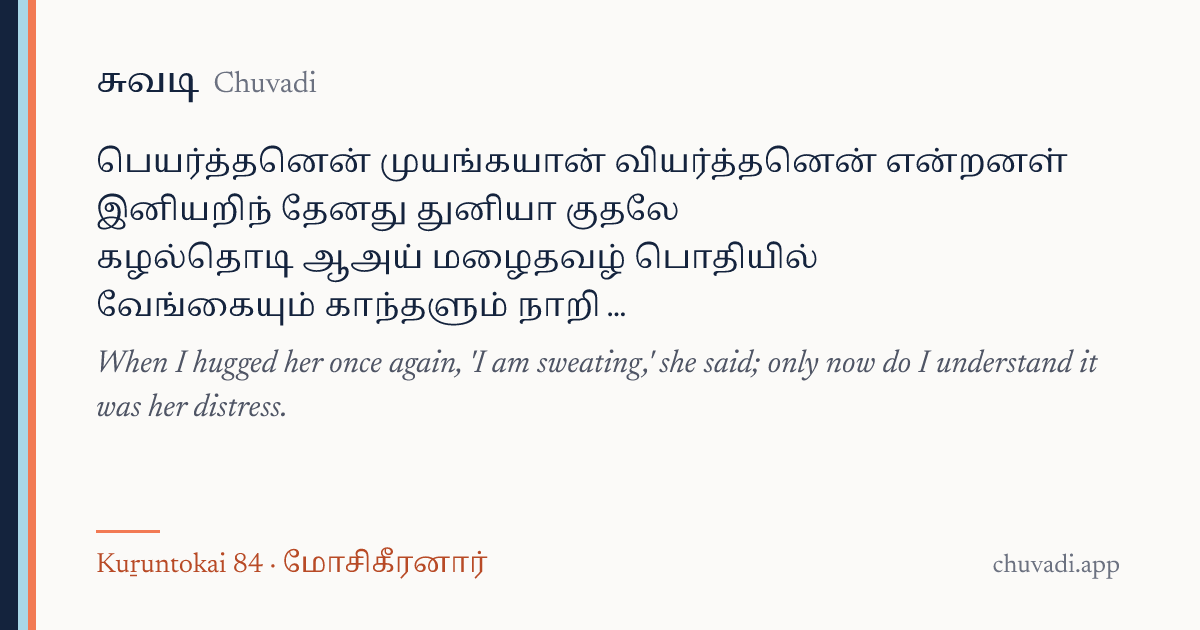
பாடல் · The poem
Tap a word to see where else it occurs.
பொருள் · Meaning in TamilAI
நான் மீண்டும் அவளைத் தழுவியபோது, "எனக்கு வியர்க்கிறது" என்று விலகினாள். அது அவள் மனக்கலக்கத்தின் அடையாளம் என்பதை இப்போதுதான் அறிந்தேன். கழலும் தொடியை அணிந்த ஆய் என்ற வள்ளலின், மேகங்கள் தவழும் பொதியில் மலையைப் போல, வேங்கைப் பூவின் மணமும் காந்தள் பூவின் மணமும் கமழ, ஆம்பல் மலரைவிடக் குளிர்ச்சியானவள் அவள்.
பாலைத் திணை; செவிலித்தாய் கூற்று. தான் வளர்த்த பெண் தலைவனோடு உடன்போக்கில் சென்ற பின், அதற்கு முன் நடந்த ஒரு சிறு நிகழ்வை நினைத்துப் பார்க்கிறாள்: தழுவியபோது அவள் விலகியது, போகும் முடிவால் உண்டான உள்ளக்கொதிப்பு என்று இப்போது உணர்கிறாள். இறுதி அடிகளில், இழந்த மகளின் மணத்தையும் குளிர்ச்சியையும் அன்போடு நினைவுகூர்கிறாள். ஆய் பொதியில் மலைக்குரிய வள்ளல்.
ஆங்கிலம் · English translationAI
Translation
- When I hugged her once again, 'I am sweating,' she said;
- only now do I understand it was her distress.
- Āy of the loose-fitting bracelet: his Potiyil, where clouds creep,
- is fragrant with vēṅkai and kāntaḷ; with that fragrance,
- cooler even than the āmpal flower is she.
What the poem says
The speaker is the cevili, the foster-mother who raised the heroine. The girl has eloped with the hero across the wasteland (pālai), and the foster-mother looks back on a small moment before she left. When she embraced the girl, the girl pulled away, saying she was hot and sweating. Only now does the foster-mother realise that this was a sign of her inner turmoil, her mind already set on going.
The closing lines describe the girl with love and grief. She is as fragrant as the Potiyil hills, scented with vēṅkai and kāntaḷ blossoms, and cooler than the āmpal water lily. The contrast is pointed: this cool, fragrant girl said she was sweating, and is now crossing the burning desert.
Āy, here given the epithet kaḻal toṭi (read as "loose-fitting bracelet", though it may instead mean "with warrior's anklet and bracelet"), was a chieftain of the Potiyil hills in the far south, celebrated in other Sangam poems for his generosity. The opening phrase peyarttaṉeṉ is usually read as "I embraced her again", though it might also mean that the foster-mother drew back after being pushed away.