



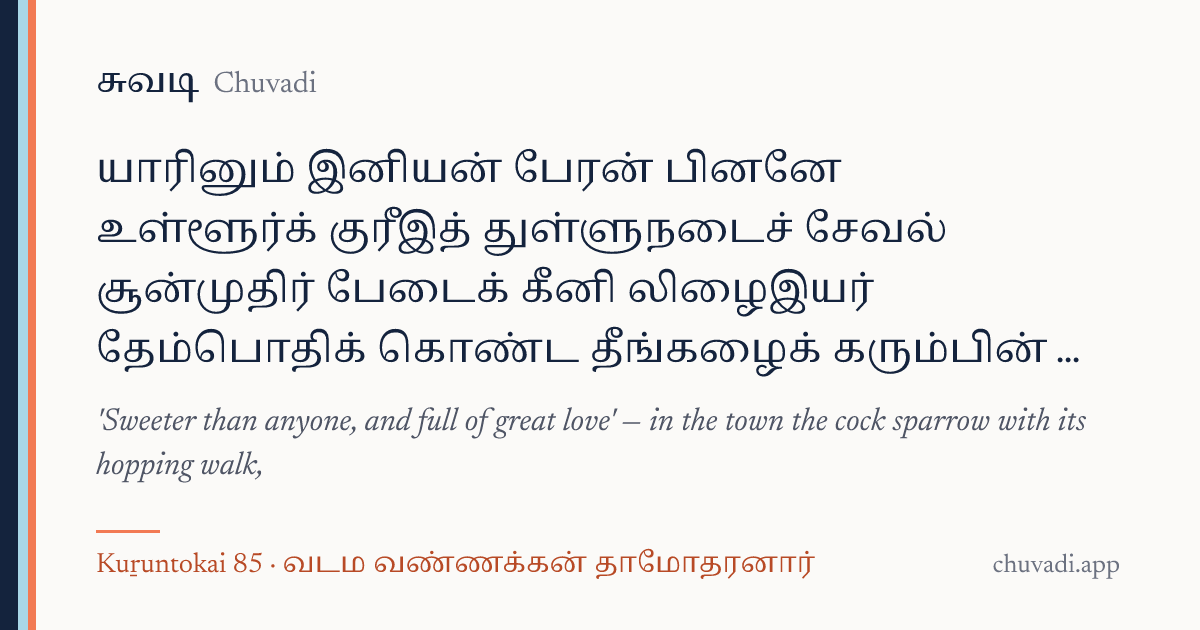

குறுந்தொகை 85
பாடல் · The poem
Tap a word to see where else it occurs.
பொருள் · Meaning in TamilAI
"எல்லோரையும்விட இனியவன்; பெரும் அன்பு உடையவன்" — இப்படிச் சொல்வது யார் தெரியுமா? ஊருக்குள் வாழும், துள்ளி நடக்கும் ஆண்குருவி, முட்டையிடும் நிலையிலுள்ள தன் பெண்குருவிக்குக் கூடு கட்டுவதற்காக, உள்ளே தேன் நிறைந்த இனிய கரும்பின் மணமில்லாத வெண்பூவைக் கோதி எடுக்கும் வளமான ஊரையுடைய தலைவனின் பாணனின் வாய்தான் இப்படிச் சொல்கிறது.
மருதத் திணை; தோழி கூற்று. தலைவனுக்காகப் பரிந்து பேச வந்த பாணனின் புகழுரையைத் தோழி கடுமையான எள்ளலோடு திருப்பிச் சொல்கிறாள்; அதை நம்பவில்லை என்பதைச் சொல்லாமலே உணர்த்துகிறாள். இனிமை நிறைந்த கரும்பை விட்டு, மணமில்லாத அதன் பூவை மட்டும் குருவி எடுப்பதுபோல, தலைவனும் இல்லறத்தின் இனிமையை விட்டுப் பயனற்ற பரத்தையர் உறவை நாடுகிறான் என்பது உள்ளுறை.
ஆங்கிலம் · English translationAI
Translation
- 'Sweeter than anyone, and full of great love' —
- in the town the cock sparrow with its hopping walk,
- to weave a nest for his mate who is heavy with eggs,
- from the sweet stalk of sugarcane that holds honey within
- pecks apart the scentless white flower —
- so says the bard of that man of the rich town.
What the poem says
The friend speaks in the farmland landscape (marutam). The hero's bard (pāṇaṉ) has come to plead for him, praising him as the sweetest and most loving of men. The friend repeats his words with heavy irony: so says the bard. She does not need to add what she thinks of the claim.
The sparrow passage holds the uḷḷuṟai, the implied comparison. A male sparrow tears apart the white flower of the sugarcane, a flower with no scent, to line a nest for his mate who is about to lay. The cane is full of sweetness, yet he takes only its useless flower. This may suggest that the hero, rich and capable of great sweetness, offers his wife only empty attentions, or that the bard's fine words are as scentless as the cane flower. The nest-building for a mate about to lay may also hint that the heroine has recently given birth, a time when an errant husband is expected to return home.
The opening line is set in quotation marks because it reproduces the bard's praise. The poet's name, Vaṭama Vaṇṇakkaṉ Tāmōtaraṉār, may describe him as an assayer or money-tester of northern origin, though this reading is not certain.