




குறுந்தொகை 89
பாடல் · The poem
Tap a word to see where else it occurs.
பொருள் · Meaning in TamilAI
அகன்ற அடியும் அகன்ற வாயும் உடைய உரலில் குற்றும்போது பாடும் வள்ளைப் பாட்டை அயலாரும் பாடுகிறார்கள்; அடிக்கடி பாடுகிறார்கள். பெரிய அணிகலன்களை அணிந்த பொறையனின் அச்சம் தரும் கொல்லிமலையின் மேற்குச் சிகரத்தில், கரிய கண்களையுடைய தெய்வம் வடித்த அழகிய பாவையைப் போன்ற, மென்மையான இயல்புடைய இந்த இளம்பெண் குற்றும்போது ஒரு பாட்டுப் பாடினால், அறியாமை நிறைந்த இந்த ஊருக்கு என்ன குறை வந்துவிடும்?
மருதத் திணை; தோழி கூற்று. உலக்கைப் பாட்டில் தலைவி தலைவனைப் பற்றிப் பாடியதை வைத்து ஊர் அலர் தூற்றுகிறது; எல்லோரும் பாடும் பாட்டை இவள் பாடினால் என்ன கேடு என்று தோழி அதைப் புறந்தள்ளுகிறாள். கொல்லிப்பாவை தெய்வத்தால் செய்யப்பட்டதாகப் போற்றப்பட்ட பேரழகுச் சிலை; பொறையன் சேர மன்னர்களின் பெயர்.
ஆங்கிலம் · English translationAI
Translation
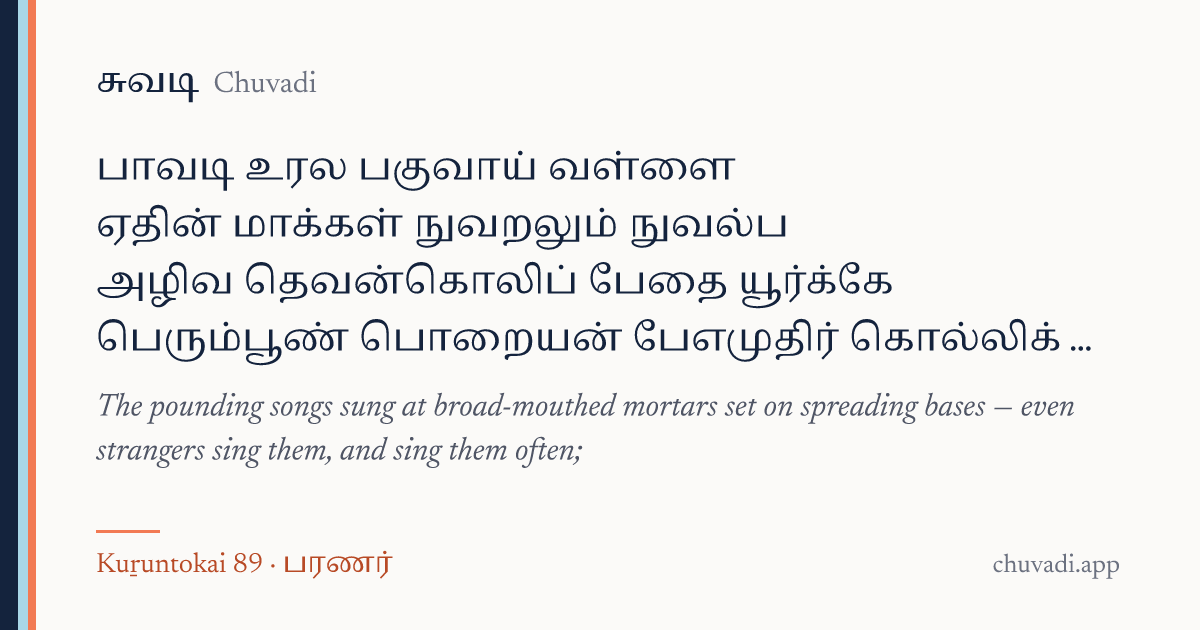
- The pounding songs sung at broad-mouthed mortars set on spreading bases —
- even strangers sing them, and sing them often;
- what does this foolish town lose by it,
- on fearsome Kolli of Poṟaiyaṉ with his great ornaments,
- where on the western peak the dark-eyed goddess fashioned
- a statue of perfect form — if, like her, this
- gentle young girl has sung while she pounds?
What the poem says
The friend speaks in the farmland setting (marutam). While pounding grain, the heroine sang a vaḷḷai, one of the work songs women sang at the mortar, and evidently the song touched on the hero. The town now gossips. The friend dismisses the fuss: everyone, even strangers, sings these songs; what harm can a girl's singing do?
The comparison is with the Kolli statue (kollippāvai), a figure on the western peak of the Kolli hills that, according to tradition, was made by a goddess and possessed a beauty beyond human craft. It is mentioned in several Sangam poems. The friend likens the heroine to it, perhaps implying her innocence and stillness, perhaps simply her beauty. Kolli was held by Poṟaiyaṉ, a name of the Cēra kings.
The poem's exact situation is not clear. It may be addressed to the hero, telling him that the affair has become public and that he should act, or to the town itself. The phrase "if she has sung while she pounds" (pāṭiṉaḷ kuṟiṉē) is compressed; it could also mean "if she has sung while pounding, so be it".