



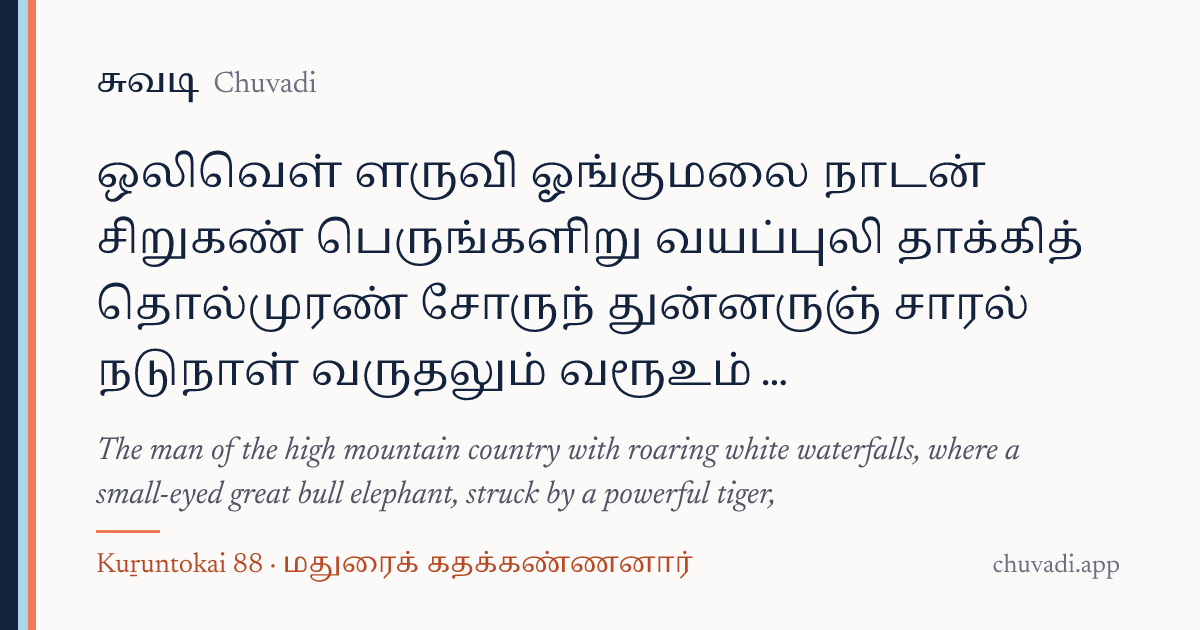

குறுந்தொகை 88
பாடல் · The poem
Tap a word to see where else it occurs.
பொருள் · Meaning in TamilAI
ஒலிக்கும் வெண்மையான அருவிகளையுடைய உயர்ந்த மலைநாட்டுத் தலைவன், சிறிய கண்களையுடைய பெரிய ஆண்யானை வலிய புலியால் தாக்கப்பட்டுத் தன் பழைய வலிமையை இழக்கும், கடத்தற்கு அரிய மலைச்சாரல் வழியே நள்ளிரவிலும் வருகிறானே! தோழி, நாம் ஊரார் பேசும் பழிக்கு அஞ்சுபவர்கள் அல்லோம்.
குறிஞ்சித் திணை; தோழி தலைவியிடம் கூறியது, இரவுக்குறிக்கு வரும் தலைவன் கேட்கும்படி. புலி யானையைத் தாக்கும் அச்சம் நிறைந்த வழியே அவன் வருவதுதான் அவர்களுக்கு அச்சம் தருகிறது; ஊர்ப்பழிக்கு அல்ல. ஆகவே இனி இரவில் வராமல் விரைவில் மணம் செய்துகொள் என்பது உட்குறிப்பு. "வடுநாணலமே" என்பதை, பழிக்கு நாணாதவர் என்றும் பழிக்கு அஞ்சி ஒதுங்காதவர் என்றும் கொள்ளலாம்.
ஆங்கிலம் · English translationAI
Translation
- The man of the high mountain country with roaring white waterfalls,
- where a small-eyed great bull elephant, struck by a powerful tiger,
- loses its old fury — on such slopes, so hard to cross,
- he even comes, does he, in the middle of the night;
- and we are not ones to shrink from the shame of scandal, friend, not we.
What the poem says
Overheard speech is the device here: the friend addresses the heroine, probably so that the hero will hear, who has been coming to meet her at night. The path he takes runs over slopes where tigers attack even great elephants. The friend's point is that his danger frightens them far more than gossip does: they are not afraid of being talked about, but they are afraid for him.
The fight between tiger and elephant is a stock image of the dangers of the hill country (kuṟiñci) at night, and it serves here as a warning. The suggestion (iṟaicci) is that he should stop risking these midnight crossings and marry the heroine openly.
The last line (vaṭu nāṇalamē) is the hardest part of the poem. It may mean "we do not fear blame", as translated here, or "we are not ashamed of the mark (of love)", or it may be ironic, implying that they ought to feel shame. Each reading changes the friend's tone.