



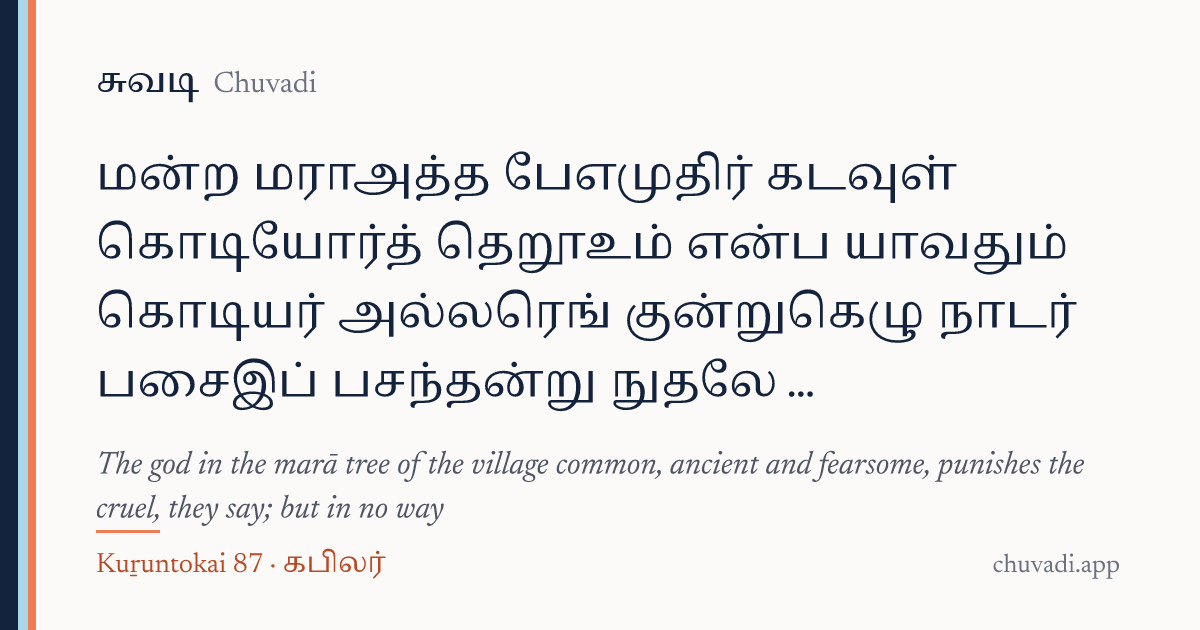

குறுந்தொகை 87
பாடல் · The poem
Tap a word to see where else it occurs.
பொருள் · Meaning in TamilAI
ஊர்மன்றத்தில் உள்ள மராமரத்தில் வாழும், அச்சம் தரும் பழமையான தெய்வம் கொடியவர்களைத் தண்டிக்கும் என்கிறார்கள். ஆனால் மலைகள் நிறைந்த எம் நாட்டுத் தலைவர் சிறிதும் கொடியவர் அல்லர். அவர்மேல் கொண்ட ஏக்கத்தாலேயே என் நெற்றி பசலை பூத்தது; அகன்ற மென்மையான என் தோள்களும் மெலிந்து மெலிந்து நெகிழ்ந்துவிட்டன.
குறிஞ்சித் திணை; தலைவி தோழியிடம் கூறியது. சூளுரைத்தும் இன்னும் மணம் செய்யாத தலைவனை மன்றத்து மரத்தில் வாழும் தெய்வம் தண்டிக்குமோ என்று தோழி அஞ்சியதாகக் கொள்ளலாம். அவர் கொடியவர் அல்லர், ஆகவே தெய்வம் அவரைத் தண்டிக்காது; தன் மெலிவுக்குக் காரணம் தன் ஏக்கமே என்று தலைவி அவனுக்காக வாதிடுகிறாள்.
ஆங்கிலம் · English translationAI
Translation
- The god in the marā tree of the village common, ancient and fearsome,
- punishes the cruel, they say; but in no way
- is he cruel, the man of our mountain country;
- it is from longing that my forehead has turned pale,
- and my broad soft shoulders have grown slack, and slacker still.
What the poem says
Kapilar gives the heroine a defence of her lover in this kuṟiñci poem. Her friend may have warned that the hero, who swore an oath of love and has not yet married her, is in danger from the god who dwells in the marā (kaṭampu) tree of the village common and punishes oath-breakers. The heroine defends him: he is not cruel, so the god has no reason to punish him. The pallor of her forehead and the thinness of her arms are her own doing, the effect of her longing.
In Tamil poetry, sacred trees at the village common were believed to house powerful deities, and an oath sworn before them was dangerous to break. The heroine's anxiety is double: she is suffering, and she also fears that the hero might be harmed because of her suffering.
The repetition in the last two lines, pacaii pacantaṉṟu and ñekiḻa ñekiḻntaṉṟu, uses the same root twice for emphasis: longing she has paled, loosening she has loosened. The translation tries to keep a trace of that doubling.