




நற்றிணை 11
பாடல் · The poem
Tap a word to see where else it occurs.
பொருள் · Meaning in TamilAI
அணியாமல் இரவு முழுதும் வைக்கப்பட்ட பூமாலையைப் போல, அவர் குறித்த குறி தவறியதால் உன் மேனி வாடிவிட்டது. அதையே நினைத்தும், அயலார் உன்னை மணம் பேச வரும் சொற்களை எண்ணியும், 'அவர் வரமாட்டார்' என்று தெளிவாகச் சொல்லும் ஊடலை உள்ளத்தில் வைத்துக்கொள்வதை உன் நெஞ்சிலிருந்து விட்டுவிடு, நான் வேண்டுகிறேன். அலைகள் மோதும், பூக்கள் உதிர்ந்த மணல் நிறைந்த கரையில், சக்கரங்களின் அருகே உள்ள நண்டுகளைக் காத்து, தேர்ப்பாகன் கடிவாளத்தைச் சரிபார்த்துத் தேரைச் செலுத்துகிறான்; கடற்கரைச் சோலையெங்கும் நிலவு பரவிவிட்டது.
நெய்தல் திணை; காவல் மிகுந்ததால் சந்திப்பு தடைப்பட்டு வருந்திய தலைவியிடம், தலைவன் வேலிக்கு அப்பால் நிற்கும்போது தோழி சொல்லியது. நண்டுகளைக் காத்துச் செல்லும் தேர், அவன் அன்போடு வந்துகொண்டிருக்கிறான் என்பதைக் காட்டலாம்; நிலவு பரவியதால் களவுச் சந்திப்பு இனி இயலாது, வெளிப்படையாக மணந்துகொள் என்று தலைவனுக்கு உணர்த்துவதாகவும் கொள்ளலாம். 'நொதுமலர் நேர்பு உரை' என்பது அயலார் மணம் பேசுவது என்பது பெரும்பாலும் சரியாகத் தோன்றினாலும் உறுதியில்லை.
ஆங்கிலம் · English translationAI
Translation
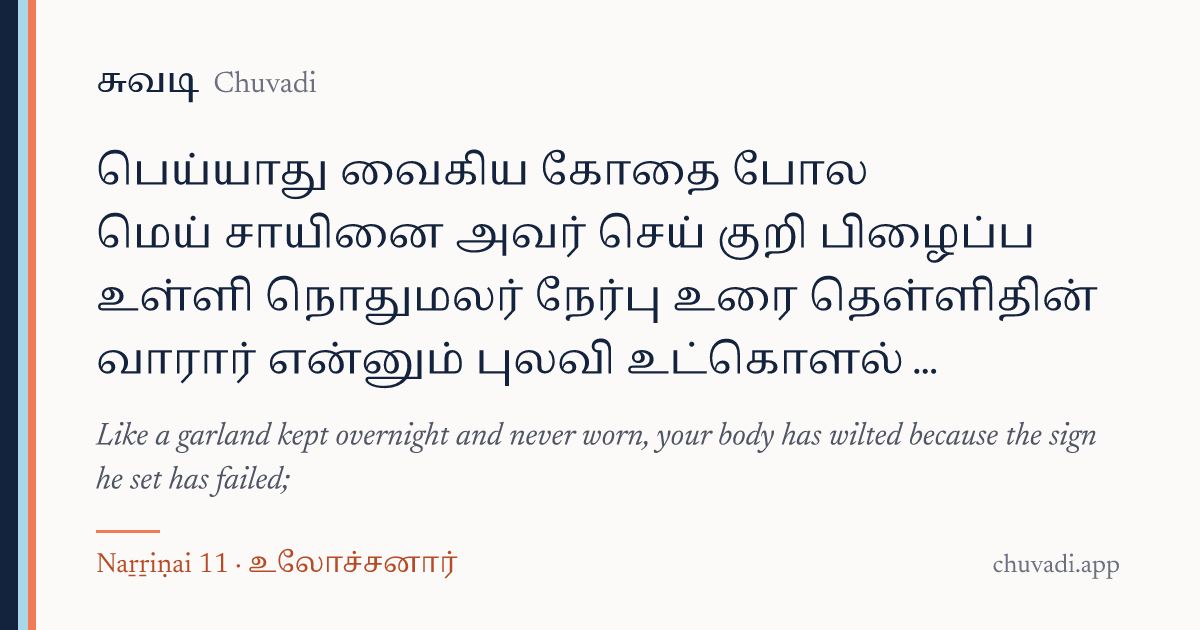
- Like a garland kept overnight and never worn,
- your body has wilted because the sign he set has failed;
- brooding on it, and on the talk of strangers seeking you; the sulk that plainly
- says 'he will not come': this you must not keep within you;
- let it leave your heart, I beg you.
- On the shore of flowered sand battered by the breakers,
- sparing the crabs beside the wheels,
- the charioteer tests the reins and drives;
- the moonlight has spread across the seaside grove.
What the poem says
The guard over the heroine has been tightened, and the lovers' meetings have been cut off; she cannot bear it. Her friend speaks to her while the hero stands hidden beyond the fence (neytal, poem by Ulōccaṉār).
The friend sees that the heroine has wilted like a garland strung but never worn. The signal he arranged for their meeting failed, and strangers have started talking of a marriage with someone else, so the heroine has decided in her sulk that he will not come. The friend tells her to let that thought go.
The last four lines are a picture: a chariot on the moonlit beach, its driver checking the reins and steering so as not to crush the crabs near the wheels. It may be the friend's assurance that he is on his way, careful and gentle even towards crabs. Since the hero is listening, it may also be a reproach: the moon is up, the grove is bright, and a secret meeting is no longer possible; he should come openly and marry her.
'The talk of strangers' (notumalar nērpu urai) most likely means marriage proposals from other families, though the phrase is compressed.