




நற்றிணை 10
பாடல் · The poem
Tap a word to see where else it occurs.
பொருள் · Meaning in TamilAI
உயர்ந்து நிமிர்ந்த அழகிய மார்பகங்கள் தளர்ந்தாலும், பொன்னைப் போன்ற மேனியின் மேல் நீலமணியைப் போலத் தாழ்ந்து விழும் அழகிய நீண்ட கூந்தல் நரையோடு முடிக்கப்பட்டாலும், இவளைக் கைவிடாமல் காப்பாயாக, பூக்கள் பொலியும் ஊரனே! இனிய கடுமையான கள்ளையும், அணிகலன்களால் அழகுபடுத்திய நீண்ட தேர்களையும் உடைய வெற்றி மிக்க சோழர்கள் கொங்கர்களை அடிபணியச் செய்ய, வெண்ணிறத் தந்தங்களையுடைய யானைகளையுடைய போர் என்னும் ஊரின் தலைவனான பழையன் எறிந்த வேல் தவறாமல் இலக்கைத் தாக்கியது. அதுபோலத் தவறாத உன் நல்ல சொல்லை இவள் நம்பியிருக்கிறாள்.
பாலைத் திணை; உடன்போக்கின் போது தோழி தலைவியைத் தலைவனிடம் ஒப்படைத்துச் சொல்லியது. முதுமையிலும் கைவிடக் கூடாது என்று வாக்குறுதி கேட்கிறாள். பழையன் சோழருக்குத் துணையாகப் போரிட்ட தலைவன் என்பது பாடலிலிருந்தே தெரிகிறது; அதற்கு மேல் விவரம் இல்லை. 'ஊர' என்ற விளி பொதுவாக மருதத் திணைக்கு உரியது; பாலைத் திணைப் பாடலில் இது சற்றுப் பொருந்தவில்லை.
ஆங்கிலம் · English translationAI
Translation
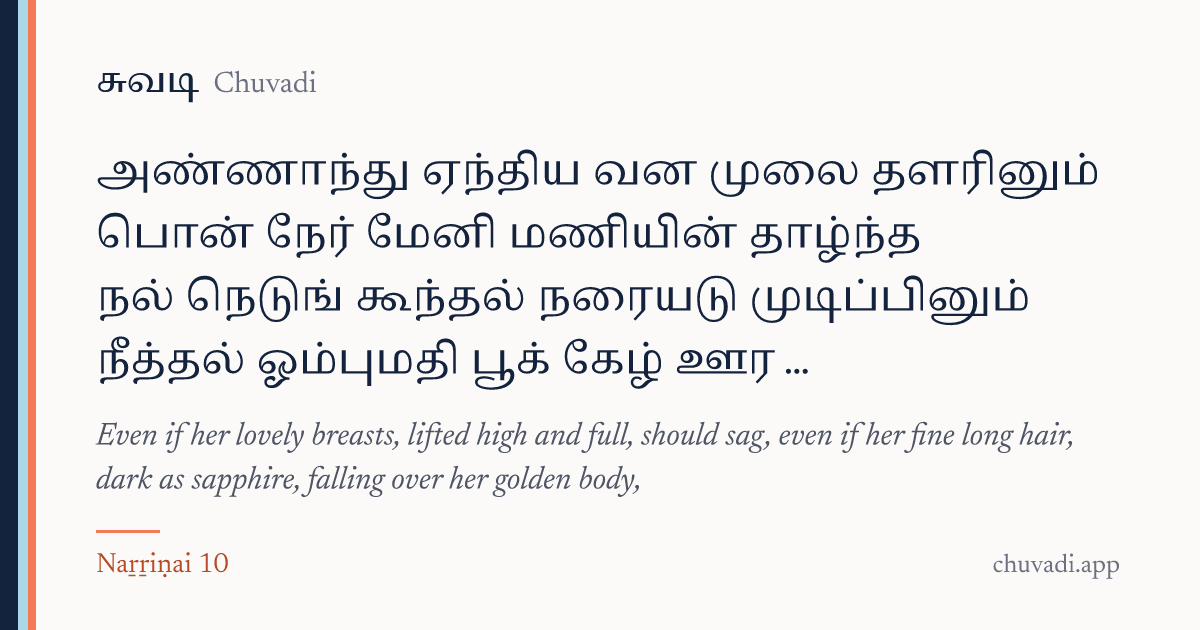
- Even if her lovely breasts, lifted high and full, should sag,
- even if her fine long hair, dark as sapphire, falling over her golden body,
- should be bound up streaked with grey,
- take care never to leave her, lord of the town bright with flowers.
- The Cōḻas of sweet strong toddy and tall chariots hung with jewels,
- victorious, wished to bring the Koṅkar to submission, and the lord of Pōr
- with his white-tusked elephants,
- Paḻaiyaṉ, hurled his spear and it struck true; like that, your
- good word that never fails is what she has trusted.
What the poem says
The colophon says the friend is handing the heroine over to the hero as she leaves with him (pālai; the poet's name is lost). It is a solemn moment: the friend asks him to promise lifelong faithfulness.
Even when her breasts lose their firmness and her dark hair turns grey, he must never abandon her. The friend reminds him of what the heroine is relying on: his word, which never misses its mark, like the spear of Paḻaiyaṉ, lord of Pōr, who fought for the Cōḻa kings when they set out to subdue the Koṅkar people. Paḻaiyaṉ appears in other Sangam poems as a warrior chief allied to the Cōḻas; this poem is evidence for that alliance but gives no further details.
He is addressed as 'lord of the town bright with flowers' (ūra), a form of address normally used in marutam poems for the hero of the farmland towns. The poem is labelled pālai because it belongs to an elopement, but the address fits marutam better.