




நற்றிணை 9
பாடல் · The poem
Tap a word to see where else it occurs.
பொருள் · Meaning in TamilAI
தளராமல் முயலும் ஆர்வம் மிக்க மக்கள், தாம் வழிபடும் தெய்வத்தைக் கண்ணால் நேரே கண்டது போல, அலைக்கழிக்கும் துன்பம் தீரும்படி உன் அழகிய மென்மையான மூங்கில் போன்ற தோள்களை நான் அடைந்துவிட்டேன். ஆகவே, பொரி போன்ற பூக்களையுடைய புன்க மரத்தின் நெருப்புப் போன்ற ஒளிரும் தளிர்களை, தேமல் அழகு செய்யும் உன் அழகிய மார்பில் அழகு மிகும்படி தேய்த்துக்கொள். நிழலைக் காணும் இடமெல்லாம் நீண்ட நேரம் தங்கி ஓய்வெடு; மணலைக் காணும் இடமெல்லாம் மணற்பாவை செய்து விளையாடு; வருந்தாமல் நட, வெண்மையான பற்களை உடையவளே! நாம் செல்லும் வழி, மாம்பூ மொட்டுகளைக் கொத்தி மகிழும் குயில்கள் கூவும் மணமுள்ள குளிர்ந்த சோலைகளையும், பல சிற்றூர்களையும் உடைய காட்டு வழியே.
பாலைத் திணை; உடன்போக்கில் செல்லும் தலைவன் தலைவிக்குச் சொல்லியது. கொடிய பாலைவழியை இனிய வழியாகக் காட்டி, இளம்பெண்ணான அவளை விளையாட்டோடு அழைத்துச் செல்லும் அவனுடைய அன்பு இங்கே தெரிகிறது. தெய்வத்தை நேரே கண்ட அடியவரின் மகிழ்ச்சியைத் தன் மகிழ்ச்சிக்கு உவமையாக்குகிறான்.
ஆங்கிலம் · English translationAI
Translation
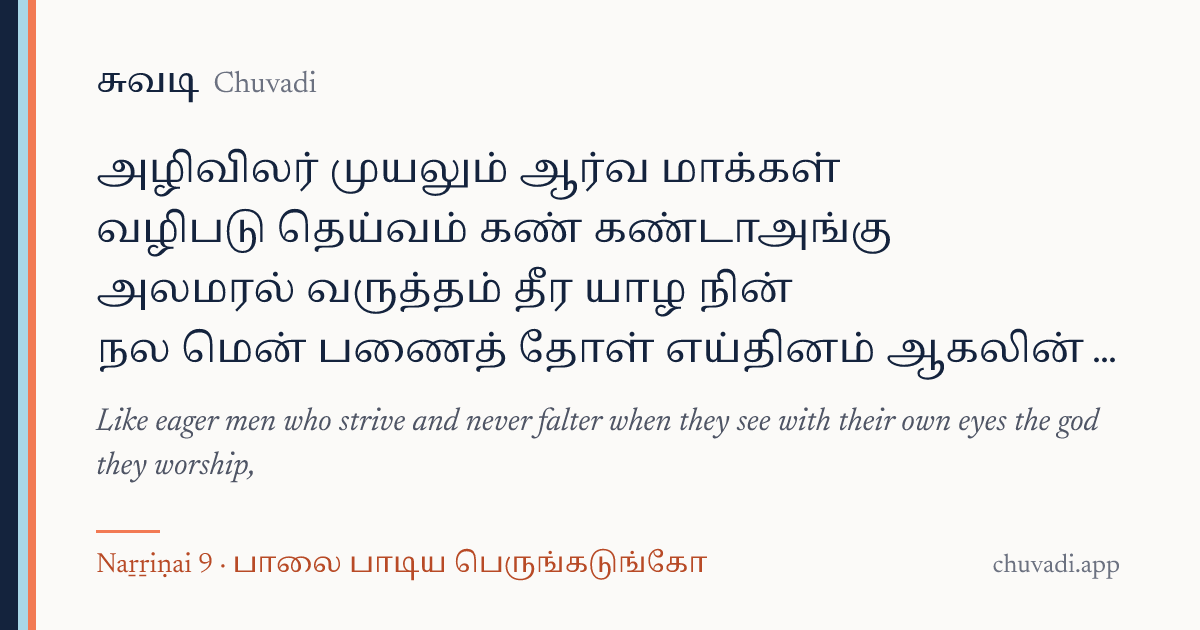
- Like eager men who strive and never falter
- when they see with their own eyes the god they worship,
- I am free of the pain of restless longing, since I have
- come to your fine, soft shoulders, smooth as bamboo;
- take the bright, flame-coloured shoots of the puṉku with its puffed-rice flowers
- and rub them on your lovely breasts, spotted with sunaṅku, till they glow with charm;
- wherever you see shade, rest a long while;
- wherever you see sand, shape little sand-dolls;
- go on without tiring, you with gleaming teeth.
- Where the glad cuckoo calls, pecking at mango buds,
- through forest with fragrant, cool groves
- and many little villages, runs the road we take.
What the poem says
The hero speaks to the heroine as the two of them elope together (pālai, poem by Pālai Pāṭiya Perumkaṭuṅkō, 'Perumkaṭuṅkō who sang of pālai', traditionally a Cēra prince).
He begins with a religious simile: having her at last is like a devotee who has toiled without rest and finally sees his god face to face. All his anxiety is gone.
Then he coaxes her along the journey. This is meant to be the cruel road of pālai, but he describes it as gentle: she can rub the young red leaves of the puṉku tree, whose white blossoms look like puffed rice, on her breasts as a girl's adornment; she can stop in every patch of shade and play at making sand-dolls (vaṇṭal), as girls do. The road runs through cool groves where cuckoos pick at mango buds, past many small villages.
The tenderness is the point. He treats her as the playful young girl she still is, and turns a frightening journey into a pleasant walk. Sunaṅku are the pale spots on the skin that the poetry treats as a sign of a young woman's beauty.