



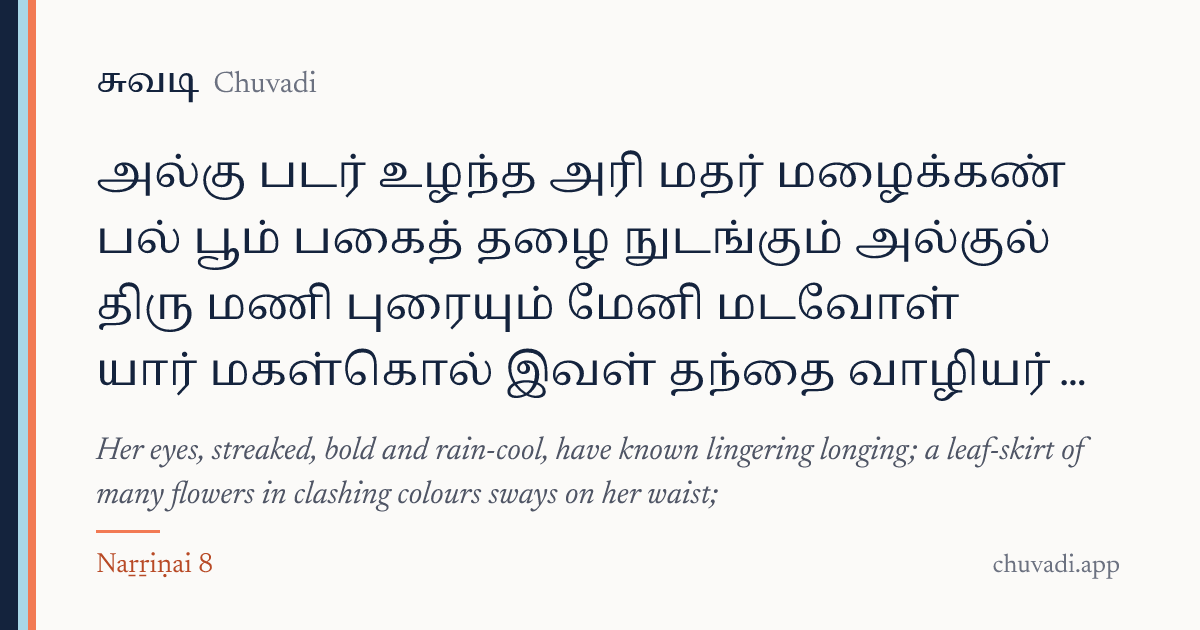

நற்றிணை 8
பாடல் · The poem
Tap a word to see where else it occurs.
பொருள் · Meaning in TamilAI
நீங்காத ஏக்கத்தால் வருந்திய, செவ்வரிகளும் செருக்கும் உடைய குளிர்ந்த கண்களையும், பல நிறப் பூக்கள் கலந்து தொடுத்த தழையாடை அசையும் இடையையும், அழகிய மணியைப் போன்ற மேனியையும் உடைய இந்த இளம்பெண் யாருடைய மகளோ? இவளுடைய தந்தை வாழ்க! இவள் என்னைத் துன்பத்தில் ஆழ்த்திவிட்டாள். அகன்ற வயல்களில் அறுப்பவர்கள் அறுத்துக் கொண்டு சென்ற பின்னும், குளிர்ந்த சேற்றில் படர்ந்து, வலிய தண்டுகளையுடைய நெய்தல் மலர்கள் வைக்கோல் போர்களிலும் கண்களைப் போல மலரும். உறுதியான தேர்களையுடைய பொறையனின் தொண்டி நகரம் அத்தகையது; இவளைப் பெற்ற தாய் அந்நகரத்தின் செல்வம் முழுவதையும் பெறுவாளாக!
குறிஞ்சித் திணை; இயற்கைப் புணர்ச்சியின் முடிவில், தோழியர் கூட்டத்தோடு தலைவியைக் கண்ட தலைவன் தனக்குள் சொல்லியது. பொறையன் சேர மன்னன்; தொண்டி சேரரின் துறைமுக நகரம். அறுவடைக்குப் பின்னும் மலரும் நெய்தல், குறையாத வளத்தைக் காட்டுகிறது; 'கண் போல்' என்ற உவமை மீண்டும் தலைவியின் கண்களை நினைவூட்டுகிறது. முதல் அடியில் உள்ள ஏக்கம் அவளுடையதா, அவளைக் கண்ட தலைவனுடையதா என்பது உறுதியாகத் தெரியவில்லை.
ஆங்கிலம் · English translationAI
Translation
- Her eyes, streaked, bold and rain-cool, have known lingering longing;
- a leaf-skirt of many flowers in clashing colours sways on her waist;
- her body is like a precious gem: this innocent girl,
- whose daughter can she be? Long live her father!
- She has thrown me into grief. In the wide fields,
- though reapers reap and carriers bear the sheaves away,
- spreading over the cool mud, strong-stemmed and sturdy,
- the neytal blooms like eyes among the stacks of straw:
- Toṇṭi of Poṟaiyaṉ of the sturdy chariots,
- may the mother who bore her win all the worth of that city!
What the poem says
The colophon places this at the close of the lovers' first, chance union: the hero sees the heroine again, now among her companions, and speaks to himself. The poet's name has not survived (kuṟiñci).
He catalogues her beauty: bold, streaked eyes, a skirt of leaves and flowers of many colours, a body that gleams like a gem. Then come the conventional questions of a man struck by love: whose daughter is she? He blesses her father and, at the end, her mother, wishing her the whole wealth of Toṇṭi. To bless the parents is a way of praising the daughter, and perhaps of thinking ahead to asking for her hand.
Toṇṭi was the port of the Cēra kings, and Poṟaiyaṉ is a Cēra royal name. The poet describes its fields: even after the reapers have cut and carried the harvest, neytal (water lily) flowers keep blooming in the mud and even among the straw stacks, like open eyes. The image suggests a fertility that cannot be exhausted, and the comparison to eyes quietly returns to the girl's eyes in line 1.
Line 1 is ambiguous: 'lingering longing' may describe her eyes or the longing they cause in him.