



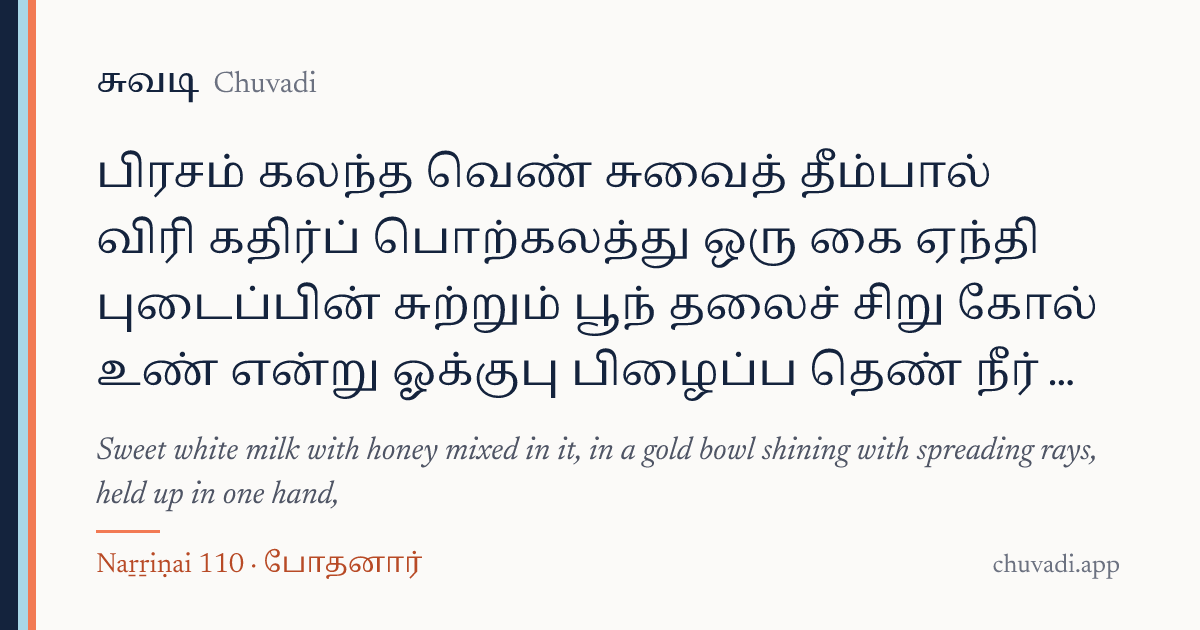

நற்றிணை 110
பாடல் · The poem
Tap a word to see where else it occurs.
பொருள் · Meaning in TamilAI
தேன் கலந்த வெண்மையான இனிய பாலை, ஒளிக்கதிர் விரியும் பொற்கிண்ணத்தில் ஒரு கையில் ஏந்தி, நுனியில் பூச் சுற்றிய சிறிய கோலை அடிப்பது போல ஓங்கி, குடி என்று சொல்லி மிரட்டும் போது, அவள் தப்பி ஓடுவாள். தெளிந்த ஒளியுடைய முத்துப் பரல்கள் இட்ட பொற்சிலம்புகள் ஒலிக்கத் துள்ளிக் குதித்து அவள் பந்தலுக்கு ஓட, நரை கலந்த கூந்தலையுடைய சிவந்த மேனி முதிய செவிலியர் ஓடிச் சோர்ந்து நின்றுவிடுவார்கள். அப்படிச் சொன்னதைக் கேட்காமல் விளையாடிய அந்தச் சிறுமி, இத்தகைய அறிவையும் ஒழுக்கத்தையும் எங்கே கற்றுக்கொண்டாளோ! தான் மணந்த கணவனின் குடும்பம் வறுமை அடைந்ததால், தன்னைக் கொடுத்த தந்தை வீட்டின் செழுமையான உணவை நினைக்கவும் மாட்டாள். ஓடும் நீரில் தோன்றும் நுண்ணிய மணல் அலைகள் போல, உண்ணும் வேளைகளைத் தவிர்த்து, எப்போதாவது உண்கிறாள் அந்தச் சிறிய மனவலிமை உடையவள்.
பாலைத் திணை; மகளின் புதிய வீட்டைக் கண்டு வியந்த செவிலி சொன்னது என்று கொள்ளலாம்; மகளின் நிலையைச் சொன்னதாகவும் கொள்ளலாம் என்கிறது துறைக்குறிப்பு. பால் குடிக்க மறுத்து ஓடிய சிறுமி, இப்போது வறுமையிலும் தந்தையிடம் உதவி கேட்காமல் வாழ்வது வியப்பைத் தருகிறது. ஓடும் நீரின் மணல் அலை உவமை எதைக் குறிக்கிறது என்பது உறுதியாகத் தெரியவில்லை.
ஆங்கிலம் · English translationAI
Translation
- Sweet white milk with honey mixed in it,
- in a gold bowl shining with spreading rays, held up in one hand,
- and with a small stick, its tip wrapped in flowers, raised as if to strike,
- they say 'Drink!', and threaten her, but she slips away; her clear-lustred
- pearl-filled golden anklets ringing as she skips,
- the red-skinned old foster-mothers with their streaked grey hair
- grow too tired and give up, while she runs to the pavilion,
- the little playful girl who refused every order:
- where did she learn such sense and such right conduct?
- Since the house of the husband she chose has fallen into want,
- she gives no thought to the rich food of the father who gave her away;
- like the fine ripples of sand in flowing water,
- skipping meal-times, she eats only now and then, this small brave one.
What the poem says
The colophon calls this maṉai maruṭci, wonder at the house: someone, most likely the foster-mother, has visited the daughter in her new home, and says it may also be read as describing the daughter's state (pālai, by Pōtaṉār).
The first half is a lively memory of childhood. The little girl would not drink her milk: the old nurses chased her with a gold bowl of honeyed milk and a flower-tipped stick, but she skipped away, anklets ringing, until they were worn out. She obeyed nobody.
Now she is married to a man whose family has fallen on hard times. She will not ask her rich father for food, and she makes do, eating less than she should, at odd hours. The speaker is astonished: where did that spoilt child learn such good sense and dignity? The image in line 12, the fine ripples of sand in running water, probably describes her sparse, irregular meals, though it might refer to her thin body; the sense is uncertain. The poem has little of the usual pālai wasteland, but it belongs to the aftermath of a girl leaving home with her lover.