



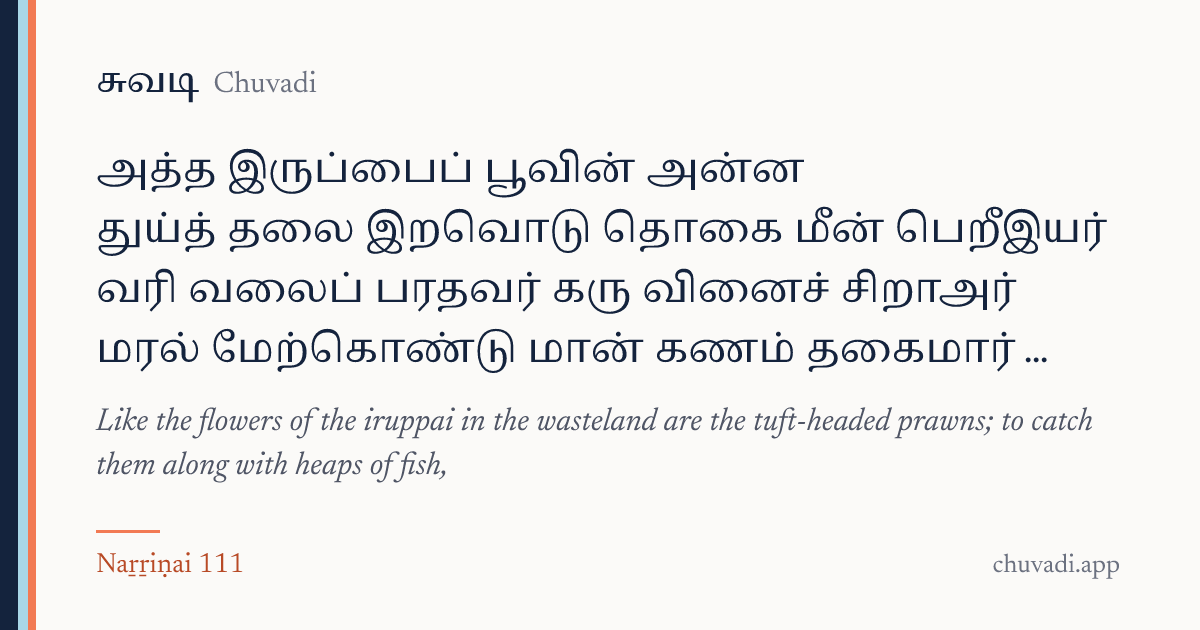

நற்றிணை 111
பாடல் · The poem
Tap a word to see where else it occurs.
பொருள் · Meaning in TamilAI
பாலை நிலத்து இருப்பை மலர் போன்ற, பஞ்சு போன்ற தலையையுடைய இறால்களையும், மற்ற மீன்களின் குவியலையும் பெறுவதற்காக, வரிகளையுடைய வலைகளைக் கொண்ட பரதவர்களும் கடுமையான வேலை செய்யும் அவர்களுடைய சிறுவர்களும், மரல் நிறைந்த நிலத்தைக் கடந்து மான் கூட்டத்தை வளைத்துப் பிடிக்கக் கடுமையான வலிமையுடைய இளைஞர்கள் வேட்டைக்குப் புறப்படுவது போலப் புறப்பட்டு, திமில் என்னும் படகில் ஏறி அலைகள் நிறைந்த கடலைக் கடந்து, வாள் போன்ற வாயுடைய சுறாவையும் வலிய மீன்களையும் வெட்டி, கொழுப்பு நிறைந்த படகுகளோடு சரிந்த மணல் கரையில் இறங்குகிறார்கள். அத்தகைய பெரிய உப்பங்கழியை அடுத்த சிற்றூருக்கு, தோழி, கடற்கரைத் தலைவனின் தேர் கல்லென்ற ஒலியோடு வரும்.
நெய்தல் திணை; நல்ல விரிச்சி கேட்டு மகிழ்ந்த தோழி தலைவியிடம் சொன்னது. பாடியவர் பெயர் கிடைக்கவில்லை. நிறைந்த மீனோடு உறுதியாகத் திரும்பும் பரதவர் போலத் தலைவனும் உறுதியாக வெளிப்படையாக வருவான் என்பது குறிப்பு; விரிச்சி பற்றிப் பாடலில் எதுவும் சொல்லப்படவில்லை.
ஆங்கிலம் · English translationAI
Translation
- Like the flowers of the iruppai in the wasteland
- are the tuft-headed prawns; to catch them along with heaps of fish,
- the fishermen with their striped nets, and their boys at hard labour,
- like young men of fierce strength who, crossing the maral country to head off herds of deer,
- rise up and go out to hunt,
- board their catamarans and swim across the wasteland of the waves,
- cut up the sword-mouthed shark and other strong fish,
- and with boats loaded with fat come down to the sloping sand,
- in the hamlet by the great backwater; with a clatter
- it will come, my friend, the chariot of the lord of the shore.
What the poem says
The friend has received a good omen, a viricci, the chance words of passers-by taken as a sign, and joyfully tells the heroine that the hero will come (neytal; the poet is unknown). The omen itself is not described in the poem; we know of it only from the colophon.
Most of the poem is a picture of the fishing village. The fishermen set out with their nets and their sons to catch prawns, whose tufted heads look like iruppai flowers, and they go to sea as eagerly as young hunters in the dry country setting out after deer. They brave "the wasteland of the waves", kill sharks and other big fish, and come back with boats full of fat.
The fishermen's sure return with a full catch prepares for the final line: the hero's chariot will also come, loudly, into this hamlet, which implies an open visit to ask for her hand. The comparison of the sea with the land of the hunters joins neytal imagery with that of the drier tiṇais.