



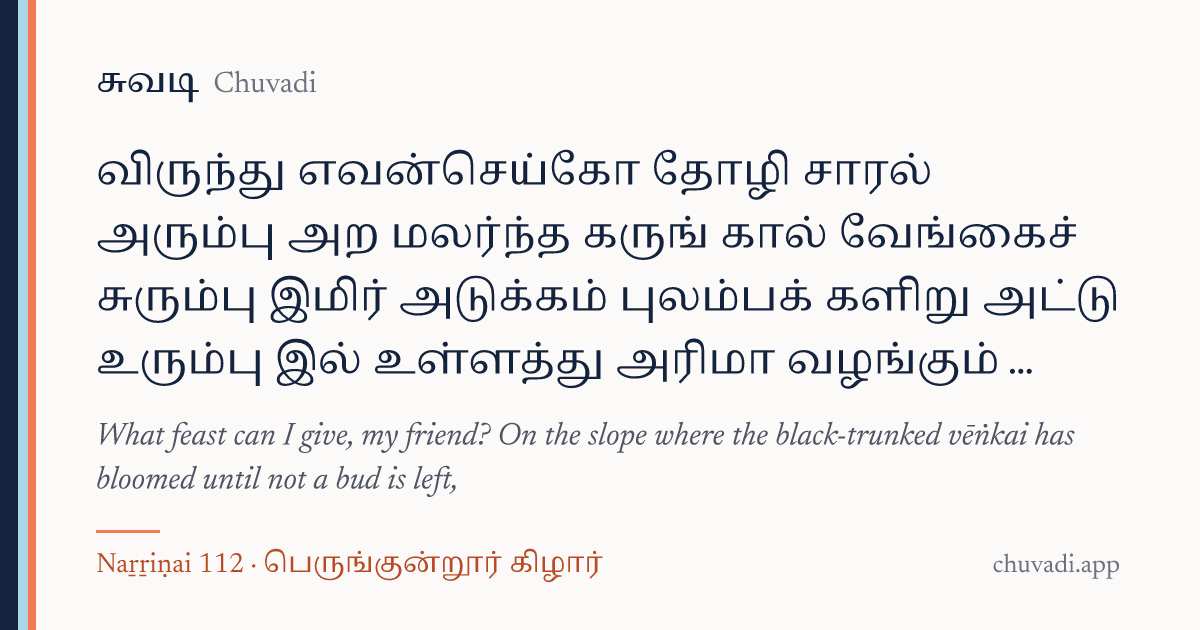

நற்றிணை 112
பாடல் · The poem
Tap a word to see where else it occurs.
பொருள் · Meaning in TamilAI
தோழி, இந்த மழைக்கு நான் என்ன விருந்து செய்வேன்? மலைச்சாரலில் அரும்பு ஒன்றும் மீதமில்லாமல் முழுதும் மலர்ந்த கரிய அடியுடைய வேங்கை மரங்கள் நிறைந்த, வண்டுகள் ஒலிக்கும் மலைப்பக்கம் வெறிச்சோடும்படி, யானையைக் கொன்று, அச்சமில்லாத உள்ளத்தோடு சிங்கம் உலவும் பெரிய பாறைகளையுடைய நாட்டவன் வருவதை அறிந்து, அவனை விரும்பி, கரிய கடலிலிருந்து நீரை முகந்து, நீலமணி நிறமுடைய அருவிகளாக, இறங்கும் நீர் அகன்ற நிலம் அமிழும்படி பரப்பி, மலையே கண் இமைப்பது போல மின்னி, வில்லின் நாண் போல முழங்கும் வலிய இடிகளோடு நெருங்கி வந்திருக்கிறது இந்த மழை.
குறிஞ்சித் திணை; பருவம் வந்ததால் வருந்திய தலைவியைத் தோழி தேற்றியது. தலைவன் வருவதை அறிந்து மழையே அவனை வரவேற்க வந்தது என்று சொல்லி, மழையைத் துயரத்தின் அடையாளமாகக் காணாமல் மகிழ்ச்சிச் செய்தியாகக் காட்டுகிறாள். சங்கப் பாடல்களில் சிங்கம் அரிதாகவே வருகிறது.
ஆங்கிலம் · English translationAI
Translation
- What feast can I give, my friend? On the slope
- where the black-trunked vēṅkai has bloomed until not a bud is left,
- the ridge loud with bees lies desolate, for, having killed an elephant,
- a lion with a heart that knows no fear roams there,
- in the land of the man of great rocks; knowing that he is coming, and longing for him,
- it has drawn up water from the dark sea, and with jewel-coloured waterfalls
- spread its streaming water so the wide land sinks deep beneath it,
- flashing as though the mountain were blinking its eyes:
- to this rain, crowded with its strong-roaring bulls of thunder.
What the poem says
The season has come and the heroine cannot bear it; her friend steadies her (kuṟiñci, by Peruṅkuṉṟūr Kiḻār).
The friend's way of comforting her is to give the rain a welcome. The rain, she says, knows that the hero is coming and longs for his arrival; it has scooped up the dark sea and poured it down on his mountains as waterfalls, flashing with lightning so that the whole mountain seems to blink. What feast could she possibly give such a guest? The question treats the storm as a friendly messenger instead of a cruel reminder.
His country is wild and grand: vēṅkai in full flower, bees, and a fearless lion that has killed an elephant. Lions appear only rarely in Sangam poetry, and arimā here may be a poetic animal more than an observed one. The poem's sense hinges on reading the rain as the subject of lines 5–9, which seems the natural construction.