



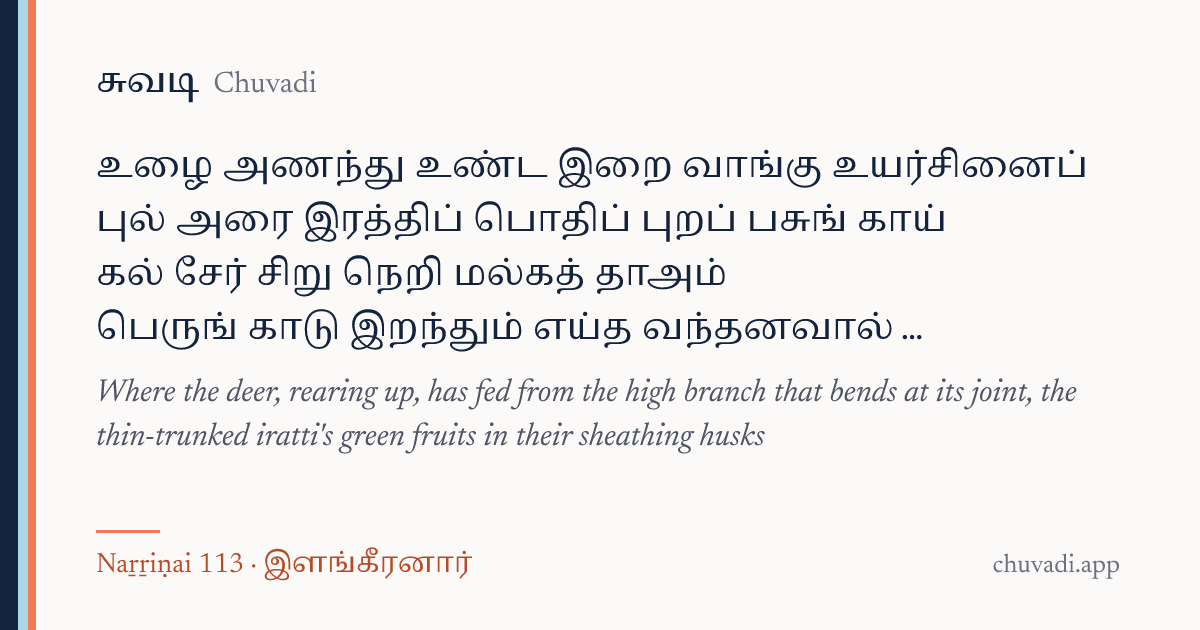

நற்றிணை 113
பாடல் · The poem
Tap a word to see where else it occurs.
பொருள் · Meaning in TamilAI
மான் முன்கால்களைத் தூக்கி நின்று மேய்ந்த, கணுவில் வளைந்த உயர்ந்த கிளைகளையுடைய, மெல்லிய அடிமரத்தைக் கொண்ட இரத்தி மரத்தின் உறையால் மூடிய பசுமையான காய்கள், கற்கள் நிறைந்த சிறிய வழியில் நிறைந்து பரவிக் கிடக்கின்றன. அத்தகைய பெரிய காட்டைக் கடந்து வந்த பிறகும் அவை என்னை வந்து அடைந்துவிட்டன. செய்வதற்கு அரிய பொருள் தேடும் வேட்கையால், பெண்ணே, நான் போகிறேன் என்று சொன்னபோது, அவள் தன் நெய்தல் மலர் போன்ற மையுண்ட கண்களில் துயரம் மிக, தன் கரிய கூந்தலுக்குப் பின்னே முகத்தை மறைத்துக்கொண்டு மிகவும் வருந்தினாள். உதியன் போரிட்டுப் பாய்ந்த, முன்னணியில் ஆரவாரம் மிகுந்த, இம்மென்று ஒலிக்கும் பெரிய போர்க்களத்தில் இசைக்கலைஞர் ஊதும் அழகிய ஆம்பல் குழல் போல ஏங்கி, கலங்கிய துயரத்தில் இருந்தவளின் தனிமை நிறைந்த பார்வைகளே அவை.
பாலைத் திணை; பொருள் தேடச் சென்ற தலைவன் வழியில் தாங்க முடியாமல் சொன்னது. பிரியும்போது அவள் பார்த்த பார்வை காட்டைக் கடந்தும் அவனைத் தொடர்ந்து வருகிறது. உதியன் என்பது சேர அரசன் ஒருவனின் பெயர்; அவனுடைய போர்க்களக் குழலோசை தலைவியின் ஏக்கத்துக்கு உவமையாகிறது.
ஆங்கிலம் · English translationAI
Translation
- Where the deer, rearing up, has fed from the high branch that bends at its joint,
- the thin-trunked iratti's green fruits in their sheathing husks
- lie scattered thick along the narrow stony path;
- though I have crossed that great forest, they have come to reach me:
- when, set on the hard work that the sickness for wealth demands, 'I
- am going, my girl,' I told her, she,
- her kohl-dark eyes like neytal filling with sorrow,
- hid herself behind her dark hair, utterly broken;
- where Utiyaṉ charged, in the battle loud at its van,
- on the great humming field, the musicians blow
- the lovely āmpal flute; like it, sobbing,
- the lonely looks of her who suffered troubled grief.
What the poem says
The hero, who has left to earn wealth, cannot bear his feelings in the middle of the wasteland and speaks (pālai, by Iḷaṅkīraṉār).
He has come far: past a forest where deer stand on their hind legs to reach the iratti branches, and the dropped green fruit covers the stony path. Yet something has followed him all that way, and the subject arrives only in the last line: her lonely looks. When he told her he was going, she hid her face behind her hair, her eyes filling with tears, and the look she gave him has stayed with him.
Her sobbing is compared to the sound of the āmpal flute played by musicians on the battlefield where Utiyaṉ charged. Utiyaṉ is the name of a Cēra king known from other Sangam poems; the simile ties a private grief to a famous public scene. The phrase "sickness for wealth" (poruṭ piṇi) presents his ambition as a kind of illness that drives him on.