




நற்றிணை 114
பாடல் · The poem
Tap a word to see where else it occurs.
பொருள் · Meaning in TamilAI
வெண்மையான தந்தங்களை எடுத்து அகன்ற பாறையில் வைப்பதும், பச்சை இறைச்சியை வெட்டும்போது கூர்மையான நகங்களையுடைய நாய்கள் ஆர்வத்தோடு நீண்டு நிற்பதுமாக, தெருதோறும் புலால் நாறும் சிற்றூரின் ஆரவாரத்தை, இரவெல்லாம் உறங்காமல் கிடந்து கேட்டு வருந்தினேன். தோழி, இது இரங்கத்தக்கதே! நேற்று இரவு மலைநாட்டவன் உறுதியாக வந்திருக்கிறான். மழைத்துளிகள் விழுந்து புள்ளிகள் பதிந்த பழைய கரைகளையுடைய ஆறு, மோதும் அலைகளோடு உயர்ந்து பெருகி வருகிறது; அதை நினைத்து அஞ்சுகிறேன். ஈரமான குரலும் பெரிய முழக்கமும் உடைய நல்ல இடியேறு, பாம்புகளின் அழகை அழிக்கும் உயர்ந்த மலையைத் தாக்கி, மயங்கிய இளம் பெண் யானை வருந்தும்படி, துதிக்கையை ஊன்றி இறங்கி வந்த ஆண் யானையைத் தாக்கி வீழ்த்திவிட்டது.
குறிஞ்சித் திணை; தலைவன் வரும் வழியை நினைத்து அஞ்சிய தோழி, அவன் வேலிக்கு அப்பால் நிற்கும்போது தலைவியிடம் சொல்வது போலச் சொன்னது. இடி தாக்கி யானை இறந்ததையும், வெள்ளம் பெருகிய ஆற்றையும் சொல்லி, இரவில் வருவதன் ஆபத்தை உணர்த்துகிறாள். இரண்டாம் அடியில் நகங்களால் நீண்டு நிற்பவை எவை என்பது உறுதியாகத் தெரியவில்லை.
ஆங்கிலம் · English translationAI
Translation
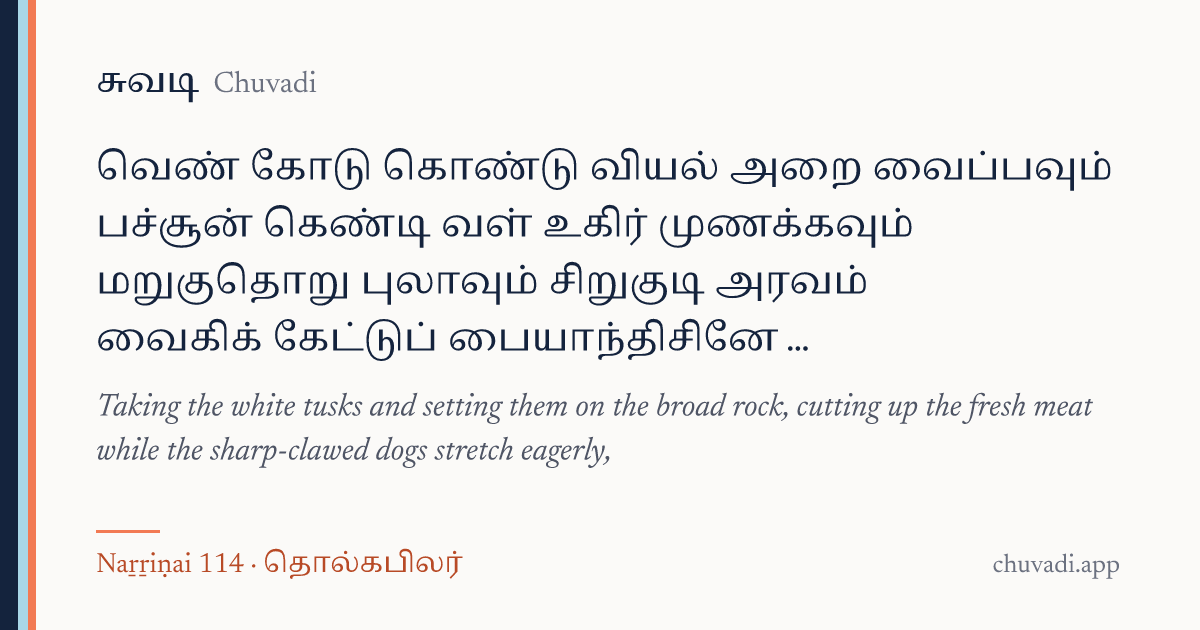
- Taking the white tusks and setting them on the broad rock,
- cutting up the fresh meat while the sharp-clawed dogs stretch eagerly,
- the uproar of the little village that reeks of flesh in every street
- I heard as I lay awake all night, and was distressed.
- How pitiable it is, my friend! Last night
- he surely came, the man of the hill country;
- its old banks pitted with spots where raindrops struck,
- the river comes swelling high with clashing waves, and I fear it;
- the fine bull of thunder, wet-voiced and roaring loud,
- striking the tall peak where it ruins the beauty of snakes,
- so that its foolish young mate grieves,
- has struck the tusker that came down planting its trunk.
What the poem says
The friend is afraid of the path the hero uses, and speaks as if to the heroine while he stands outside the fence (kuṟiñci, by Tolkapilar).
The poem tells its story backward. First we hear the village at night, loud and smelling of meat: the people are setting white tusks on a rock and cutting up fresh flesh. Only in the final lines do we learn why: a thunderbolt struck a bull elephant as it came down the mountain, leaving its mate grieving. Thunder is said to "ruin the beauty of snakes", an old belief that thunder harms serpents.
Between these two scenes the friend says what she really fears. He came last night, through that storm, along a river in flood. If thunder can kill a tusker on that slope, what might it do to him? The image of the grieving cow elephant hints at what would happen to the heroine. Line 2 is uncertain: who or what "stretches with sharp claws" (vaḷ ukir muṇakka) is not clear; dogs at the butchering are only a guess.