



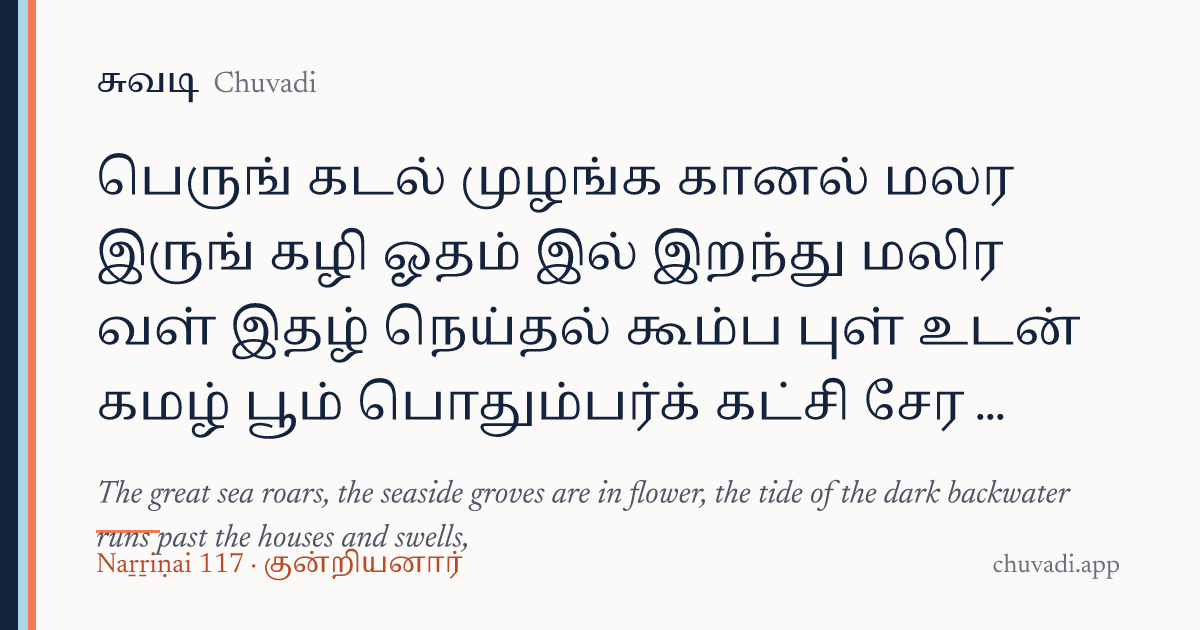

நற்றிணை 117
பாடல் · The poem
Tap a word to see where else it occurs.
பொருள் · Meaning in TamilAI
பெருங்கடல் முழங்குகிறது; கடற்கரைச் சோலைகள் மலர்கின்றன; கரிய உப்பங்கழியின் ஓதநீர் வீடுகளைக் கடந்து பெருகுகிறது; பெரிய இதழ்களையுடைய நெய்தல் மலர்கள் குவிகின்றன; பறவைகள் ஒன்றுசேர்ந்து மணம் வீசும் பூஞ்சோலையில் உள்ள தம் கூடுகளை அடைகின்றன; மறையும் கதிரவனின் ஒளி மங்கி, சிவந்து வளைந்த வட்டம் மேற்கு மலையை நெருங்குகிறது. துயரம் சூழ்ந்து நான் நடுங்கும்படி, தனிமையோடு துன்பம் தரும் மாலைப் பொழுது வந்துவிட்டது. அத்தகையவர் நம்மை நினைக்காமல் பல நாள்கள் கழிந்தால், தோழி, நான் உயிரோடு இருக்க மாட்டேன். என் நோய்க்கு வேறு காரணம் சொல்கிறார்கள்; ஆனால் பழியை வேறு ஒருவர் மேல் சுமத்துவது முறையும் அன்று.
நெய்தல் திணை; மணம் நீண்டுபோனதால் வருந்திய தலைவி தோழியின் ஆறுதலை ஏற்காமல் சொன்னது; தலைவன் வேலிக்கு அப்பால் இருக்கும்போது சொன்னதாகவும் கொள்ளலாம். கூடு திரும்பும் பறவைகளும் மாலைப் பொழுதும் அவளுடைய தனிமையை மிகுதிப்படுத்துகின்றன. நோய்க்குத் தெய்வம் போன்ற வேறு காரணம் சொல்வது பொய் என்றும், பழி தலைவனுக்கே உரியது என்றும் உணர்த்துகிறாள்.
ஆங்கிலம் · English translationAI
Translation
- The great sea roars, the seaside groves are in flower,
- the tide of the dark backwater runs past the houses and swells,
- the broad-petalled neytal closes, and the birds together
- go back to their nests in the grove of fragrant blooms,
- the setting sun grows dim, and the red, bending disc
- draws near the western hill; as sorrow gathers and I tremble,
- this miserable evening has come with loneliness;
- if he, being what he is, does not think of us, and many days go by,
- I will not live, long may you live, my friend. My
- sickness, they say, comes from something else;
- but to let the blame fall somewhere else is not right either.
What the poem says
The marriage keeps being delayed, and the heroine refuses her friend's comfort; the colophon adds that the hero may be listening outside (neytal, by Kuṉṟiyaṉār).
The first seven lines build a single seaside evening, line by line: the sea roars, the tide floods the backwater, the neytal flowers fold, birds return to their nests, and the red sun sinks behind the hill. Each detail marks the hour when lovers should be together and the lonely suffer most. The birds going home in pairs stand in contrast to her own state.
The ending turns to the town's talk. People will put her illness down to some other cause, a god or a spirit, as was common when a girl grew pale. She says this is not only false but unjust: the blame belongs to the man, and shifting it elsewhere is wrong. Spoken in his hearing, this is a plain warning. Her threat that she will not live many more days is the usual strong language of akam, but it is meant to move him.