




நற்றிணை 118
பாடல் · The poem
Tap a word to see where else it occurs.
பொருள் · Meaning in TamilAI
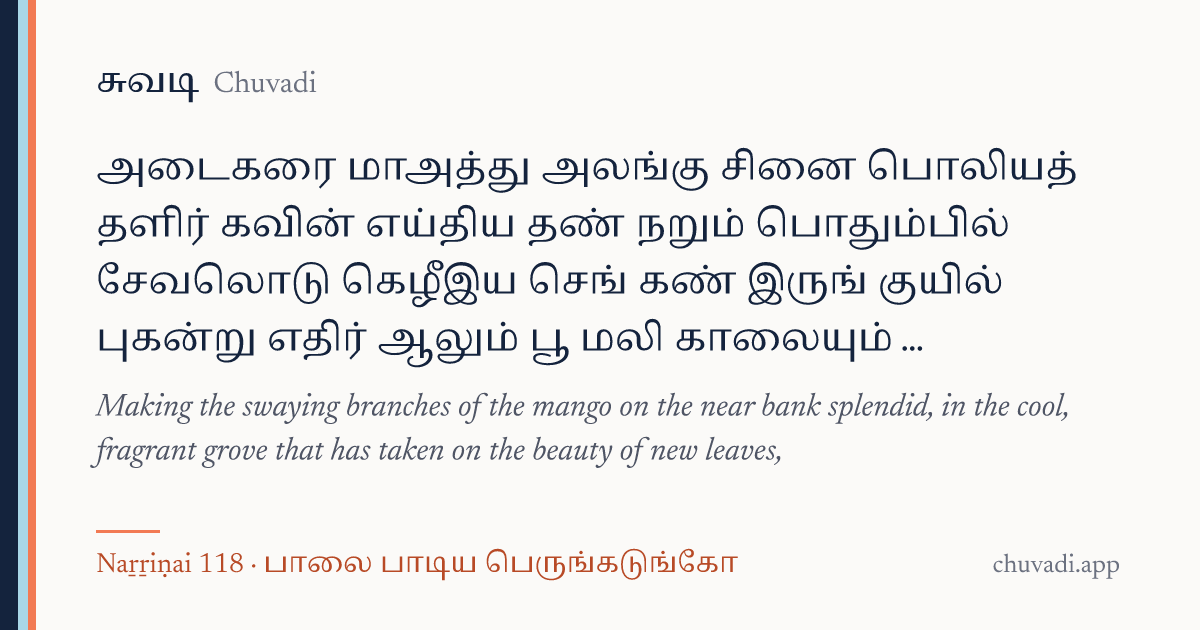
அடைகரையில் நிற்கும் மாமரத்தின் அசையும் கிளைகள் பொலிவு பெறும்படி, தளிர்களால் அழகு பெற்ற குளிர்ந்த மணமுள்ள சோலையில், சிவந்த கண்களையுடைய கரிய குயில் தன் சேவலோடு சேர்ந்து விருப்பத்தோடு எதிர்க்குரல் கொடுத்துக் கூவும் பூ நிறைந்த இப்பருவத்திலும், அவர் பிரிந்து சென்றுவிட்டார், உறுதியாக நம்மை மறந்துவிட்டார் என்று எண்ணி, பூங்கொத்துகள் நிறையும்போது என் உள்ளம் உடைகிறது. அதற்கும் மேலாக, ஓவியம் வரைவதில் திறமையுடைய ஓவியர்கள் ஒளிரும் அரக்குச் சாயத்தில் தோய்த்த தூரிகை போன்ற பஞ்சு போன்ற நுனியுடைய பாதிரியின் வெண்மையான இதழ்களையுடைய மலர்களை, வண்டுகள் மொய்க்க ஏந்திக்கொண்டு, தெருதோறும் புதிய மலர் என்று கூவி விற்கும் அயலாளான ஒருத்திக்காக என் நெஞ்சு வருந்துகிறது.
பாலைத் திணை; பருவம் வந்ததைக் கண்டு தாங்க முடியாத தலைவி சொன்னது. குயிலும் மலர்களும் பூ விற்பவளின் குரலும் பருவம் வந்ததை அறிவிப்பதால் அவள் உள்ளம் வருந்துகிறது. பாடியவர் பாலை பாடிய பெருங்கடுங்கோ என்னும் சேர அரசன் என்பது மரபு.
ஆங்கிலம் · English translationAI
Translation
- Making the swaying branches of the mango on the near bank splendid,
- in the cool, fragrant grove that has taken on the beauty of new leaves,
- the red-eyed dark koel, together with its mate,
- calls back eagerly in answer, in this flower-filled season;
- 'He has gone away; surely he has forgotten us,' so I think,
- and on top of my heart breaking as the clusters come thick,
- like the brush that painters skilled in their craft have steeped in bright lac,
- the pātiri with its tufted tips,
- its white-petalled blossoms held up while the bees settle on them,
- 'Fresh flowers!' she cries in street after street,
- and for that stranger woman my heart aches.
What the poem says
The heroine sees the season arrive and cannot bear it (pālai, by Peruṅkaṭuṅkō, the Cēra prince remembered as the poet "who sang pālai").
Spring is everywhere: the mangoes by the water put out shining new leaves, and in the grove a koel and its mate call to each other. To her this can mean only one thing: he has forgotten her. Then, on top of that, a flower seller walks the streets with a basket of pātiri blossoms, their tips tinged like a painter's brush dipped in red lac, calling out "fresh flowers!"
The flower seller is a stranger, nothing to her, and she has done nothing wrong; but her cry announces the season and hurts the heroine more than anything. The same device appears in narr.97, where a farmer's daughter selling flowers is called crueller than the cuckoo. The image of the lac-dipped brush is a rare glimpse of the painter's craft in Sangam poetry.