



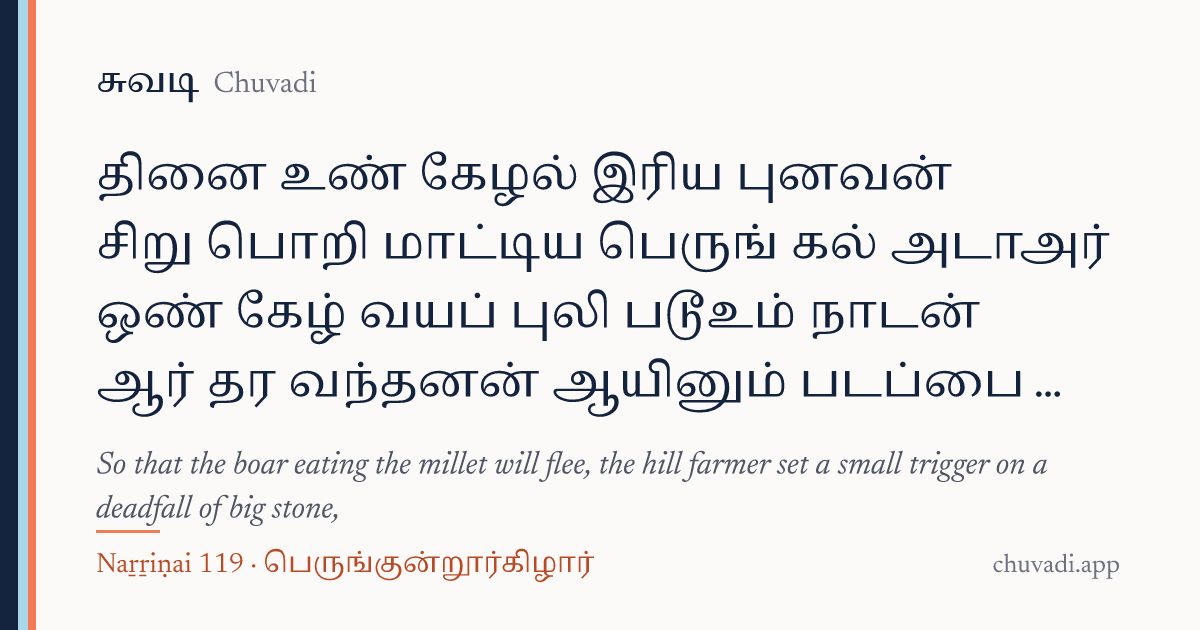

நற்றிணை 119
பாடல் · The poem
Tap a word to see where else it occurs.
பொருள் · Meaning in TamilAI
தினையைத் தின்னும் பன்றி அஞ்சி ஓடும்படி, புனத்தைக் காக்கும் குறவன் பெரிய கல்லாலான பொறியில் சிறிய விசையை அமைத்தான்; அதில் ஒளிரும் நிறமுடைய வலிய புலி அகப்படுகிறது. அத்தகைய நாட்டை உடையவன், நமக்கு நிறைந்த இன்பம் தருவதற்காக வந்தாலும், தோட்டத்தின் அருகே இனிய பெரிய முசுக்குரங்கு நல்ல உணவை உண்ணும், பல மலர்கள் நிறைந்த காட்டாற்றுக்கு மேலே கரிய கலைமான் வருடை ஆட்டுக் கூட்டத்தோடு தாவிக் குதிக்கும் பெரிய மலையின் நிழலுக்கு, குளவியும் கூதளமும் நெருங்கத் தொடுத்த கண்ணியைச் சூடிக்கொண்டு வருவான். ஆனால் அவளைத் தழுவும் வாய்ப்பு அவனுக்குச் சிறிதும் கிடைக்காது. அவன் தன் மலையைவிடப் பெரிய வருத்தம் அடையட்டும்.
குறிஞ்சித் திணை; தலைவி வீட்டில் காவலில் வைக்கப்பட்டதை, வேலிக்கு அப்பால் நின்ற தலைவனுக்குத் தோழி உணர்த்தியது. பன்றிக்கு வைத்த பொறியில் புலி அகப்பட்டது போல, தலைவியைக் காக்க வைத்த காவல் தலைவனையே துன்பத்தில் சிக்க வைக்கிறது என்பது இறைச்சி. நான்கு முதல் ஏழு வரையிலான அடிகளின் அமைப்பு உறுதியாகத் தெரியவில்லை.
ஆங்கிலம் · English translationAI
Translation
- So that the boar eating the millet will flee, the hill farmer
- set a small trigger on a deadfall of big stone,
- and a strong tiger with bright markings is caught in it: that man's country;
- though he has come to give us our fill of joy, near the garden
- where the big, sweet musu monkey eats its good forage,
- above the forest stream full of many flowers, where the black buck
- leaps and frolics along with the herd of mountain goats,
- to the shade of the great hill he will come, with a garland of kuḷavi
- and kūtaḷam woven thick; yet not at all
- will he get to hold her in his arms;
- let him feel a sulk greater than his own mountain.
What the poem says
The friend, knowing the hero is just outside, tells him that the heroine is now confined to the house (kuṟiñci, by Peruṅkuṉṟūr Kiḻār).
The opening picture is the iṟaicci. A farmer sets a stone deadfall to frighten off a millet-eating boar, and instead a tiger is caught in it. Something meant for one purpose catches a bigger prey: the precautions the family has taken to keep the girl in will trap the hero's hopes.
The friend imagines him coming as usual to their meeting place in the shade of the great hill, past the garden where the musu monkeys feed and the stream where black buck and mountain goats leap, wearing his garland of kuḷavi and kūtaḷam. He will find no one there. The final line, wishing him a sulk "greater than his own mountain", is half teasing and half sharp: the only answer to his loss is to stop coming in secret and marry her. The exact construction of lines 4–7 is not fully clear.