




நற்றிணை 121
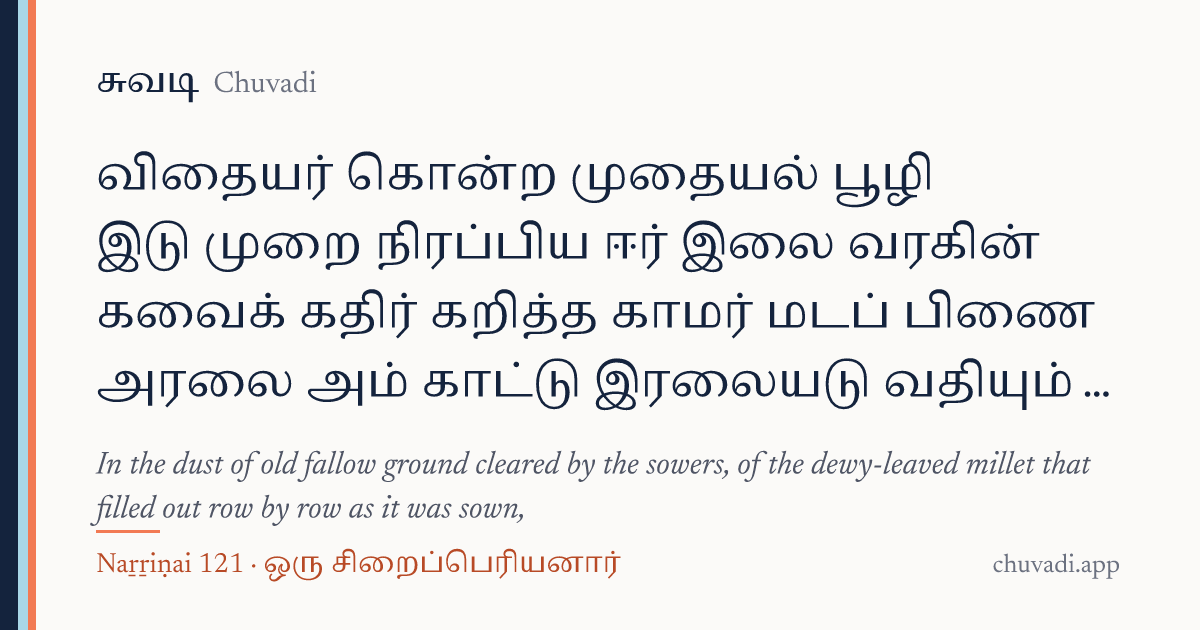
பாடல் · The poem
Tap a word to see where else it occurs.
பொருள் · Meaning in TamilAI
விதைப்பவர்கள் திருத்திய பழைய தரிசு நிலப் புழுதியில், விதைத்த முறைப்படி வரிசையாக நிறைந்து வளர்ந்த ஈரமான இலைகளையுடைய வரகின் பிளவுபட்ட கதிர்களைக் கடித்துத் தின்ற அழகிய இளம் பெண்மான், அழகிய காட்டில் தன் ஆண்மானோடு தங்கியிருக்கும். நீ விரும்பிய தலைவியின் ஊர் அத்தகைய முல்லை நிலத்தில் இருக்கிறது. அரசன் இரவிலேயே எங்களுக்கு விடை கொடுத்துவிட்டான் என்று நீ சொல்கிறாய். கவலைப்படாதே; உன் கண்ணி வாழ்வதாக! நீ கண்டு மகிழும்படி, விரிந்த பிடரி மயிரால் அழகுபெற்ற, வேகமாகச் செல்லும் செருக்குடைய குதிரைகளை நல்ல ஓட்டத்தில் விரைந்து செலுத்துவேன். குளிர்ந்த மழை பெய்த காட்டாற்றின் சரியும் மணற்கரைகள் பின்னே போய்விடும். மாலையில் விருந்தினர்க்கு உணவு சமைக்கும் உன் மனைவியின் மெல்லிய மூட்டுகளையுடைய மூங்கில் போன்ற தோள்களில் நீ இன்று உறங்குவாய்.
முல்லைத் திணை; வினையை முடித்துத் திரும்பும் தலைவனுக்குத் தேர்ப்பாகன் சொல்லியது. பெண்மான் ஆண்மானோடு அமைதியாகத் தங்கியிருப்பது, தலைவன் தலைவியோடு சேரப்போவதைக் குறிப்பாகக் காட்டும் உள்ளுறை. நான்காம் அடியில் வரும் அரலை என்பதை ஒரு செடியின் பெயராகக் கொண்டோம்; இச்சொல்லின் பொருள் உறுதியாகத் தெரியவில்லை.
ஆங்கிலம் · English translationAI
Translation
- In the dust of old fallow ground cleared by the sowers,
- of the dewy-leaved millet that filled out row by row as it was sown,
- having nibbled the forked ears, the lovely young doe
- rests with her stag in the pleasant woods of aralai;
- such is the forest country where the town of the woman you love lies.
- "The king has let us go by night," you say, so
- do not fret, long may your garland flourish; for you to see it,
- the spirited horses, bright with spreading plumes and swelling stride,
- I will rouse to a strong, flashing gallop, and the cool-rained
- forest river's banks of slipping sand will fall away behind,
- and you, with your wife who prepares the evening meal for guests,
- will lie in sleep on her shoulders, smooth as bamboo with soft joints.
What the poem says
The war is over and the hero is hurrying home. According to the colophon it is his charioteer who speaks: the king has released the army by night, and the driver promises to whip up the horses so that his master will sleep in his wife's arms that same evening (mullai, the tiṇai of waiting and return; poem by Oru Ciṟaip Periyaṉār).
The opening picture is the mullai landscape at its gentlest: in a field of varaku millet sown on old fallow, a young doe has eaten the ears and now rests beside her stag. The pair at peace is the hidden image (uḷḷuṟai) of the reunion to come, and it also tells the hero how near and how pleasant his wife's country is.
The wife is pictured as the ideal householder, busy with the evening meal for guests, an image of the settled married life the mullai poems celebrate. Aralai in line 4 is taken here as the name of a plant of the woodland; the word is not certain, and it may describe the ground instead. "Long may your garland flourish" is a common blessing on a man.