



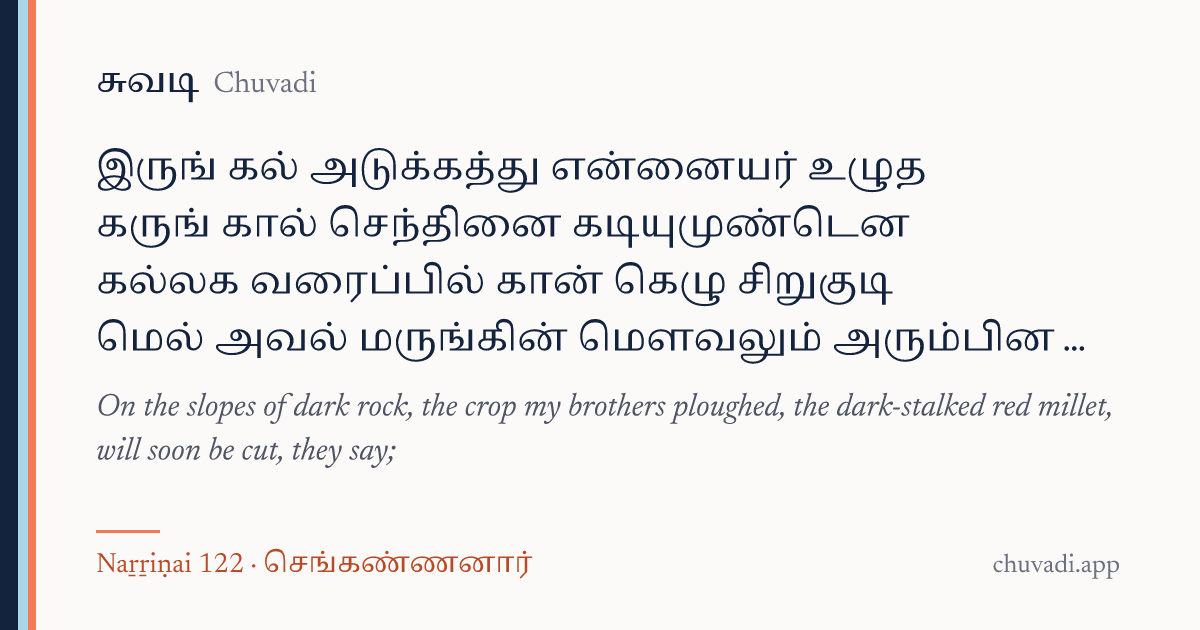

நற்றிணை 122
பாடல் · The poem
Tap a word to see where else it occurs.
பொருள் · Meaning in TamilAI
பெரிய பாறைகளையுடைய மலைச்சரிவில் என் அண்ணன்மார் உழுது விதைத்த கரிய தாளையுடைய செந்தினை அறுவடைக்கு வந்துவிட்டது என்கிறார்கள். பாறைகள் சூழ்ந்த நம் காட்டுச் சிற்றூரில், மென்மையான பள்ளங்களின் அருகே காட்டுமல்லிகையும் அரும்பிவிட்டது. வெண்மையான இடி முழங்கும் அச்சம் தரும் நள்ளிரவு இருளில் மலைநாட்டுத் தலைவன் இங்கே வருகிறான் என்று ஊரார் சொல்வது உண்மையோ, இல்லையோ, வேறு என்னவோ என்று எண்ணிக்கொண்டு, ஆராயும் கூர்மையான மனத்தோடு நின்று, மறைவாக நடந்தவற்றை எல்லாம் ஆராய்கிறாள் அன்னை. அவள் முகமும் மலர்ச்சியின்றி இருக்கிறது. பூக்கள் தொடுத்த கண்ணியை அணிந்தவளே! இது சரியாக அமையும் வழியை நீயே உனக்குள் எண்ணிப் பார்க்க வேண்டும்.
குறிஞ்சித் திணை; வேலிக்கு அப்பால் மறைந்து நிற்கும் தலைவன் கேட்கும்படி, தோழி தலைவியிடம் சொல்வது போலச் சொல்லியது. தினை அறுவடையால் பகற்குறி இல்லாமல் போகும்; அன்னை ஐயுறுவதால் இரவுக்குறியும் அரிதாகும்; ஆகவே விரைவில் மணம் செய்வதே வழி என்பது குறிப்பு. கண்ணி அணிந்தவள் தலைவி என்று கொண்டோம்; அது தலைவனின் கண்ணியைக் குறிப்பதாகவும் கொள்ளலாம்.
ஆங்கிலம் · English translationAI
Translation
- On the slopes of dark rock, the crop my brothers ploughed,
- the dark-stalked red millet, will soon be cut, they say;
- in our small forest village within its ring of rocks
- the wild jasmine too has budded beside the soft hollows;
- in the frightening middle of the night when white thunder roars,
- that the man of the mountain country comes here —
- "Is it so, or is it not, or what is it then?" she asks,
- and stands with a mind clever at judging, probing what is hidden;
- mother too wears an unsmiling face. With yourself
- you yourself must consider,
- you with the flower-woven garland, how this can be set right.
What the poem says
The hero has come by night and waits outside the fence. The friend speaks to the heroine, but every word is meant for the man listening in the dark (kuṟiñci; poem by Ceṅkaṇṇaṉār).
She gives him three warnings. The millet is ready for harvest, so the girls will no longer be sent to guard the fields, and the daytime meetings there will end. The wild jasmine (mauval) is in bud, a sign that the season is turning. Worst of all, the mother has heard something: she stands thinking hard, asking herself whether the rumour of a man from the hills coming at midnight in thunder and darkness is true, and her face has hardened.
The closing lines ask "you" to find a way of setting things right. In form they speak to the heroine, the one with the flower-woven garland, but the real hearer is the hero, and the only real remedy is marriage. It is also possible to take the garland as the hero's own head-wreath, which would make the address more direct.